



In the past, many students believed that Computer Science was the only pathway to a high-paying engineering career. The rise of coding bootcamps, social media influence, and startup culture created the impression that traditional engineering branches were losing their relevance. However, as we move through 2026, reality tells a different story. Mechanical Engineering remains one of the most powerful and versatile engineering disciplines because it serves as the foundation of every industrial revolution, including the current one.
Whether it is electric vehicles, robotics, aerospace technology, smart factories, renewable energy plants, or advanced manufacturing systems, mechanical engineers continue to play a central role in innovation.
The reason is simple. Every physical product that people use must be designed, manufactured, tested, maintained, and continuously improved. Software can control machines, but someone must first design and build those machines. Mechanical engineers bridge the gap between imagination and reality by transforming ideas into practical technologies. This unique capability ensures their relevance across generations of technological advancement.
In 2026, companies are actively seeking engineers who understand both mechanical systems and digital technologies. This growing demand has created exciting opportunities for professionals with interdisciplinary skills. As industries continue to evolve, Mechanical Engineering is not becoming obsolete—it is becoming smarter, more connected, and more valuable than ever before.
From Traditional Machines to Smart Systems
Modern Mechanical Engineering extends far beyond conventional machines and manufacturing equipment. Today’s engineers work on autonomous vehicles, robotic systems, smart factories, AI-powered machinery, and sustainable energy solutions. The integration of sensors, data analytics, and machine learning into mechanical systems has transformed the profession into a technology-driven career.
Mechanical engineers now collaborate closely with software developers, electronics engineers, and AI specialists to create intelligent systems capable of adapting to changing environments. This evolution has significantly expanded the scope of Mechanical Engineering rather than reducing it.
Why Students Still Choose Mechanical Engineering
Students continue to choose Mechanical Engineering because it offers flexibility and a wide range of career opportunities. Unlike specialized branches that focus on a single industry, Mechanical Engineering opens doors to multiple sectors.
Graduates can pursue careers in automotive companies, aerospace organizations, manufacturing industries, defense projects, energy corporations, consulting firms, research institutions, and government departments. This versatility provides long-term job security and allows professionals to transition between industries while utilizing the same core engineering skills.
Mechanical Engineering Powers Every Industry
One of the strongest reasons Mechanical Engineering remains the king of engineering careers is its presence across nearly every industry. Modern economies rely heavily on manufacturing, transportation, infrastructure, defense, healthcare equipment, energy systems, and industrial automation. Mechanical engineers contribute significantly to all of these sectors.
India’s manufacturing sector continues to grow rapidly, with factory output showing strong expansion in recent years. This growth reflects the increasing demand for engineers capable of designing, operating, maintaining, and optimizing industrial systems.
As governments and private organizations invest heavily in infrastructure and domestic production, the need for skilled mechanical engineers continues to rise. Unlike temporary career trends that come and go, industries dependent on physical products and mechanical systems remain essential to economic development. This consistent demand creates a stable and rewarding career path for Mechanical Engineering graduates.
Manufacturing and Industrial Growth
India’s “Make in India 2.0” initiative has accelerated domestic manufacturing by encouraging local production across various sectors. Government initiatives are identifying products that can be manufactured within the country, creating new opportunities for engineers involved in production, process optimization, and industrial design.
Automotive and Electric Vehicles
Electric vehicles have transformed the automotive industry. While software controls many vehicle functions, mechanical engineers design vehicle structures, thermal management systems, battery housings, suspension systems, and manufacturing processes. The EV revolution is creating thousands of new opportunities for mechanical engineering professionals worldwide.
Aerospace and Defense Engineering
Aerospace innovation and defense manufacturing continue to generate significant demand for mechanical engineers. India’s expanding defense manufacturing capabilities, including advanced artillery systems and military equipment production, highlight the importance of mechanical engineering expertise in national development.
The Rise of Industry 4.0 and Smart Manufacturing
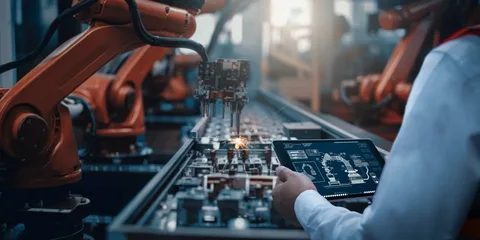
Industry 4.0 is often associated with artificial intelligence, machine learning, and automation, but its foundation is still built on mechanical systems. Smart factories depend on machines, robots, conveyors, production lines, and advanced manufacturing equipment. Mechanical engineers play a crucial role in designing, developing, and optimizing these systems while integrating cutting-edge technologies to improve productivity and efficiency.
Today’s manufacturing facilities are no longer collections of isolated machines. Instead, they function as interconnected ecosystems where equipment communicates through digital networks. This connectivity enables real-time monitoring, predictive maintenance, and data-driven decision-making, significantly improving operational performance.
Artificial intelligence and machine learning are transforming the manufacturing sector by enhancing quality control, reducing downtime, and improving production planning. These advancements rely heavily on engineering expertise capable of connecting physical machinery with digital intelligence. As a result, Mechanical Engineering graduates occupy a unique position because they understand the systems that generate and utilize industrial data.
Robotics and Automation
Robotics is one of the fastest-growing fields within engineering. Mechanical engineers are responsible for designing robotic structures, motion systems, actuators, and mechanical components that enable robots to perform complex tasks efficiently and accurately.
As automation becomes increasingly common in manufacturing, logistics, healthcare, and defense industries, the demand for robotics specialists continues to rise. Mechanical engineers with expertise in robotics are highly valued because they combine knowledge of mechanical design with practical problem-solving abilities. This combination allows them to develop innovative robotic systems that improve productivity while reducing operational costs.
AI Integration in Mechanical Systems
Mechanical engineers who possess knowledge of artificial intelligence, machine learning, and automation technologies are becoming increasingly valuable in today’s job market. Modern industries require professionals who can optimize both hardware and software systems to achieve maximum efficiency.
Smart manufacturing environments depend on engineers who can integrate AI-powered solutions into mechanical systems. These technologies help organizations improve maintenance schedules, predict equipment failures, and optimize production processes. As a result, professionals who combine traditional mechanical engineering skills with digital expertise often enjoy higher salaries, faster career growth, and greater job opportunities.
Why Mechanical Engineering Offers the Broadest Career Scope
One of the greatest strengths of Mechanical Engineering is its exceptional versatility. While many engineering disciplines prepare students for careers in specific industries, Mechanical Engineering provides a strong foundation that can be applied across numerous sectors.
Graduates can pursue careers in design engineering, production management, maintenance engineering, quality assurance, supply chain management, consulting, project management, research and development, entrepreneurship, and government services. This wide range of opportunities allows mechanical engineers to choose career paths that align with their interests and professional goals.
The versatility of Mechanical Engineering becomes particularly valuable during periods of economic uncertainty. If one industry experiences a slowdown, mechanical engineers can often transition into another sector without needing to completely retrain. Their expertise in physical systems, manufacturing processes, thermodynamics, materials science, and engineering analysis remains relevant across multiple industries. Our team at SMCET College is committed to providing one of the best mechanical engineering colleges in Jaipur.
This adaptability is one of the primary reasons Mechanical Engineering has maintained its reputation as an evergreen engineering discipline for decades.
Design Engineering
Design engineers are responsible for creating products ranging from automotive components and aircraft parts to industrial machinery and consumer products. They use advanced Computer-Aided Design (CAD) software, simulation tools, and digital prototyping technologies to develop innovative solutions.
Modern design engineering combines creativity with technical expertise, making it one of the most exciting career paths within Mechanical Engineering. Engineers in this field continuously work on improving product performance, safety, efficiency, and sustainability.
Production and Operations
Production engineers ensure that manufacturing processes operate efficiently and cost-effectively. Their responsibilities include improving productivity, reducing production costs, maintaining quality standards, and implementing automation strategies.
As manufacturing industries continue to expand globally, production engineers remain essential for maintaining competitiveness and operational excellence. Their contributions directly impact a company’s profitability and overall success.
Research and Development
Research and Development (R&D) engineers focus on developing new technologies and improving existing products. They work on innovative projects involving aerospace systems, renewable energy technologies, advanced materials, robotics, and next-generation manufacturing solutions.
For individuals who enjoy innovation and problem-solving, R&D offers an exciting opportunity to contribute to technological advancements that shape the future.
Government and PSU Opportunities
Mechanical engineers also have access to numerous government job opportunities through Public Sector Undertakings (PSUs), railways, defense organizations, energy corporations, and public infrastructure projects.
These positions often provide job security, competitive salaries, excellent benefits, and long-term career growth. As a result, government careers remain an attractive option for many Mechanical Engineering graduates.
Salary Trends for Mechanical Engineers in 2026
Compensation remains one of the most important factors for students considering an engineering career. While starting salaries vary depending on the institution, location, skills, and specialization, Mechanical Engineering continues to offer strong long-term earning potential.
Industries such as aerospace, robotics, energy, defense, oil and gas, automotive manufacturing, and advanced industrial automation provide highly competitive compensation packages. Fresh graduates can expect attractive starting salaries, while experienced professionals often progress into high-paying technical and managerial positions.
One of the most appealing aspects of Mechanical Engineering is its strong salary growth potential. Engineers who specialize in automation, robotics, electric vehicles, simulation technologies, advanced manufacturing, or project management frequently experience rapid career advancement and significant income growth.
Unlike careers heavily influenced by short-term technology trends, Mechanical Engineering offers sustained demand and continuous opportunities for specialization.
Freshers Salary Expectations
| Experience Level | Typical Salary Range |
| 0–2 Years | ₹3–6.5 LPA |
| Premium Recruiters | ₹7–12 LPA |
| 3–5 Years | ₹7–16 LPA |
| 6–10 Years | ₹14–32 LPA |
| 10+ Years | ₹28–65+ LPA |
Source: Industry salary reports and career surveys, 2026.
Mid-Level and Senior Career Growth
Engineers who continuously upgrade their technical and managerial skills often progress into leadership roles such as Technical Manager, Project Manager, Operations Head, Engineering Director, or Chief Technology Officer.
These positions offer significantly higher compensation packages and provide greater strategic influence within organizations. Continuous learning, industry certifications, and specialization in emerging technologies can accelerate career growth and open doors to global opportunities.
Mechanical Engineering vs Other Engineering Branches
Comparison Table
| Factor | Mechanical Engineering | Computer Science | Civil Engineering | Electrical Engineering |
| Industry Diversity | Very High | Medium | Medium | High |
| Global Opportunities | High | High | Medium | High |
| Government Job Opportunities | Excellent | Moderate | Excellent | Excellent |
| Manufacturing Scope | Excellent | Low | Moderate | High |
| AI Integration | Growing Rapidly | Core Area | Moderate | High |
| Future Stability | Very High | High | High | High |
Long-Term Career Stability
Mechanical Engineering offers exceptional long-term stability because society will always need machines, products, vehicles, infrastructure, and energy systems. While economic cycles may affect certain industries temporarily, the fundamental demand for mechanical engineering expertise remains constant.
This resilience gives mechanical engineers a significant career advantage compared to professionals in highly specialized fields. Their skills can be applied across multiple industries, allowing them to adapt to changing market conditions and emerging technologies. As a result, Mechanical Engineering remains one of the most secure and dependable career choices in the engineering sector.
Future Technologies Creating New Opportunities
The future of Mechanical Engineering is being shaped by transformative technologies that are redefining industries worldwide. Electric vehicles, renewable energy systems, additive manufacturing, digital twins, smart factories, robotics, and AI-powered design tools are creating entirely new career opportunities.
Engineers who combine traditional mechanical engineering knowledge with modern digital skills are particularly well-positioned for success. Employers increasingly seek professionals who can integrate hardware, software, and intelligent systems to solve complex industrial challenges.
Industry leaders recognize that innovation depends on multidisciplinary engineering teams capable of combining mechanical design, automation, data analytics, and artificial intelligence. Mechanical engineers naturally play a central role in these teams because of their deep understanding of physical systems and real-world applications.
This combination of technical expertise and technological adaptability ensures excellent career prospects for Mechanical Engineering graduates in the years ahead.
Electric Vehicles
The electric vehicle (EV) industry is one of the fastest-growing sectors globally. Developing EVs requires expertise in thermal management, structural design, battery systems, powertrain components, and manufacturing processes.
Mechanical engineers contribute to nearly every stage of EV development, from vehicle design and testing to production and quality assurance. As governments and industries continue investing in sustainable transportation, demand for skilled mechanical engineers in the EV sector is expected to grow significantly throughout the decade.
Renewable Energy
The global transition toward clean energy has created exciting opportunities for mechanical engineers. Wind turbines, solar energy systems, hydroelectric plants, hydrogen technologies, and energy storage solutions all rely heavily on mechanical engineering principles.
Engineers in this field work on designing efficient energy systems, improving equipment performance, and developing innovative technologies that support sustainable development. Renewable energy is expected to remain one of the most promising career sectors for future mechanical engineering graduates.
Advanced Manufacturing
Advanced manufacturing technologies are transforming how products are designed and produced. Additive manufacturing (3D printing), generative design, digital production systems, and smart factories have created specialized roles that did not exist a decade ago.
Mechanical engineers are leading this transformation by developing innovative manufacturing processes, optimizing production efficiency, and integrating advanced technologies into industrial operations. These developments are opening up new career pathways with strong growth potential and competitive salaries.
Skills That Make Mechanical Engineers Highly Employable
Success in 2026 requires more than just earning a degree. Employers are increasingly looking for engineers who can combine strong technical knowledge with modern digital skills and practical problem-solving abilities.
Mechanical engineers who master industry-standard software, automation tools, robotics systems, data analytics, and AI-related technologies gain a significant advantage in today’s competitive job market. Their ability to understand both physical systems and emerging technologies makes them valuable assets across a wide range of industries.
Strong communication, teamwork, project management, and leadership skills are equally important. Mechanical engineers often work on multidisciplinary projects involving software developers, designers, suppliers, customers, and business stakeholders. Professionals who can effectively bridge technical and business requirements are more likely to advance into leadership positions.
Technical Skills
To remain competitive in the industry, mechanical engineers should develop expertise in:
- CAD Software (SolidWorks, CATIA, Creo, AutoCAD)
- ANSYS and Simulation Tools
- Manufacturing Processes
- Thermodynamics and Heat Transfer
- Fluid Mechanics
- Robotics and Automation
- Product Design and Development
- Quality Control and Quality Engineering
- CNC Programming and Machining
These technical skills form the foundation of a successful Mechanical Engineering career.
Digital and AI Skills
As industries become increasingly digital, mechanical engineers should also develop skills in:
- Data Analytics
- Python Programming
- Industrial Internet of Things (IIoT)
- Machine Learning Fundamentals
- Digital Twin Technology
- Smart Manufacturing Systems
- Artificial Intelligence Applications
- Cloud-Based Engineering Platforms
Combining traditional engineering expertise with digital competencies significantly improves employability and career growth potential.
Conclusion
B.Tech Mechanical Engineering continues to earn its reputation as one of the strongest and most versatile engineering disciplines in 2026. Its unmatched industry relevance, diverse career opportunities, strong employment prospects, and adaptability to emerging technologies make it an excellent choice for aspiring engineers.
While trends may shift toward coding, artificial intelligence, and digital technologies, the world will always require engineers who can design, develop, manufacture, improve, and maintain physical systems. Mechanical engineers play a critical role in shaping the technologies that drive modern society.
From electric vehicles and aerospace engineering to robotics, renewable energy, and smart manufacturing, Mechanical Engineering remains at the center of technological progress. Students who embrace continuous learning, develop interdisciplinary skills, and stay aligned with industry trends can build rewarding, future-ready careers that continue to evolve with innovation.