






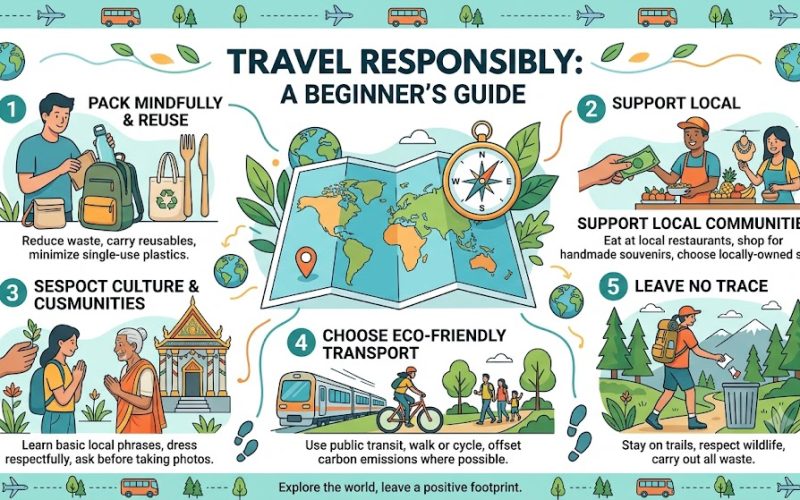
Travel allows us to discover beautiful places, experience different cultures, meet new people, and create unforgettable memories. However, tourism can also affect the environment and local communities. That is why responsible travel is becoming increasingly important. How to Travel Responsibly for Beginners is not about giving up comfort or avoiding travel. It is about making thoughtful choices that reduce negative impacts and create more positive experiences.
Whether you are planning your first international trip or a weekend getaway, small changes can make your journey more sustainable.
Choose Sustainable Transportation
Transportation is one of the biggest contributors to the environmental impact of travel. Whenever possible, choose options that use less energy and produce fewer emissions.
For shorter distances, consider walking, cycling, buses, or trains instead of taking taxis or renting a car. Public transportation can also give you a better opportunity to experience everyday local life.
When flying is necessary, consider choosing direct flights because they generally involve fewer takeoffs and landings. You can also avoid unnecessary short trips by combining several nearby destinations into one journey.
Stay in Eco-Friendly Accommodation
Your choice of accommodation can make a difference. Look for hotels, guesthouses, hostels, or homestays that demonstrate responsible practices.
Eco-friendly accommodations may use renewable energy, reduce water consumption, avoid excessive plastic, recycle waste, or source food locally. Supporting locally owned properties can also help more tourism money remain within the destination.
You do not always need an expensive eco-resort. Even a small locally owned guesthouse can be a responsible choice.
Respect Local Culture and Traditions
One of the most important parts of responsible travel is respecting the people and culture of the destination.
Learn a few basic words or phrases in the local language before arriving. Dress appropriately when visiting religious or traditional places, and always ask before photographing people.
Remember that customs can vary significantly from one destination to another. Something that feels normal at home may be considered inappropriate somewhere else. Being curious, polite, and respectful helps create better relationships with local communities.
Support Local Businesses
Responsible travel is also about helping local economies. Instead of spending your entire trip at international chains, look for locally owned restaurants, markets, shops, guides, and tour operators.
Try regional food and purchase locally made products when possible. Avoid buying souvenirs made from protected wildlife, endangered plants, or culturally significant objects.
When you spend money with local businesses, your trip can contribute directly to the people who live and work in the destination.
Reduce Plastic and Waste
Simple habits can significantly reduce waste while travelling. Carry a reusable water bottle, shopping bag, and travel utensils when practical.
Avoid single-use plastic bottles and unnecessary packaging. Use refill stations where safe drinking water is available. Keep your waste with you until you find an appropriate bin, especially when hiking or visiting remote areas.
Never leave food wrappers, tissues, bottles, or other waste in natural areas. The goal is simple: leave the destination as clean as, or cleaner than, you found it.
Protect Nature and Wildlife
Natural attractions are often a major reason people travel. Protecting these places should therefore be part of every responsible trip.
Stay on marked trails when hiking and follow local rules in national parks and protected areas. Do not pick flowers, disturb plants, collect rocks, or damage natural formations.
When observing wildlife, maintain a safe distance and never feed animals. Be careful when choosing wildlife experiences. Avoid attractions that allow visitors to touch, ride, or handle wild animals when those activities may harm their welfare.
Responsible tourism means enjoying nature without treating it as a souvenir.
Be Careful With Water and Energy
Travelers can reduce their environmental impact by avoiding unnecessary use of water and electricity.
Take shorter showers, turn off lights and air conditioning when leaving your room, and reuse towels when appropriate. You do not need to behave completely differently from how you would at home. Simply avoid wasting resources because you are staying somewhere temporarily.
These small habits become especially valuable in destinations where water or energy resources are limited.
Travel During Less Busy Periods
Overtourism can put pressure on popular destinations, especially during peak seasons. If your schedule allows, consider travelling during shoulder or off-peak seasons.
Visiting less crowded destinations can also provide a more peaceful experience while spreading tourism income beyond the most famous attractions.
Instead of visiting only the places everyone posts online, research smaller towns, local attractions, and lesser-known areas. This can lead to more authentic experiences while reducing pressure on overcrowded locations.
Choose Responsible Tours
If you book guided activities, research the company before paying. Look for operators that employ local guides, respect environmental regulations, and treat communities and wildlife responsibly.
Small-group tours can sometimes have a lower impact than large groups. Ask questions about where your money goes and how the company supports the destination.
A responsible tour should allow you to enjoy an experience without exploiting people, animals, or natural resources.
Be a Responsible Traveler Online
Travel responsibility also applies to what you share online. Think carefully before posting locations that are fragile, sacred, or already suffering from overcrowding.
Avoid encouraging unsafe behavior simply because it looks impressive in photographs. Give credit to local businesses, artists, guides, and creators when appropriate.
Social media can inspire people to travel, so use it to encourage respectful and sustainable tourism.
Final Thoughts
Learning How to Travel Responsibly for Beginners does not require complicated rules. Start with simple habits: use less plastic, respect local cultures, support local businesses, protect nature, save resources, and choose responsible transportation and accommodation.
Responsible travel is ultimately about being a thoughtful guest. Every traveler has the ability to make better choices. When millions of travelers adopt small sustainable habits, those choices can create a meaningful positive impact on destinations around the world.