





Walk into any well-run wellness facility and you will notice a pattern. The spaces that keep members coming back rarely rely on a single amenity. They pair heat with cold, stillness with stimulation, and they do it with equipment that looks and feels dependable. Sauna units and cold plunge tubs have become the anchor of that pairing, and the operators who get it right tend to share one habit: they choose equipment built to a consistent standard rather than assembling mismatched pieces from different sources.
That is where the conversation about Renu Therapy becomes useful. The brand has built its reputation around recovery products designed for repeated, real-world use, and that philosophy translates well into commercial cold plunge tubs. When you look at how a facility actually operates, with dozens of users a day, tight cleaning schedules, and zero tolerance for downtime, the standards behind the equipment matter more than any spec sheet headline.
This article looks at why those standards line up so naturally with commercial cold plunge requirements. We will cover durability and build quality, temperature and water management, safety and user experience, and the business case for pairing cold therapy with sauna units under one consistent standard. If you run a gym, spa, clinic, hotel, or athletic facility, or you are planning to open one, the sections below should help you evaluate your options with a clearer eye.
Why Standards Matter More in a Commercial Setting
A home cold plunge and a commercial cold plunge may look similar in a product photo, but they live very different lives. A residential unit might be used three or four times a week by one household. A commercial tub can see that much use before lunch. Water is heated, cooled, filtered, and drained on a far more demanding cycle, and every component is tested by constant use.
This is why “standards” is the right word to focus on. A standard is a repeatable expectation about how a product is built, how it performs, and how it holds up over time. In a commercial environment, a standard is what protects you from surprises: a pump that fails in month four, a lid that warps, a chiller that cannot keep up during peak hours.
The same logic applies to sauna units. A facility that installs a heavy-duty sauna and a lightweight, residential-grade plunge tub will quickly feel the mismatch. The sauna runs all day without complaint while the plunge tub becomes the maintenance headache. Members notice inconsistency, staff spend time on repairs, and the recovery area starts to feel like two separate products rather than one cohesive experience.
Aligning your equipment to a shared standard solves that problem at the root. When your sauna units and cold plunge tubs are designed with the same expectations for durability, safety, and ease of upkeep, the entire recovery zone works as a system. That is the core reason Renu Therapy’s approach fits commercial cold plunge needs so well.
Section One: Build Quality and Durability Built for Daily Traffic
The first place standards show up is in the physical construction. Commercial cold plunge tubs need to survive constant water exposure, frequent temperature swings, cleaning chemicals, and the wear of hundreds of entries and exits per week. That calls for materials and engineering that go beyond cosmetic appeal.
Materials That Handle Repeated Use
Look for insulated shells, reinforced frames, and surfaces that resist staining, scratching, and mineral buildup. A quality tub should hold its shape and finish after months of heavy use, not just look good on installation day. Insulation matters too, because a well-insulated tub holds temperature more efficiently and reduces the strain on the chiller.
Sauna units follow the same principle. Solid wood construction, properly sealed joints, and quality heating elements are what separate equipment that lasts years from equipment that needs replacement parts within a season. When both your heat and cold products share that build philosophy, your maintenance planning becomes simpler. You are dealing with predictable wear patterns rather than a patchwork of unrelated failure points.
Components You Can Actually Service
Commercial buyers should also think about serviceability. Pumps, chillers, and filtration components will eventually need attention, no matter how good the product is. The question is whether the design lets a technician reach those parts without dismantling half the unit. Equipment built to a professional standard tends to consider this from the start, with accessible panels and standard fittings.
Warranty terms and parts availability are part of this picture as well. A manufacturer that supports commercial customers with clear coverage and reliable replacement parts is telling you something about how the product is meant to be used. When you compare options, ask direct questions about commercial warranty terms, lead times for parts, and what support looks like after installation.
Consistency Across the Whole Recovery Zone
There is also a quieter benefit to buying from one standard: visual and functional consistency. Members judge a facility partly by how cohesive it feels. Matching finishes, similar control interfaces, and a unified look across your sauna units and plunge tubs signal professionalism. It tells guests that the space was planned rather than improvised, and that impression supports premium pricing and long-term membership retention.
Section Two: Temperature Control and Water Management That Meet Professional Demands
If build quality is the foundation, temperature and water management are the daily performance test. This is where commercial cold plunge tubs earn or lose their reputation.
Reliable, Repeatable Cooling
A commercial plunge tub needs to hold a target temperature through back-to-back sessions. Every user displaces water and adds body heat, so the chiller has to recover quickly. An underpowered system leads to a tub that starts the morning at a crisp temperature and drifts warmer by midday, which undercuts the experience and frustrates regular members.
A strong standard means the chiller is sized for the tub and for the traffic you expect, not just for a single user. It also means the controls are simple enough for staff to adjust without a manual. Digital temperature readouts, straightforward set points, and clear status indicators reduce the chance of errors and make daily opening routines faster.
Sauna units share this need for dependable control. Members expect a sauna to reach temperature promptly and hold it steadily. The rhythm of contrast therapy, where a user moves between heat and cold, only works when both sides deliver consistent conditions. Fluctuating temperatures in either one break the flow of the session.
Filtration and Sanitation
Water quality is the most important operational issue for any shared cold plunge. Multiple users mean oils, sweat, and debris enter the water continuously. Effective filtration, a sanitation method such as ozone or UV, and an easy drain-and-refill process are essential to keeping water clean and safe.
Commercial operators should evaluate how a tub handles this in practice. How easy is it to change filters? How long does a full drain take? Can staff perform routine sanitation in a few minutes, or does it demand specialized knowledge? Equipment designed to a professional standard treats these questions as core features rather than afterthoughts.
Local health regulations vary, so it is smart to confirm requirements with your regional authority before installation. Requirements around water treatment, signage, and supervision can differ, and a facility that plans for them in advance avoids costly retrofits.
Energy Efficiency and Running Costs
Operating cost is easy to overlook during purchase and painful to discover afterward. A well-insulated tub with an efficient chiller uses less power over its lifetime. The same goes for sauna units, where heater efficiency and insulation directly affect the monthly electric bill. When you calculate total cost of ownership, efficient equipment often pays back its premium within a few years, particularly in high-traffic locations.
Section Three: Safety and User Experience for Every Member
Standards are not only about machinery. They are about people. A commercial recovery area has to work for first-time visitors, seasoned athletes, and staff who are responsible for everyone’s wellbeing.
Safe Entry, Exit, and Use
Cold water immersion is a powerful experience, and it demands thoughtful design. Non-slip surfaces, stable step access, and comfortable dimensions help users enter and leave the tub with confidence. Clear depth and sizing matter as well, since a tub that suits one body type poorly can discourage use.
Facilities should also establish clear guidelines for session length, temperature ranges, and who should consult a physician before using cold therapy. People with certain cardiovascular conditions, for example, should get medical advice before immersion. Posting straightforward instructions near the tub and training staff to answer basic questions builds trust and reduces risk. This same principle applies to sauna units, where hydration, session limits, and health considerations deserve equal attention.
An Experience Members Want to Repeat
The best recovery areas feel inviting rather than intimidating. Clean water, a comfortable temperature, a tidy surround, and equipment that looks well cared for all contribute to that feeling. When a plunge tub is easy to understand and pleasant to use, first-timers are more likely to return, and regulars are more likely to recommend the facility.
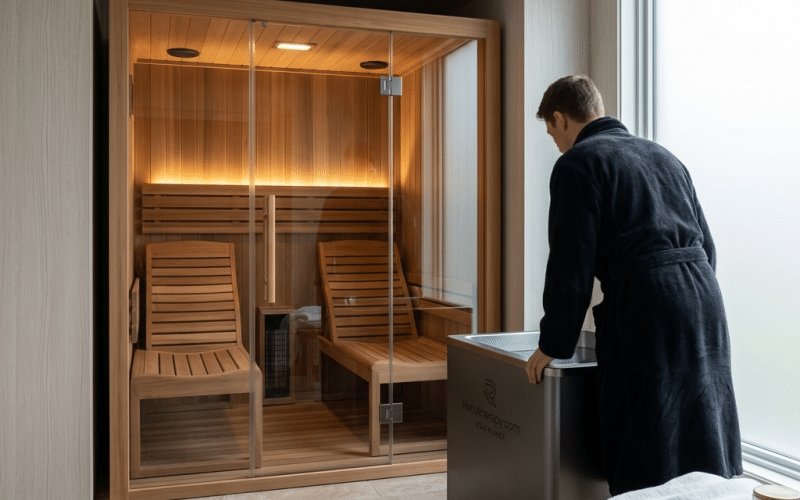
Pairing cold immersion with sauna units enhances this effect. Contrast therapy has become a popular routine because it gives members a structured, satisfying sequence: warm up, cool down, repeat. Facilities that make this flow easy, with the sauna and plunge placed close together and both equipment types performing reliably, create a memorable experience that members build into their weekly habits.
Staff Confidence and Operational Simplicity
Staff are the unsung users of any commercial equipment. If cleaning is complicated or troubleshooting is unclear, the burden falls on your team, and small problems become long shutdowns. Equipment built to a professional standard respects staff time. Clear maintenance schedules, accessible components, and intuitive controls let your team keep the recovery zone running without constant escalation to a technician.
Section Four: The Business Case for Pairing Cold Plunge Tubs With Sauna Units
Once the technical standards are clear, the next question is commercial: does this investment make sense for your business? For most wellness operators, the answer is yes, provided the equipment is chosen carefully.
Recovery Amenities Drive Membership Value
Recovery has moved from a niche interest to a mainstream expectation. Gyms, studios, hotels, and clinics increasingly compete on what happens after the workout. Offering both sauna units and cold plunge tubs gives you a strong, marketable amenity that is easy to explain and easy to photograph. It supports higher membership tiers, add-on packages, and pay-per-session pricing.
Because contrast therapy involves both heat and cold, the combination often encourages longer visits and more frequent use. Members who feel that a facility supports their whole routine, from training to recovery, tend to stay longer. That retention benefit is often worth more than the equipment cost itself.
Predictable Costs and Fewer Disruptions
Downtime is expensive. Every day a plunge tub is out of service is a day of frustrated members and lost revenue. Choosing equipment built to a consistent commercial standard reduces the odds of unexpected failure, and it makes budgeting simpler. You can plan routine maintenance, filter replacement, and water changes as line items rather than emergencies.
Consistency also helps when you scale. If you operate multiple locations or plan to expand, standardizing on one family of products makes training, purchasing, and servicing more efficient. Your team learns one set of procedures, and your replacement parts inventory stays manageable across sites.
Brand Reputation and Member Trust
Finally, consider what your equipment says about your brand. Members equate visible quality with care. A sleek, well-maintained cold plunge and a clean, reliable sauna suggest that you take health and safety seriously. That perception matters in a market where people are increasingly informed and selective about where they spend money on wellness.
A helpful way to evaluate a purchase is to walk through a typical day in your facility. Picture the opening routine, the mid-morning rush, the evening peak, and the closing clean. Ask whether each piece of equipment would make that day smoother or harder. Products aligned with Renu Therapy-style standards, focused on durability, control, and ease of upkeep, tend to perform well in that mental test.
Practical Tips for Choosing the Right Setup
Before committing, run through a short checklist. Confirm the intended commercial rating and warranty coverage. Ask about chiller capacity relative to expected daily users. Review the filtration and sanitation method, and check how long routine cleaning takes. Measure your space carefully, including access routes for delivery, drainage, and electrical requirements. Finally, plan the layout so that sauna units and plunge tubs sit close enough to encourage contrast therapy without creating congestion.
It also helps to request a demonstration or speak with existing commercial customers. Real-world feedback about reliability and support often reveals more than marketing materials can. Because product details, specifications, and pricing change over time, verify current information directly with the manufacturer or an authorized dealer before you buy.
Conclusion: A Shared Standard Creates a Better Recovery Zone
Commercial cold plunge tubs and sauna units succeed for the same reasons: dependable construction, precise temperature control, clean and safe operation, and an experience that members want to repeat. When you choose equipment guided by a consistent standard, those qualities carry across your entire recovery area instead of being strong in one corner and weak in another.
That is why the standards associated with Renu Therapy align so well with what commercial cold plunge operators need. They emphasize durability under heavy use, straightforward maintenance, and an overall design that respects both members and staff. For a facility owner, that translates into fewer disruptions, more predictable costs, and a stronger, more cohesive amenity to market.