






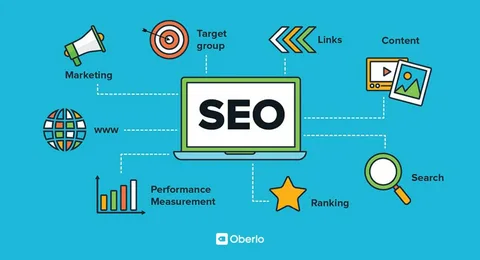
The way people search for information online has undergone a tectonic shift over the last decade. Traditional Search Engine Optimization (SEO) once focused almost exclusively on a single objective: ranking a website on the first page of Google. For years, businesses poured their entire digital budgets into a narrow funnel of keywords, backlink building, and technical site audits, all designed to appease a single algorithm.
However, in 2026, modern search behavior is no longer confined to a search engine box. Today’s consumers explore information across a fragmented and vibrant digital ecosystem. They look for authentic product “vibe-checks” on social media, watch deep-dive tutorials on video platforms, ask conversational AI assistants for immediate answers, and browse hyper-specific marketplaces before they ever consider a purchase. Platforms like worldwidedigest have further evolved this journey, providing curated insights that bypass traditional search clutter.
Because of this radical shift, the “Google-only” strategy is no longer a viable growth engine. To remain visible in this era, companies must adopt a broader, more aggressive approach known as Search Everywhere Optimization (SEOx). This strategy ensures that your brand, content, and expertise appear wherever a user happens to be looking—whether that is a search engine, a social feed, a voice assistant, or a video reel.
The Fragmented Evolution of Search Behavior
The traditional search journey used to be a straight line: a user opened a browser, typed a query, clicked a blue link, and gathered information. Today, that journey is a web of interconnected touchpoints. A consumer researching a new laptop might start with a broad Google search, pivot to YouTube for a performance review, check TikTok for “aesthetic” desk setups, and finally land on an online marketplace to compare real-user ratings.
Modern users now distribute their “search intent” across several distinct environments:
-
Vertical Search Engines: Platforms like Amazon for products or Yelp for services.
-
Social Search: Using TikTok or Instagram as a visual discovery engine for trends and recommendations.
-
Generative AI: Asking tools like Gemini or ChatGPT for synthesized summaries rather than a list of links.
-
Video Platforms: Using YouTube as a primary learning and troubleshooting hub.
-
Voice Search: Interacting with smart speakers and mobile assistants for quick, hands-free facts.
This multi-platform behavior creates a complex customer lifecycle. If your brand is only visible on Google but invisible on TikTok or AI citation lists, you are effectively missing more than half of your potential audience’s discovery window.

What Exactly is Search Everywhere Optimization (SEOx)?
Search Everywhere Optimization (SEOx) is the strategic evolution of digital marketing. While traditional SEO focuses on “ranking,” SEOx focuses on “omnipresence.” The goal is to make your brand the definitive answer across the entire digital landscape.
Unlike the old model, SEOx treats every platform as a search engine. On LinkedIn, it means optimizing your profile and posts for professional queries. On Pinterest, it means using high-intent visual keywords. On AI platforms, it means structuring your data so that language models identify your brand as a “Trusted Entity.” By implementing SEOx, businesses ensure they aren’t just a result on a page—they are a consistent presence in the user’s daily digital life.
Why “Traditional SEO” is No Longer the Only King
Traditional SEO is still a cornerstone, but it has been weakened by two major 2026 trends: AI-generated answers and Zero-Click Searches. Search engines now provide instant, AI-synthesized responses at the very top of the page. These summaries often give the user exactly what they need without requiring a single click to an external website. Furthermore, the rise of social media as a primary “discovery” tool for younger demographics means that “ranking #1” on Google doesn’t help if your target audience is spending 90% of their time on visual apps.
Each platform uses its own proprietary algorithm. What works for Google’s crawlers—long-form, text-heavy blog posts—often fails on social media, where engagement signals like “shares” and “watch time” dictate visibility. By diversifying into SEOx, businesses protect themselves from the volatility of a single algorithm update.
Where Modern Consumers Are Actually Hiding
To master SEOx, you must meet the audience where they live. Here is how the search landscape is divided today:
1. The Social Discovery Hubs
Social platforms like TikTok, Instagram, and LinkedIn have become the new “Yellow Pages.” Users search for everything from “best skincare for sensitive skin” to “B2B marketing strategies.” The content that wins here isn’t just informative; it is social proof. When an influencer or a community member recommends a product, it carries more weight than a paid advertisement.
2. The AI & Conversational Layer
AI assistants are the fastest-growing search channel. Users no longer want to browse; they want to know. Instead of looking for “10 best hotels in New York,” they ask, “Which NY hotel has the best view of Central Park and a rooftop bar?” Optimizing for this requires highly structured, authoritative data that AI systems can easily cite as a “source of truth.”
3. The Video Learning Centers
YouTube remains the world’s second-largest search engine. It is the go-to for “How-to” queries and product demonstrations. Video content captures a level of trust and engagement that text simply cannot match, making it essential for any brand trying to build authority.
The Four Pillars of a Successful SEOx Strategy
To implement Search Everywhere Optimization effectively, businesses must adhere to four foundational principles:
-
Consistency: Your brand voice, visuals, and core message must be identical across all channels. If a user sees one “vibe” on your website and another on your Instagram, trust is broken.
-
Authority (E-E-A-T): Google’s standards of Experience, Expertise, Authoritativeness, and Trustworthiness now apply everywhere. You must prove you are an expert through high-quality content and social validation.
-
Contextual Relevance: A 2,000-word whitepaper belongs on your site or LinkedIn, while a 30-second “Top 3 Tips” video belongs on a Reel. Tailor the format to the platform’s “culture.”
-
Adaptive Agility: In the world of SEOx, data is real-time. You must constantly monitor which platforms are driving actual conversions and shift your resources accordingly.
The Long-Term Benefits of an “Everywhere” Approach
Adopting an SEOx strategy offers more than just more traffic; it offers resilience. 1. Increased Trust: When a user sees your brand on Google, then sees a helpful video on YouTube, and later reads a positive mention on a forum, your credibility triples. 2. Algorithm Protection: If Google changes its layout, your leads from TikTok and Amazon keep your business afloat. 3. Higher Conversion Rates: By appearing at multiple touchpoints in the buyer’s journey, you stay “top of mind” when they are finally ready to click “buy.”
Conclusion: Dominating the 2026 Search Landscape
The era of the “single search engine” is over. We live in a world where search is a continuous, multi-platform experience. Businesses that continue to cling solely to traditional SEO tactics will find themselves shouting into an empty room while their competitors capture the audience on AI, social media, and video hubs.
By embracing Search Everywhere Optimization, you are essentially “future-proofing” your brand. You aren’t just chasing a rank; you are building an omnipresent digital identity that provides value wherever your customer chooses to look. In 2026, the most successful brands aren’t just the ones that are found—they are the ones that are impossible to miss.