





Introduction
Houston is one of the most important trade cities in North America, and possibly the world. Port of Houston is the busiest foreign trade port in the US, two class 1 railroads service the area, and Houston is connected to the rest of the country via a robust highway system. With over 7 million people in the metro area and the trade that relates to it, logistics in Houston can be very lucrative, or very harsh if you are not strategic.
3PLs and shippers, manufacturers and retailers all see Houston as a major opportunity, but also a big puzzle. Port of Houston is the 10th largest container port in the world, but also suffers from congestion and ETA uncertainty. Highway 59 (also known as the Energy Corridor) in Houston suffers from congestion and has raised levels of service (RLS) for commercial trucks. The availability of warehouse space in desirable submarkets is very tight. The freight and logistics companies that thrive in Houston handle much more than freight. They develop strategies to leverage the quirks of the logistics environment and strengthen the weaknesses of the system.
This paper will address the key logistics challenges for developing a durable and efficient supply chain in Houston. We will cover Houston’s multimodal logistics infrastructure, the edge of logistics (warehousing and last mile), technology and data, and risk. This information is geared for logistics/supply chain professionals and management of freight companies, both national and regional.
What Differentates Houston Logistics
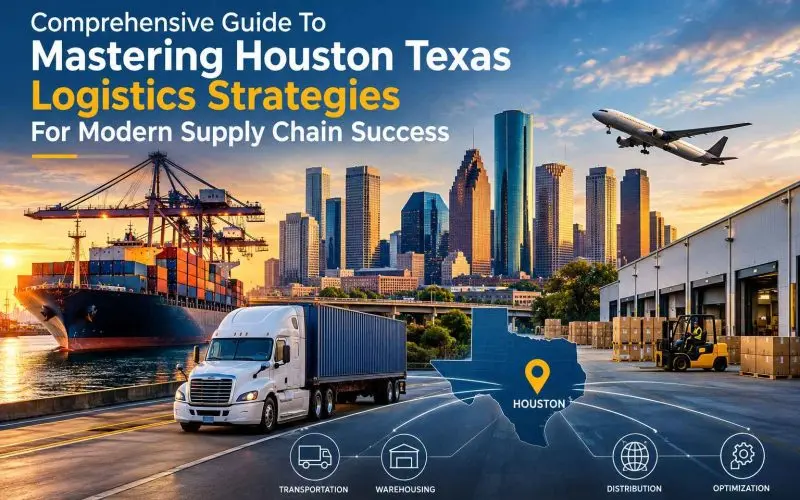
When devising a Houston Texas logistics strategy, it is critical to understand Houston’s multiple transportation options. Houston benefits from a confluence of modes of transport, including ocean, rail, road and air. Thoughtful operators integrate these modes to create a seamless logistics system.
Port Houston and the Gulf Gateway. Port Houston’s public terminals include Barbours Cut and Bayport, and serve Asia, Europe, and Latin America container traffic. The Houston Ship Channel supports one of the largest petrochemical complexes in the world. Bulk liquids and project/break-bulk cargo also use the same corridor. Knowing terminal appointment systems and gate hours, and vessel schedules, helps shippers avoid detention and increase efficiency.
Rail Head Options. Both Union Pacific and BNSF serve Houston and Intermodal ramps in the area give inland shippers options to move containers to the West Coast, Chicago and other points in an efficient and cost-effective manner. A balanced approach using rail to ship bulk, non-time sensitive cargo, and truck to ship time-sensitive, lower volume cargo, helps optimize the logistics system.
Highways and trucking. The Interstates 10, 45, and 69 (previously US 59), plus the Grand Parkway and Beltway 8 provide regional access for carriers, and create congestion that challenges on-time delivery. Real time traffic data and skillful route planning and scheduling help improve on time deliveries. Many regional carriers plan to pick up shipments early in the day to avoid the afternoon congestion.
Air cargo. George Bush Intercontinental Airport provides belly-cargo capacity and freighter service for time-critical, high-value and perishable shipments. For onshore oil and gas companies, air freight can reduce down time from weeks to hours by providing spare parts.
Basically, do not default to the method you used last year. Analyze lane-level data each quarter, compare total landed cost, and be flexible. Texas gives you options, only if you utilize them.
Warehousing, Distribution, and Last-Mile Excellence
Houston’s industrial real estate market has exploded over the last ten years, and the demand for well-located space has remained. Choosing the right facility and effectively managing it is one of the largest opportunities you have to reduce total supply chain cost.
Identify the right submarket. Areas of the metro area do serve varying needs. If you need access to a national or regional network via the interstate system, check out Northwest Houston and the Cypress corridor. This area has good access to Austin and Dallas via Highway 290. The Southeast submarket is good for port-related and petrochemical-related businesses. The Northeast submarket is good for the energy-related businesses that require fast access to Louisiana and East Texas. Look at drive times to your key customers and the ports. Often times, the difference in rent between submarkets is not that significant and a slightly more expensive building located closer to key customers can positively impact your business.
Look at the use case and expect the unexpected. Most warehouses are designed to expect a certain level of throughput. Seasonal changes and surges can really stress a fixed warehouse. Many warehouses in the area utilize a core facility with a flexible or shared warehouse to help alleviate some fixed costs.
Look for opportunities to improve. Many opportunities exist to increase productivity and profitability inside your building. Fast-moving SKUs should be located nearest the shipping dock. Cross-dock shipping should be utilized if possible. Improve your order accuracy using barcode or RFID scanning. Loss-leadering small improvements can greatly reduce your returns and customer service costs.
Rethink last-mile delivery. Houston’s large size and sprawling layout drives up the cost of both residential and business deliveries. Use of zone-based routing, effective window management, micro-fulfillment centers, and local courier partnerships can help with last-mile delivery. For B2B deliveries, being on time and notifying the customer of the delivery window are as important as delivering the shipment as quickly as possible. Developing a reputation for an on-time delivery window is more important to customer loyalty than always arriving before the delivery window.
Take the cold chain and hazmat into account. There are a number of Houston-area businesses that require temperature-controlled transport and storage, as well as businesses in the hazmat transport and storage sector. There is a high cost of doing business in these sectors, including potential loss of product and damage to business reputation. The penalty for using uncertified transport and storage services is often greater than the cost of using a certified provider.
Automate and Integrate
Moving freight across the multiple business services in the Houston area requires multiple business systems. A Transportation Management System (TMS) can bring together different business systems and automate processes like rating and tendering a load. Look for a TMS that is easily integrated with your company’s other business systems.
Track shipments from the port gate to the final destination. Utilize both GPS and ELD data to track shipments. Real-time data along the route predicts delays and arrived estimates based on weather conditions, traffic, and terminal conditions. Notify your customers of expected delays so they are not surprised by a sudden shipment update.
Integrate the tools provided by terminals and drayage companies to help you schedule the movement of your container, including last free day notifications. A drayage provider or shipper missing a last free day can quickly add up unnecessary and unexpected costs.
Use data to manage carriers. Track and measure performance along your lanes to get a baseline to negotiate rates and contract terms. Long-term, this will shift your carrier base to partners that consistently perform and meet service level agreements.
Track emissions and other data points related to sustainability for your clients and find opportunities for increased efficiency and savings along the way.
Higher levels of the supply chain need to adopt an integrated, collaborative approach to increase efficiency and reduce costs.
The idea is not to amass more dashboards. It is to gain insights to make better and more informed decisions at a swifter pace. Work on the most expensive problems first. These are often the ones negatively impacting your bottom line the most (e.g. detention fees, late deliveries, cargo claims, etc.). Address these pain points by thoughtfully building out your data practices.
Managing Risk and Building Resilience
Resilience is where the Houston logistics strategy is truly tested. The region has unique risks and incorporating them into your business strategy is part of doing business here.
Weather and Hurricanes. The hurricane season is from June to November and Gulf Coast storms can close the port, flood the roads and shut your warehouse for days. You must maintain a written continuity plan to address the positioning of your inventory and employ alternate customer and employee communications. Consider housing safety stock in less flood prone areas and review your insurance coverage before the hurricane season.
Labor and Port Congestion. Terminal congestion can be caused by vessel bunching and labor issues. Diversify your gateway strategy by qualifying other ports like Galveston, New Orleans and Savannah.
Supplier and Carrier Concentration. Use your options to ensure you are not overly reliant on a single supplier, carrier or lane. Maintain backup options but this does not mean you have to equally divide your shipping volume among all your options. Know who you would call if your main option failed and ensure you have a relationship with them.
Regulatory and compliance changes. Customs, trucking and hazmat regulations, permits, and certifications are changing all the time. Continuing education and training help your employees manage the ever-changing regulatory climate. The missteps and omissions of regulation can carry a great deal of civil and criminal penalties for chemical and energy shippers, therefore, the discipline to document properly is essential.
Scenario planning. Conduct tabletop exercises at least once a year. A great place to start is to consider the impact of a week-long closure of the Houston Ship Channel; significant disruptions to fuel or energy supply; a spike in fuel prices; extreme weather; and other events outside of your control. Consider what would happen to your organization if a key supplier or customer goes out of business? What if a major highway is closed? Because addressing these situations might be uncomfortable or politically unpopular, employees often hide or sweep problems under the rug. Considering and addressing scenarios before they happen will build your organization’s resiliency.
You should always prepare for disruptions in your business. It might require holding extra inventory, backup service agreements, or other things that cost money. The cost to prepare for disruptions is nothing compared to the cost of losing customers and getting a bad reputation for not keeping your commitments when things get tough.
Conclusion and Call to Action
Houston’s logistics sector is strong, but in Houston, as elsewhere, success requires the right strategy in addition to right location. Strong multimodal thinking combines visibility, technology, risk planning and disciplined logistics to provide a competitive edge. Improved visibility aids more informed decision-making about carriers. Risk planning protects the logistics infrastructure a company builds.
If you are looking to improve your logistics in Houston, you should start small and advance incrementally. This month, for example, audit your top five lanes. Review your hurricane plan. Identify the technology gap that costs the company money or time. Focus on one gap at a time. Build and strengthen your logistics chain using real data to inform your decisions.