




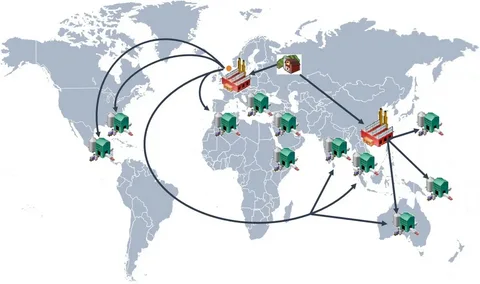
Logistics has become a core pillar of modern business success. Today, companies depend on efficient supply chains to move raw materials, manage inventory, and deliver products on time. In a competitive global economy, even small delays or inefficiencies can affect customer satisfaction and profitability.
Saudi Arabia is rapidly emerging as a global logistics hub, driven by large-scale development projects under Vision 2030. The country is investing heavily in ports, airports, railways, highways, and logistics zones to strengthen its position as a bridge between Asia, Europe, and Africa. These advancements are opening new doors for businesses across manufacturing, retail, healthcare, construction, and e-commerce.
In this evolving landscape, companies need reliable logistics partners who can provide smooth, cost-effective, and technology-driven supply chain solutions. Organizations like Palm Horizon KSA play a vital role in helping businesses manage transportation, warehousing, customs clearance, and distribution with greater efficiency.
Understanding Modern Logistics
Modern logistics is far more than just moving goods from one place to another. It is a coordinated system that integrates planning, execution, and continuous improvement across the entire supply chain. It includes several key functions such as freight forwarding, transportation management, warehousing, inventory control, customs handling, and last-mile delivery. Each step must work seamlessly to ensure smooth operations.
For example, poor inventory planning can lead to shortages, while delays in customs clearance can disrupt the entire supply chain. Similarly, inefficient transport routes can increase costs and delivery times. This is why logistics should be seen not as an expense, but as a strategic investment that improves overall business performance.
Saudi Arabia’s Logistics Transformation
Saudi Arabia is undergoing a major transformation in its logistics sector. Vision 2030 aims to position the Kingdom as a global logistics powerhouse by improving infrastructure and simplifying trade processes.
Significant developments include the expansion of international seaports, modernization of airports, new railway networks, smart customs systems, and the growth of advanced logistics parks. Industrial zones and free trade areas are also being developed to attract foreign investment and strengthen global connectivity.
These improvements are reducing transit times, improving efficiency, and enabling faster cross-border trade. As a result, businesses operating in the region can scale more easily and compete on a global level. Partnering with experienced logistics providers helps companies fully leverage these national developments.
Why Logistics Matters for Businesses
Efficient logistics directly impacts customer satisfaction, operational costs, and long-term growth. In today’s fast-paced market, customers expect fast delivery, accurate orders, and real-time tracking. Businesses that fail to meet these expectations often lose their competitive edge.
One major advantage of strong logistics systems is faster delivery times. Optimized transport planning ensures goods reach customers quickly and reliably. Another benefit is cost reduction, as efficient routing and warehouse management reduce unnecessary expenses.
Logistics also improves customer trust. When products consistently arrive on time and in good condition, brand reputation strengthens. Additionally, effective inventory management helps businesses maintain the right stock levels, reducing waste and improving cash flow. Flexibility is another key benefit, allowing companies to respond quickly to disruptions such as delays, demand changes, or regulatory updates.
Core Supply Chain Components
A successful supply chain consists of several interconnected processes that must operate smoothly together. Procurement is the starting point, ensuring that raw materials or finished goods are sourced efficiently from reliable suppliers.
Transportation is another critical component, connecting suppliers, warehouses, and customers. Businesses can choose between air, sea, road, and rail transport depending on cost, speed, and shipment type.
Warehousing plays a central role in modern logistics. It is no longer just about storage; it includes inventory management, order processing, packaging, labeling, and distribution planning. Efficient warehousing ensures faster order fulfillment and better customer service.
Distribution ensures that goods reach their final destination—whether wholesalers, retailers, or end customers—on time and in perfect condition. When all these components work together, the supply chain becomes more efficient and cost-effective.
Common Challenges
Despite advancements, businesses still face several challenges. Transportation delays caused by traffic, weather conditions, or port congestion can disrupt delivery schedules. Rising fuel costs and labor expenses also increase overall logistics spending.
International trade adds another layer of complexity, as customs regulations and documentation requirements must be handled carefully. Even minor errors can lead to shipment delays.
Inventory management is another common issue. Businesses often struggle with either excess stock or shortages, both of which negatively affect profitability. Additionally, a lack of real-time visibility makes it difficult for companies to track shipments and respond to disruptions quickly.
To overcome these challenges, businesses need experienced partners who use modern technology and proactive planning strategies.

Palm Horizon KSA
In a complex and fast-moving supply chain environment, choosing the right partner is essential. Palm Horizon KSA provides end-to-end services designed to simplify operations and improve efficiency across all stages of the supply chain.
The company offers services including freight forwarding, transportation management, customs clearance, warehousing, and distribution. Instead of offering generic solutions, it focuses on customized logistics strategies based on each client’s industry, shipment volume, and operational needs.
This tailored approach helps businesses reduce costs, improve delivery performance, and maintain better control over their supply chains. By combining expertise with modern technology, Palm Horizon KSA supports both domestic and international trade operations.
As Saudi Arabia continues to expand its infrastructure, businesses that partner with experienced providers are better positioned to grow, scale, and compete globally.
Conclusion
Logistics is a fundamental driver of business success in today’s global economy. From procurement and transportation to warehousing and distribution, every stage of the supply chain plays a crucial role in operational efficiency.
Saudi Arabia’s Vision 2030 is accelerating the country’s transformation into a global logistics hub, creating new opportunities for businesses across industries. However, to fully benefit from this growth, companies must rely on skilled partners.
With its comprehensive and customized solutions, Palm Horizon KSA helps businesses streamline operations, reduce costs, and improve customer satisfaction. In an increasingly competitive market, strong logistics is competitive market, strong logistics is not just an advantage—it is a necessity for sustainable growth.