




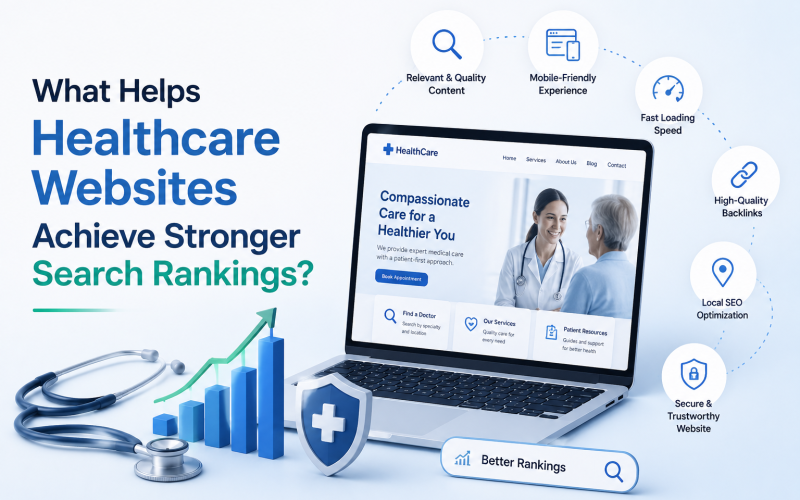
In the modern digital ecosystem, healthcare journeys often start online. Patients now don’t depend on referrals or reputation. They search online, compare options, and check healthcare providers before deciding. Search visibility is now essential for growth and trust in healthcare websites.
Strong rankings in healthcare are more complex than in many other fields. Healthcare platforms must follow stricter rules. They need to ensure quality, trust, and compliance. This is different from regular business websites. Search engines, especially Google, focus on user safety. This means only the most trustworthy and reliable content gets top visibility.
To grasp what influences rankings, go beyond basic SEO tricks. Focus on mixing content quality, technical performance, trust signals, and a long-term plan.
Why Healthcare SEO Is Fundamentally Different
Healthcare content falls into a category often referred to as “Your Money or Your Life” (YMYL). This classification covers content that can impact a person’s health, safety, or finances.
What This Means for Rankings:
- Higher standards for accuracy and credibility
- Greater emphasis on expertise and trust
- Stronger penalties for misleading or low-quality content
Traditional SEO shortcuts, like keyword stuffing or thin content, don’t work. They can even be harmful. Healthcare websites must build authority the right way.
Content Quality: The Core Ranking Driver
Content drives search performance, but in healthcare, quality means more.
What High-Quality Healthcare Content Includes:
- Accuracy: Information must be medically sound and evidence-based
- Depth: Topics should be thoroughly explained, not superficially covered
- Clarity: Complex medical concepts must be easy to understand
- Relevance: Content must directly answer user queries
Content That Performs Well Typically:
- Addresses specific patient concerns
- Uses structured formatting for readability
- Provides actionable insights without being overwhelming
Example:
A page on “diabetes symptoms” should explain early signs, risk factors, and when to see a doctor. It should go beyond listing generic info.
Search Intent: Matching What Users Actually Need
One of the most overlooked factors in healthcare SEO is search intent. Ranking well depends on the degree to which your content aligns with user needs.
Types of Intent in Healthcare:
- Informational: Learning about symptoms, treatments, or conditions
- Navigational: Searching for a specific doctor, hospital, or clinic
- Transactional: Booking appointments or accessing services
Why It Matters:
When your content doesn’t match what users want, they leave quickly. Search engines see this as low relevance.
Optimization Tip:
Each page should focus on one clear goal instead of trying to do many things at once.

E-E-A-T: The Trust Framework That Drives Rankings
Experience, Expertise, Authority, and Trust (E-E-A-T) are critical in determining healthcare rankings.
1. Experience
Content should reflect real-world understanding of healthcare topics.
2. Expertise
Writers or reviewers should have medical qualifications or relevant knowledge.
3. Authority
You should recognize your website as a credible source in its niche.
4. Trust
Users must feel confident in your information and platform.
How to Strengthen E-E-A-T:
- Add detailed author bios with credentials
- Include medical reviewers for content validation
- Display certifications and affiliations
- Use secure browsing (HTTPS)
- Maintain transparent policies and disclaimers
Trust is not built overnight—it compounds over time through consistency and accuracy.
On-Page Optimization: Structuring Content for Visibility
Key On-Page Elements:
- Title Tags: Clear, relevant, and intent-focused
- Meta Descriptions: Concise summaries that encourage clicks
- Headings (H1–H3): Logical structure for readability
- Keyword Placement: Natural integration, not forced repetition
More Enhancements:
- Internal linking to related topics
- Optimized images with descriptive alt text
- Short, readable paragraphs
These elements help search engines understand your content while improving user experience.
Technical SEO: The Foundation of Performance
Technical health is a non-negotiable factor for strong rankings.
Critical Technical Factors:
1. Page Speed
Slow-loading pages increase bounce rates and reduce rankings.
2. Mobile Optimization
Most healthcare searches happen on mobile devices, making responsiveness essential.
3. Secure Website (HTTPS)
Security builds trust and is a confirmed ranking signal.
4. Crawlability and Indexing
Search engines must be able to access and understand your pages efficiently.
Technical Best Practices:
- Optimize images and scripts
- Use clean, structured URLs
- Implement XML sitemaps
- Fix broken links and errors
Local SEO: Essential for Clinics and Healthcare Providers
For healthcare providers, local visibility is often more important than global reach.
Key Local Ranking Factors:
- Optimized business listings
- Consistent Name, Address, Phone (NAP) details
- Location-specific keywords
- Positive patient reviews
Why Reviews Matter:
Reviews act as both a ranking signal and a trust factor for potential patients.
Local Optimization Tips:
- Keep business information consistent across platforms
- Encourage satisfied patients to leave reviews
- Respond professionally to feedback
Backlinks: Building Authority Through Credibility
Backlinks remain one of the strongest indicators of authority.
High-Value Backlink Sources:
- Medical institutions
- Government health websites
- Academic publications
- Trusted healthcare blogs
What to Avoid:
- Low-quality link schemes
- Irrelevant backlinks
- Paid spam links
Quality always outweighs quantity in healthcare SEO.
User Experience (UX): A Hidden Ranking Factor
Search engines analyze how users interact with your website.
Important UX Signals:
- Time spent on the page
- Bounce rate
- Navigation ease
Improving UX:
- Use clean layouts
- Ensure fast loading times
- Make content easy to scan
- Avoid intrusive pop-ups
A better user experience leads to higher engagement—and stronger rankings.
Content Freshness: Keeping Information Relevant
Healthcare information evolves without interruption. Outdated content can harm both rankings and credibility.
What Should Be Updated:
- Medical guidelines
- Statistics and data
- Treatment recommendations
Strategy:
- Regular content audits
- Updating old pages with new insights
- Adding recent research or developments
Fresh content signals relevance to search engines.
Structured Data: Enhancing Search Visibility
Benefits:
- Rich search results (FAQs, reviews, etc.)
- Higher click-through rates
- Improved content understanding
Common Healthcare Schema Types:
- Medical conditions
- FAQs
- Reviews and ratings
Voice Search and Changing User Behavior
Search behavior is evolving with voice assistants and mobile usage.
Optimization Strategies:
- Use conversational language
- Answer direct questions clearly
- Focus on long-tail queries
Voice searches often mirror natural speech patterns, making clarity even more important.
Compliance and Ethical Considerations
Healthcare websites must meet strict legal and ethical standards.
Key Areas:
- Patient data protection
- Transparent disclaimers
- Ethical content practices
Failure to comply can damage both rankings and reputation.
Measuring and Improving SEO Performance
Tracking performance ensures continuous improvement.
Key Metrics to Check:
- Organic traffic growth
- Keyword rankings
- Engagement metrics
- Conversion rates
Continuous Improvement Process:
- Analyze performance data
- Identify weak areas
- Optimize content and technical aspects
SEO is not a one-time effort—it requires ongoing refinement.
Common Mistakes That Limit Healthcare Rankings
Even well-designed websites can struggle due to avoidable errors.
Frequent Issues:
- Thin or generic content
- Lack of credibility signals
- Poor mobile experience
- Over-optimization of keywords
Avoiding these mistakes is as important as implementing best practices.
Building a Long-Term SEO Strategy
Sustainable success in healthcare SEO requires patience and consistency.
Core Principles:
- Focus on user value over search engines
- Maintain high content standards
- Build authority gradually
- Invest in technical performance
Short-term tactics rarely work in this space—long-term strategies do.
The Role of Content Depth and Topic Authority
Healthcare websites that do well focus on more than a single article. They create topic authority.
What This Looks Like:
- Many articles covering related topics
- Interlinked content clusters
- Comprehensive coverage of medical conditions
Example:
Instead of one article on “heart health,” create a cluster:
- Symptoms
- Causes
- Treatments
- Prevention
This signals expertise and improves rankings.
Emerging Trends in Healthcare SEO
Technology and user expectations shape the future of healthcare SEO.
Key Trends:
- AI-driven personalization
- Predictive search behavior
- Advanced data analytics
- Integrated digital health ecosystems
Websites that adapt to these trends will maintain a competitive edge.
Final Thoughts
To boost search rankings for healthcare websites, use a well-rounded approach. Focus on great content, technical accuracy, and building trust.
Unlike other industries, success here is not about visibility; it’s about responsibility. The information presented can influence real-life health decisions, making accuracy and credibility non-negotiable.
Websites that are reliable and easy to use usually do well. Good organization helps them succeed over time. They also need a solid technical foundation.
Healthcare SEO focuses more on earning trust than on chasing algorithms. Designers build search engines in a field where trust matters most. They aim to reward that trust.