






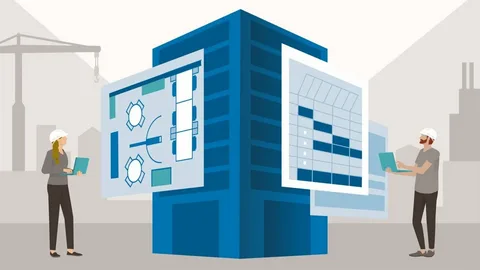
Architectural firms design with data now, moving far past the traditional era of flat sheets. Modern building information models hold thousands of individual objects that schedule, tag, and communicate directly with other engineering disciplines. The intelligence embedded inside these objects shapes how the entire project behaves across its lifecycle. A door knows its specific swing angle. A window tracks its own sill height. That data flows directly into the construction documents a client signs off on. All can be done by Revit family creation services.
Building these smart digital components takes substantial time, and creating high-quality ones requires advanced technical skill. A small in-house design team often runs out of both resources during a tight project deadline. The same few internal Revit experts end up handling content creation late at night, squeezing it in between client meetings and coordination calls.
To break this bottleneck, forward-thinking firms look outward. They hand complex content development to specialized professionals, keeping their core architects free to focus entirely on design. This strategic choice continues to gain rapid ground across the architectural profession, delivering immediate structural benefits to firms that commit to the transition.
The Role of Specialized Family Creation Services
Revit family creation services build the reusable, parametric objects that fill a modern building model. These include the standard doors, windows, custom casework, and mechanical fixtures that an architect places daily. Skilled external providers handle the deep parameter logic, geometric visibility settings, and rigorous multi-version testing that keeps each object mathematically honest.
Architectural Revit Family Creation Services matter because a building model only behaves as well as the content placed inside it. Weak, poorly coded objects break automatic schedules and muddy cross-discipline coordination. Conversely, strong parametric objects hold a complex project together and ensure that all downstream data remains completely trustworthy.
When a firm invests in clean family creation, it secures a handful of critical operational advantages:
-
Clean, automated schedules: Highly accurate, standardized parameters feed material quantities that estimators and contractors can instantly trust.
-
Consistent sheet presentation: A single, well-built family simultaneously drives the plan symbol, the detail tag, and the section view without visual glitching.
-
Lighter, agile models: Lean geometric modeling keeps project file sizes small, ensuring that models remain quick to open, synchronize, and edit.
-
Real-world coordination: Correctly mapped engineering connectors flag structural or systems conflicts that actually matter, eliminating false positives.
-
Faster project handover: Objects carry rich asset lifecycle data that the building owner can readily utilize for facility management long after move-in.
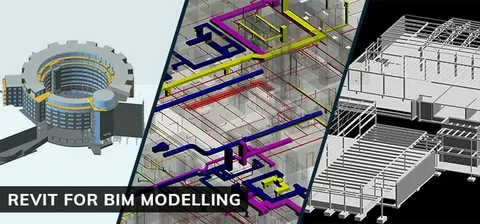
The Reality of Internal Content Challenges
Family creation looks deceptive from a distance, yet it regularly trips up internal design teams in practice. Most workflow trouble starts when teams build content under intense deadline pressure with very little structural governance behind it. The corporate library grows in fits and starts, one rushed object at a time. A few destructive patterns show up repeatedly, and they cost firms far more than leadership realizes.
First, intense time pressure inevitably pushes family work onto the same one or two internal power users. Because they must juggle this creation on top of live project deadlines, the company library grows slowly and unevenly. Quality dips significantly on rushed production days, yet those flawed objects still find their way into real, client-facing projects.
Second, designers frequently over-model objects by packing in excessive geometric detail that nobody actually needs for construction documentation. Complex screws, intricate handles, and high-polygon radiuses cause project files to swell. File regeneration drags down computing speeds, and the active model starts to feel sluggish for every single user on the team.
Furthermore, messy parameter structures quietly wreck schedules and visibility filters. Mixed naming conventions and missing shared parameters cause tags to break unexpectedly. When this happens, a senior designer must spend a frustrating afternoon hunting for the underlying data conflict instead of billing hours to design.
Finally, weak library governance leads to duplicate content. The exact same object gets rebuilt three different times across three separate project teams. Nobody knows which version serves as the source of truth, causing the firm’s central library to bloat with near-copies that drift apart over time.
Why Modern Firms Outsource Content Development
Outsourcing turns a recurring operational headache into a highly managed, predictable capacity. A specialist partner brings rigorous structure, speed, and a steady hand that an internal team can rarely spare during a major crunch phase. The content work happens in parallel with the core design phase, preventing deadlines from colliding. Firms reach for expert BIM object creation services for several clear reasons.
It successfully frees up the design team. Architects stop disappearing into the frustrating constraints of the Family Editor. They can spend their entire workday on spatial design and client management, knowing their customized content will show up in the project folder ready to place.
It also guarantees consistent quality. A dedicated external provider runs the exact same naming rules, parameter sets, and strict quality assurance checks on every single object. As a result, the entire office library reads the same way across all active projects.
This approach allows firms to scale their production on demand. A practice can quickly spin up a massive, custom content package for a complex healthcare facility or an airport hub without embarking on a risky, permanent hiring spree. The content capacity flexes seamlessly with the active workload, scaling up during a big pursuit and dialing down once the project ships.
Furthermore, it injects deeper expertise into the firm’s workflow. Tricky algebraic formulas, complex hosting behaviors, and performance tuning require daily repetition to master. Specialized providers bring that depth because content creation is their primary operational focus.
Finally, it introduces highly predictable costs. A scoped creation package provides a clear, upfront price for the deliverables. Firms can plan their content spend per project as a direct reimbursable expense, rather than carrying a heavy, full-time technical salary through quiet business months.
The Next Generation of Building Content
The nature of BIM content keeps shifting toward deeply connected data and intelligent workflow automation. Tomorrow, the same embedded family data will feed advanced energy simulations, carbon tracking tools, and real-time operations dashboards. Building models will carry significantly heavier data loads, meaning the objects inside them must be engineered to handle that analytical weight. That future rewards firms that treat their content libraries as real digital infrastructure rather than temporary, throwaway project files.
Demand for highly organized outside help will continue to climb as data standards tighten across the global construction field. Specialized family creation will grow increasingly sector-specific, splitting into hyper-focused branches for advanced labs, heavy industrial plants, and massive data centers. Each distinct market brings its own rigorous compliance rules, specific components, and modeling quirks. Architectural firms that lock in a dependable content partner early secure a stable, high-performing library that serves them for years, giving them a massive head start when the next major industry manRevit Family Creation Services: Improve BIM Workflowdate lands.