



The ideal shoes can help you feel invincible. The wrong pair? Blisters, sore feet, and a $120 blunder that you sat in and left in your closet. Years of guessing game in shoes sizes have been played by Americans; picking a 9 off the shelf because that is always my size or ordering online because of a long-lost recollection. However, here is the shocking reality: approximately 75% of individuals have the incorrect size of shoes, often not even aware of it themselves.
That guessing game will come to an end in 2026. With 3D scanning using smart phones, and the rediscovery of the simple paper-and-pencil legacy, Americans are reconsidering their feet-measuring techniques. The first step to the perfect fit is knowing your real numbers- and this guide tells you just how to do so.
Why Shoe Sizing Is Broken (And Has Been for Years)
It is not you that is the problem, it is the system. Shoes sizes are not standardized, like the purchase of a gallon of milk or a 2×4 piece of lumber. The size 8 of Nike in women could be a 7.5 in Adidas or 8.5 in New Balance. International sizing presents an additional bewilderment: US, UK, European, Australian, Chinese and Japanese systems vary in scale. A US men’s 9 is a UK 8, a European 43, and a Japanese 27. Mix half-sizes, narrow and wide, and the fact that your right and left feet are seldom the same, and it is a miracle that anybody can get one that fits.
The price of this mix up is not imaginary. Shoes that do not fit result in blisters, bunions, plantar fasciitis and long term foot pain. However, the majority of Americans still purchase shoes without measurement, just because it is a habit. And in 2026, all that will be different, and it will be two things that will transform it: technology and education.
Technique 1: The 3D Revolution of Scanning
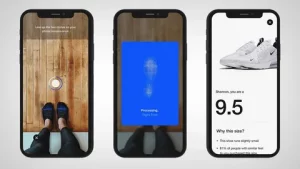
Enter any large shoes box store nowadays and you will potentially find a smooth platform where clients stand on bare foot 10 seconds. It is a 3D intelligent foot scanning system, and it is changing the way Americans get their fit.
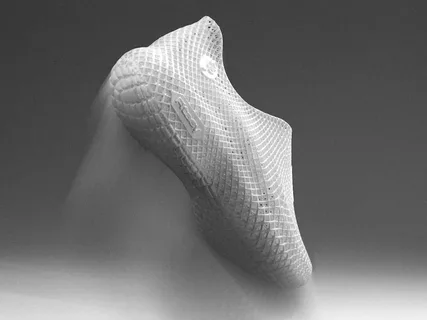
These machines employ optical imaging, pressure sensors and laser technology to measure foot length, width, arch height, and pressure distribution, and can measure all these factors in less than 30 seconds and with an accuracy of 0.5 millimeters. The information is directly fed into tablets, which creates real-time size recommendations in dozens of brands. There are systems that also have integration with 3D printing of custom orthotics or shoes that are made-to-order.
The world 3D foot scanning market is expanding. According to industry reports, the industry is expected to keep growing until 2032, and the key players in the industry, such as Aertex, Monumental, and Safe Size, are expected to be on the forefront. No longer considered the rarest of novelties, these systems are becoming standard gear in operating stores, department stores, and even a few web-based retailers that provide a so-called virtual fit technology.
However, there is a drawback of 3D scanning, you have to go to a store. Remote measurement solutions are necessary to the millions of Americans who shop online (with more than 30 percent of shoe sales being done on the Internet nowadays).
Technique 2: Paper-and-Pencil Method (Still Gold)
And then know before you hasten to seek a scanner that the old-fashioned way is as good as it can possibly be when performed as it should. And in 2026, brands will finally show how to do it right to customers.
This is the step by step procedure that is recommended by the podiatrist and footwear experts:
What You’ll Need
- A sheet of plain paper (greater than your foot)
- A pencil or pen
- A ruler (inches or centimeters)
- A surface that is hard and flat (no carpet–it smashes and inaccurately measures)
- The socks you are to wear with the shoes.
Step 1: Time It Right.
Measure at evening not in the morning. During the day, your legs swell and become long due to walking and standing. Measurements in the morning may be a half-size less than those in the evening.
Step 2: Trace with Accuracy
Lay the paper on the solid floor. Put your entire weight on it. Use the pencil and draw the contour of your shoe. Hold the pencil near your skin without pushing it on the arch. And with someone help–self-tracing can always give angled lines and erroneous results.
Step 3: Measure Length
Measure on the ruler the distance between the heel and the longest toe. The big toe is the one that is normally longer, however in some individuals it is the second toe that is longer. Write this figure in centimeters and inches.
Step 4: Measure Width
Locate the broadest part of your foot–usually across the ball, just under the toes. Measured between sides. This is vital since majority of sizing charts just consider length.
Step 5: Repeat with the Other Foot
Your feet are not brothers–they are brothers. One of the feet is nearly always a little longer or wider. Always take the bigger measure in choosing your size.
Step 6: Convert to US Size
Use a conversion chart to turn your foot length into a US shoe size. Here’s a quick reference:
| Foot Length (inches) | Foot Length (cm) | US Men’s | US Women’s |
| 9.25″ | 23.5 | 6 | 7.5 |
| 9.5″ | 24.1 | 6.5 | 8 |
| 9.75″ | 24.8 | 7 | 8.5 |
| 10.0″ | 25.4 | 7.5 | 9 |
| 10.25″ | 26.0 | 8 | 9.5 |
| 10.5″ | 26.7 | 8.5 | 10 |
| 10.75″ | 27.3 | 9 | 10.5 |
| 11.0″ | 27.9 | 9.5 | 11 |
| 11.25″ | 28.6 | 10 | 11.5 |
Source: Alibaba Product Insights
In case the reading of the measurement is between the two sizes, size up. It is more convenient to add an insole or to wear thicker socks than to stretch a too short shoe.
The Width Factor: Length is Not Enough
It is here that a majority of sizing falls short. The standard US shoe sizes measure only length and not width. But there is a large proportion of the population requiring wide or narrow fits.
Letters are used to indicate widths
AAA or AA: Narrow
- B: Standard/Medium (women standard)
- D: Standard/Medium (men standard)
- E, EE, or EEE: Wide to Extra Wide.
When the length of your foot seems correct but your feet pinch across the ball of the foot, then you probably require a broader width. On the contrary, when your feet slide laterally in the shoe, then you need a smaller fit.
Home measurements of your width: Measure your widest point along the line of your tracing (in inches or cm) and compare to brand specific width charts. Generally speaking, a man with a ball-of-foot width of 4.1 inches (10.4 cm) could have a wide (E) or extra-wide (EE) pair of shoes.
Sizing Across Brands and Genders
Brand variation exists even in case of perfect measurements. Nike is usually half a size bigger and Adidas is usually true to size. Running shoes are not the same as dress shoes and dress shoes are not the same as winter boots. Always refer to brand-specific size charts and customer reviews to note the fit.
To convert gender, the general rule is: Women size = Men size + 1.5 to 2. A 9.5 or 10 in men is a typical fit in an 8 in women. This however depends on the type of shoe- running shoes usually employ +1.5 and sneakers and casual shoes employ +2.
The Bottom Line
In 2026, Americans will not have any reason to have ill-fitting shoes. Be it in a store that has 3D scanning technology or a ten minutes of time at home using paper and pencil, good measurement is available to all individuals. The thing about it is consistency: get both feet measured, get them measured in the evening, get them measured not only long, but also wide and re-measure every six to twelve months- because your feet grow.
The perfect fit doesn’t happen by accident. It begins with becoming acquainted with your figures. And now, you do.