




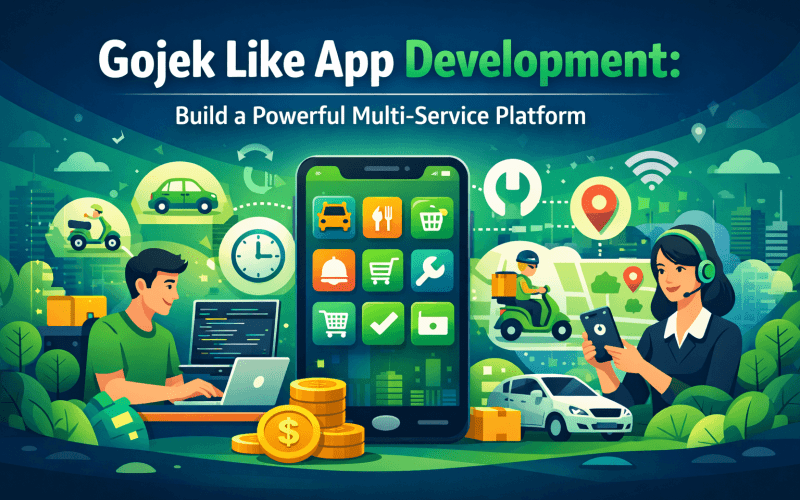
In today’s fast-paced digital economy, the demand for multi-service platforms is rising rapidly. Gojek serves as a prominent example of how to successfully integrate various services into a single user-friendly app. Consumers increasingly seek convenience and efficiency in their daily lives. Because of this shift, the appeal of an all-in-one application grows much stronger every day. These systems seamlessly offer ride-hailing, food delivery, and e-commerce within a single ecosystem.
Developing a powerful multi-service platform requires a deep understanding of its essential components. Entrepreneurs must analyze key features, modern technologies, development challenges, and monetization strategies to succeed. Navigating the competitive landscape of the on-demand economy takes careful planning. However, the right approach allows businesses to create an app that meets the diverse needs of users.
Understanding the Revolutionary Gojek Model
Gojek originated in Indonesia and completely transformed the concept of a mobile application. It acts as a comprehensive lifestyle platform rather than a simple transportation tool. It operates like a personal assistant in your pocket by handling rides, food deliveries, digital payments, and home services. This structure completely revolutionized how people engage with daily service providers.
The entire system relies heavily on the concept of on-demand services, which prioritize instant gratification. Users place an order, and the platform processes the request immediately. Whether someone needs to book a rapid ride, buy groceries, or schedule a quick home repair, the beauty of these services lies in their immediate availability. This model taps directly into our fast-paced routines and makes daily chores incredibly easy to manage.
Building a multi-service platform offers massive benefits to both operators and consumers. Users enjoy the ultimate convenience of accessing various services in one place. This consolidated approach saves valuable time and eliminates the hassle of downloading dozens of separate apps. For businesses, this model builds immense customer loyalty. It also opens up diverse, highly stable revenue streams that protect the company during economic shifts.
Key Features That Drive App Engagement
A successful multi-service application must prioritize a clean and user-friendly interface. First impressions matter deeply in the competitive digital world. The application interface should be entirely effortless to navigate. Simple designs, intuitive icons, and smooth transitions keep users happy and engaged. No one wants to battle a confusing, cluttered application when they are trying to order an urgent service.
Offering a diverse buffet of services is equally critical for long-term growth. Integrating multiple services into one platform means you are catering to a vast audience with different daily requirements. This variety keeps the user base growing steadily over time. It also creates a powerful synergy where different services complement each other. For example, a user might book a ride in the morning and order lunch through the same platform later that day.
Real-time tracking and automated notifications ensure that users never feel left hanging. Customers want to see exactly where their driver or delivery agent is at any given second. Providing this transparency builds trust and eliminates unnecessary anxiety.
Furthermore, flexibility remains essential when handling digital financial transactions. Offering multiple payment gateway options like credit cards, integrated e-wallets, and cash ensures that you accommodate everyone’s personal preferences. Making the payment process smooth encourages users to complete their transactions and return to the app in the future.
Essential Technologies for Platform Development
Choosing the right mobile application development framework sets the stage for your entire project. Popular cross-platform frameworks allow developers to build efficient apps with incredible speed. These tools enable seamless cross-platform functionality so you can reach both iOS and Android users from a single codebase:
-
React Native: Backed by Meta, it delivers native-like performance using JavaScript.
-
Flutter: Created by Google, it utilizes the Dart language for highly customizable UI rendering.
The backend architecture acts as the invisible foundation where all the data storage and request management happen. Choosing robust backend technologies ensures your application runs smoothly as your user base grows. Developers frequently pair backend engines like Node.js or Python with powerful databases like MongoDB or PostgreSQL to maintain maximum uptime.
Application Programming Interfaces (APIs) serve as the unsung heroes of multi-service app development. These software bridges connect various standalone services and allow them to work together harmoniously. Whether you are implementing payment processing, interactive maps, or third-party logistics tracking, using the right APIs makes integration seamless.
Finally, hosting your platform in the cloud provides a reliable, superhero-level backup plan. Scalable cloud hosting solutions easily accommodate sudden spikes in user activity. Systems like Amazon Web Services (AWS) or Google Cloud Platform prevent your architecture from crashing during peak hours.
Strategic Steps to Build and Launch Your App
Before writing a single line of code, you must conduct thorough market research and validate your core idea. Entering the development field without analyzing real demand is a major financial risk. Entrepreneurs should actively interview potential users to find out what they genuinely need. This feedback prevents companies from suffering a costly business failure.
Defining your business model early on gives the entire engineering team a clear direction. You must decide whether you will charge users per service, take a percentage commission from service providers, or offer monthly subscription plans. Having a clear monetization plan ensures the business remains sustainable over time.
The final phase involves launching and aggressively marketing your application. Developing a premium product is only half the battle; telling the world about it is where you truly need to shine. Brands must utilize targeted social media campaigns, strategic influencer partnerships, and localized promotional offers to stand out. Shifting your platform out of the digital shadows requires a continuous, well-funded marketing spotlight.
Overcoming Critical Technical and Market Challenges
Building an all-in-one multi-service application comes with significant hurdles. From a technical perspective, integrating multiple complex services while maintaining top-tier performance under heavy user loads is incredibly difficult. To solve this issue, engineers should opt for a microservices architecture. This system isolates specific functionalities so that a glitch in the food delivery sector will not crash the ride-hailing component. Regular, rigorous automated testing also keeps bugs at bay.
Market competition presents another massive obstacle for new startups. The on-demand landscape is crowded with massive global players and aggressive local competitors. To cut through the digital noise, you must offer unique features or highly localized services that larger corporations ignore. Building a distinct brand identity helps you capture a loyal slice of the market pie.
Attracting users is hard enough, but retaining them over the long haul is an entirely different ballgame. Companies must battle user attrition by offering personalized experiences, smart promotions, and excellent loyalty rewards. Consistently updating your application based on user feedback and modern trends keeps your audience satisfied and engaged.
Proven Monetization Strategies for Long-Term Success
The commission-based revenue model is the most popular strategy in the multi-service application world. Under this system, the platform takes a reasonable percentage slice of the financial action from every completed transaction. This model is exceptionally lucrative for high-frequency activities like ride-hailing and food delivery.
Operators can also unlock predictable revenue by offering subscription services. Users love paying a fixed fee to unlock premium features, such as free delivery, exclusive discounts, or priority customer service. Offering different subscription tiers allows you to appeal to a much broader audience.
Finally, a highly active application doubles as premium digital advertising real estate. You can partner with local brands to display contextual advertisements within your platform. Whether you choose targeted promotions based on user behavior or classic banner ads, advertising creates a steady stream of passive income. Just be careful not to overwhelm your users with constant ads, as excessive promotions can ruin the user experience.
Real-World Case Studies and Future Trends
Looking at regional success stories proves that the multi-service blueprint is highly adaptable. In Southeast Asia, Grab successfully expanded from a basic ride-hailing tool into food delivery and digital payments, becoming a household name. In Nigeria, Gokada started as a localized bike-riding service before successfully branching out into food logistics. These companies succeeded because they adapted their platforms to match the precise infrastructure needs of their local regions.
As we look toward the future, emerging innovations will continue to redefine the industry. Artificial Intelligence will soon drive hyper-personalized recommendations that anticipate user needs before they even type a request. Blockchain technology will also play a massive role in securing digital transactions and lowering banking fees.
Consumer preferences are also shifting toward sustainability and corporate social responsibility. Users want to support platforms that care about environmental impacts and fair worker wages. Tremendous market opportunities remain open, especially in developing regions where mobile phone adoption is skyrocketing. By identifying underserved gaps in healthcare, education, and household logistics, smart entrepreneurs can build the next generation of multi-service giants.