



Every business wants more revenue. But too many companies focus only on the first step: getting a name and an email address. They pour thousands of dollars into Google Ads, Facebook campaigns, and LinkedIn outreach. They generate hundreds or even thousands of leads every month. And then… nothing happens. The leads sit in a spreadsheet. They go cold. The sales team complains that the leads are low quality. Marketing blames sales for poor follow-up. The CEO looks at the pipeline and sees a leaky bucket.
This scenario plays out in countless organizations every single day. The root cause is almost always the same: treating customer relationships as a series of disconnected events rather than a continuous journey. This is exactly why smart businesses have shifted their focus to full-cycle CRM management.
Full-cycle CRM moves beyond the basic database of contacts. It turns your customer relationship system into a profit engine that works from the very first click all the way to repeat purchases, referrals, and public advocacy. To build a digital presence that supports this entire journey, you can click here for more information on advanced CRM strategies and implementation guides.
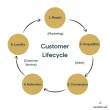
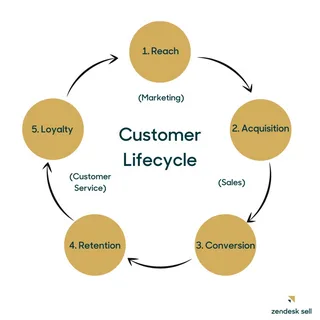
Phase 1: Lead Capture – The First Hello
Full-cycle CRM does not start with a sale. It starts with a signal of interest. That signal could be a form fill on a landing page, a chat conversation on your website, a webinar registration, or even a downloaded white paper. The key insight here is that every single interaction is valuable data.
Key entities in this phase:
-
Lead scoring models – These can be rule-based (download eBook = 10 points) or predictive (machine learning analyzes which behaviors correlate with closed deals).
-
Attribution tracking – First-touch attribution credits the original source (e.g., a blog post). Multi-touch attribution distributes credit across all touchpoints (blog post, then webinar, then demo request).
-
Integration tools – Zippier, Make (formerly Integrant), HubSpot forms, Type form, Calendula for meeting scheduling.
-
Hidden fields – These capture UTM parameters, landing page URLs, and referral sources automatically without asking the user.
Human-written tip: Do not ask for ten fields on a form. Ask for two: name and email. Build trust first. Your CRM should automatically log the source (Google Ads, organic search, LinkedIn, direct traffic) and assign a basic lead score based on behavior. One SaaS company increased form completion by 43% simply by reducing fields from nine to three. The extra information came later, through progressive profiling within the CRM.
Example workflow: A prospect clicks a LinkedIn ad, lands on a case study page, spends 90 seconds scrolling, then fills out a “Get the PDF” form. Your CRM captures the UTM parameters, tracks the time on page, and creates a new contact record with a lead score of 25. No human intervention required.
Phase 2: Lead Nurturing – Building Trust, Not Spam
Here is where most companies fail. They assume that if a lead is not ready to buy today, that lead is worthless. The reality is exactly the opposite. Most B2B leads take 60 to 180 days from first touch to first purchase. During that window, you have an opportunity to educate, build trust, and stay top of mind.
Full-cycle management means your CRM triggers automated yet personalized sequences based on what each lead does (or does not do). This approach is equally powerful for CRM real estate services, where agents must nurture leads for months or even years before a buyer is ready to make an offer. The same principles apply: track property preferences, automate listing alerts, and remember every conversation.
Entity-rich examples:
-
Workflow automation – If a lead downloads a pricing guide but does not open the follow-up email within 48 hours, send an SMS via Twilio integration. If they open but do not click, change the subject line and resend.
-
Segmentation logic – Segment leads by industry (SaaS, eCommerce, manufacturing, healthcare), by company size using employee count from Clear bit enrichment, by engagement level (active vs. cold), or by persona (decision-maker vs. influencer).
-
CRM tools mentioned – Salesforce Marketing Cloud, HubSpot Marketing Hub, Pipedrive Campaigns, Active Campaign, Zoho CRM, Keap.
-
Lead decay rules – Automatically decrease lead scores by 5 points every 30 days of inactivity to keep your pipeline fresh.
Human-written advice: Write emails like a human being. Use their first name. Reference their actual behavior. For example: “Loved that you spent four minutes on our case study page about Acme Corp. Here is a short video where the CEO explains exactly how they saved $47,000 in six months.” Full-cycle CRM is not about blasting generic newsletters. It is about relevance at scale.
Real example: A marketing agency used full-cycle nurturing in Active Campaign. They created six different nurture tracks based on lead source, industry, and behavior. The result? A 62% increase in qualified meetings booked, with zero additional ad spend.
Phase 3: Sales Conversion – From Marketing to Revenue
This is the bridge where most CRM implementations fall apart. Marketing says, “We sent you 200 leads.” Sales says, “I only saw 80 of them, and the rest were junk.” The truth is usually somewhere in the middle. Full-cycle CRM solves this by enforcing a clear, automated handoff protocol.
Key entities in this phase:
-
Lead handoff protocols – Service Level Agreements (SLAs) between marketing and sales. Example: Any lead with a score of 70+ must be assigned to a sales rep within 15 minutes during business hours. If not claimed in 4 hours, reassign to another rep.
-
Deal stages – Typical stages include: Discovery Call, Product Demo, Proposal Sent, Negotiation, Verbal Commitment, Contract Sent, Closed-Won, Closed-Lost.
-
Sales engagement platforms – Outreach, SalesLoft, HubSpot Sales Hub.
-
Round-robin assignment – Automatically distribute leads evenly across a team of sales reps to prevent burnout and ensure fairness.
-
Lead routing by territory or product line – A lead from Texas goes to the Central region rep. A lead asking about “Enterprise plan” goes to the Enterprise team.
Real-world example: A B2B software company with three sales reps implemented full-cycle CRM using Pipedrive. When a lead reaches a score of 80 (visited pricing page + opened last three emails + attended a webinar), the CRM automatically creates a deal, assigns it via round-robin, sends a Slack notification to the assigned rep, and adds a task: “Call within 1 hour.”
That rep opens the lead record and sees the entire history – page visits, email clicks, support tickets, webinar questions asked. No more awkward “tell me about yourself” questions. The rep starts the call by saying, “I saw you asked about API rate limits in the webinar. Great question. Let me show you how we handle that.” That single change reduced the average sales cycle from 47 days to 31 days.
Phase 4: Onboarding & Retention – The Forgotten Gold
Most CRM guides stop at “Closed-Won.” That is a costly mistake. Acquiring a new customer costs five to seven times more than retaining an existing one. Full-cycle management absolutely includes what happens after the signature.
New customers are fragile. Their excitement is high, but so is their anxiety. If onboarding is broken, if they cannot figure out how to use your product, if support takes three days to answer a ticket – churn happens fast.
Entities in this phase:
-
Automated onboarding sequences – Triggered the moment a deal moves to “Closed-Won.” Day 0: Welcome email with login credentials. Day 1: Video tutorial on core setup (using Loom or Guide). Day 3: Invitation to a live group onboarding call. Day 7: Check-in email asking “Any questions so far?”
-
Customer health scores – Calculated automatically based on login frequency (e.g., logged in at least 4 times in the last 14 days), feature adoption (e.g., used the reporting dashboard at least once), support ticket volume (zero tickets is good, 3+ tickets in a week is a red flag), and payment status (paid on time vs. overdue).
-
Renewal management – Full-Cycle CRM alerts sent 90 days, 60 days, 30 days, and 7 days before contract end date. Each alert includes a suggested action: “Send case studies,” “Schedule QBR,” “Offer early renewal discount.”
-
NPS surveys – Integrated directly into the CRM dashboard. When a customer responds with a score of 9 or 10 (promoter), create a follow-up task: “Ask for referral or testimonial.” For a score of 0 to 6 (detractor), alert customer success immediately.
-
Churn risk playbooks – If health score drops below 40, automatically enroll the customer into a “saving sequence” with personalized outreach from a customer success manager.
Human note: A loyal customer is not just someone who pays on time. Loyalty happens when they feel understood. Full-cycle CRM lets you remember their birthday, their last complaint, their favorite product feature, and even the name of their office dog. One eCommerce brand saw retention increase by 28% simply by using Full-Cycle CRM data to send personalized “we miss you” offers to customers who had not purchased in 90 days.
Phase 5: Loyalty & Advocacy – The Final Loop
The cycle does not end. It feeds itself. Happy customers become your best lead source. In fact, referred customers have a 37% higher retention rate and a 16% higher lifetime value than customers acquired through other channels.
What loyalty looks like in Full-Cycle CRM:
-
Referral tracking – Each customer receives a unique referral link stored on their contact record. When that link generates a new lead, both the referrer and the new lead are automatically tagged. If the new lead converts to a paid customer, the referrer gets a reward (discount, gift card, early access) triggered automatically by the CRM.
-
Review management – Automated prompts for Google Reviews, Trust pilot, G2, Capterra, or industry-specific review sites. Trigger the prompt after a positive support interaction (e.g., ticket closed with “Very Satisfied” rating) or after a customer has been active for 30 days.
-
Loyalty program integration – Points, discounts, or early access to new features – all logged and triggered via CRM rules. When a customer reaches 5,000 points, automatically send a “You’ve unlocked Gold status” email with a personalized thank you video.
-
Advocate identification – CRM reports that show your top promoters based on NPS scores, referral success, social media mentions, and case study participation.
Real impact: One eCommerce brand using full-cycle CRM increased repeat purchase rate by 34% in six months. Their simple automation: send a “thank you” email with a surprise 15% discount exactly 14 days after delivery – but only to customers who opened at least three previous emails. The tracking and triggering all happened inside their CRM.
Another example: A B2B consulting firm built a referral loop into their CRM (HubSpot). Every time a client sent a referral that turned into a signed deal, both the client and the new customer received a $500 credit. The Full-Cycle CRM tracked the entire chain – original client, referred lead, deal value, credit issued. Within one year, referrals became their second-largest source of new revenue.
Measuring What Matters: CRM Metrics for the Full Cycle
You cannot manage what you do not measure. Full-cycle CRM requires a dashboard that tracks the entire funnel, not just the top or the bottom.
Essential metrics:
-
Lead velocity rate – Month-over-month growth in qualified leads.
-
MQL to SQL conversion rate – Percentage of marketing-qualified leads that become sales-qualified leads.
-
Sales cycle length – Average days from first touch to Closed-Won.
-
Customer acquisition cost (CAC) – Total sales and marketing spend divided by number of new customers.
-
Customer lifetime value (LTV) – Average revenue per customer multiplied by average retention months.
-
LTV to CAC ratio – Healthy is 3:1 or higher.
-
Net revenue retention (NRR) – Expansion revenue minus churn, expressed as a percentage.
-
Churn rate – Percentage of customers lost per month or quarter.
Your CRM should generate all of these reports automatically. If it cannot, you either need a better CRM or better implementation.
Final Takeaway
Full-cycle CRM management is not a tool. It is a philosophy. It says: every interaction matters – from the first anonymous website visit to the tenth customer support ticket to the referral they send to a friend four years later.
If your Full-Cycle CRM is just a fancy address book, you are leaking revenue. You are losing leads that could have converted. You are losing customers who could have stayed. You are missing referrals that could have grown your business without any ad spend. But when you orchestrate the entire journey – from lead to loyalty – you stop chasing new customers. You start growing from the ones you already have.
Start small. Open your CRM today. Map your current lead-to-loyalty steps. Find the biggest gap. Is it between marketing and sales? Is it after the sale during onboarding? Is it forgetting to ask for referrals? Fix that one gap with a single automation this week. Then repeat next week. And the week after.
Because in the end, loyalty is not a milestone. It is not a campaign. It is not a discount code. Loyalty is the natural result of a full-cycle relationship, carefully managed from the very first hello to the thousandth thank you. And that is exactly what full-cycle CRM management delivers.