



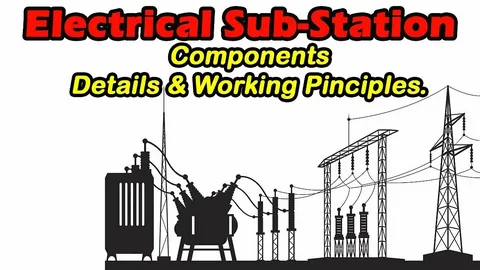
Electrical substations are the backbone of modern power systems, ensuring safe, efficient, and reliable transmission and distribution of electricity. A well-planned electrical substation not only maintains voltage stability but also protects equipment and supports long-term grid performance.
In today’s energy-driven world, electrical substation design has become more complex due to rising demand, renewable integration, and advanced grid technologies. Engineers must balance safety, efficiency, cost, and scalability while developing a robust infrastructure.
This guide explains the key principles, design stages, and best practices involved in modern electrical substation development, helping engineers and stakeholders understand how a reliable system is built from the ground up.
1. Fundamentals of Substation Engineering Design
The foundation of any power facility lies in strong substation engineering design, which focuses on converting voltage levels, protecting electrical equipment, and controlling power flow within the grid.
At its core, a substation performs three main functions:
- Voltage transformation (step-up or step-down)
- Switching and protection of circuits
- System monitoring and control
Engineers begin with load analysis, fault level calculations, and system studies to define technical requirements. These early-stage decisions determine equipment ratings, insulation levels, and protection schemes. A well-executed engineering design ensures reliability, minimizes downtime, and improves operational safety across the entire electrical network.
2. Planning Electrical Substation Layout
The electrical substation layout is one of the most critical aspects of the design process. It determines how equipment is arranged to ensure safety, accessibility, and operational efficiency.
A good layout considers:
- Minimum clearance distances for safety
- Ease of maintenance and operation
- Future expansion possibilities
- Environmental and land constraints
Different configurations are used depending on project needs, such as:
- Single busbar systems
- Double busbar systems
- Ring main arrangements
- Gas-insulated switchgear (GIS) layouts for compact spaces
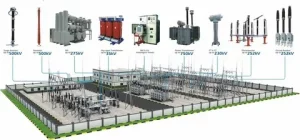
Proper spacing between transformers, circuit breakers, and control buildings ensures safe operation under fault conditions. Additionally, cable routing, grounding grids, and drainage systems must be integrated into the layout plan. A well-designed layout reduces operational risks and improves system reliability over the long term.
3. Key Components in Electrical Substation Design
Every electrical substation design includes several essential components that work together to manage electrical energy safely and efficiently.
These components include:
- Power transformers: Adjust voltage levels between transmission and distribution systems
- Circuit breakers: Automatically isolate faults to protect equipment
- Busbars: Distribute electrical power within the substation
- Instrument transformers (CTs and PTs): Provide measurement and protection signals
- Surge arresters: Protect equipment from voltage spikes
- Protection relays: Detect faults and initiate tripping mechanisms
Each component must be selected based on system voltage, fault levels, and operational requirements. Proper coordination between these devices ensures smooth system performance and minimizes outage risks.
4. Safety Standards and Protection Systems
Safety is the most important aspect of substation development. A strong substation engineering design incorporates multiple layers of protection to ensure personnel safety and equipment reliability.
Key safety features include:
- Grounding and earthing systems to prevent electric shock
- Lightning protection systems for surge control
- Fire detection and suppression systems in critical areas
- Protective relays for fast fault isolation
International standards such as IEC and IEEE guide engineers in designing safe and compliant substations. Proper insulation coordination, arc flash studies, and fault analysis further enhance system protection. Safety planning is not optional—it is an integral part of every stage of substation development.
5. Automation and Smart Substation Technologies
Modern substations are evolving into highly automated systems. Digital monitoring and control technologies now play a major role in improving efficiency and reducing operational costs.
Smart systems include:
- SCADA (Supervisory Control and Data Acquisition)
- Intelligent Electronic Devices (IEDs)
- Remote monitoring and control systems
- Real-time fault detection and diagnostics
Automation improves decision-making, reduces manual intervention, and enhances system reliability. It also supports predictive maintenance, allowing engineers to identify issues before they lead to failures. The integration of digital technologies is transforming traditional substations into smart energy hubs.
6. Best Practices for Efficient Substation Development
Successful electrical substation projects rely on careful planning and execution. Following best practices in electrical substation design ensures long-term efficiency and reliability.
Key recommendations include:
- Conduct detailed load and fault studies before design finalization
- Select equipment with future expansion in mind
- Ensure proper coordination between civil, electrical, and protection teams
- Prioritize high-quality grounding and insulation systems
- Use modular designs for flexibility and scalability
Additionally, regular testing, commissioning, and maintenance planning are essential to maintain performance over time. A well-structured engineering approach reduces lifecycle costs and improves grid stability.
Conclusion
Electrical substations are a vital part of power infrastructure, and their design requires a careful balance of engineering precision, safety, and innovation. From layout planning to protection systems and automation, every element plays a crucial role in ensuring efficient energy distribution.
A strong foundation in electrical substation engineering design not only enhances system reliability but also supports future-ready power networks capable of handling growing energy demands. With proper planning and modern technologies, engineers can develop substations that are safe, efficient, and adaptable for decades to come.