





The way people shop has changed dramatically. A customer no longer thinks about shopping as something limited to a physical store or desktop website. A smartphone, a voice command, or even a personalized recommendation can now begin the buying journey within seconds through the app.
The Evolution of Mobile Commerce in the AI Era
A decade ago, mobile commerce mainly focused on responsive websites and basic shopping applications. The goal was simple: allow users to view products and complete purchases from their phones.
The current landscape is different. Modern shopping apps are becoming intelligent ecosystems powered by machine learning, automation, and real-time data analysis.
AI allows mobile commerce platforms to analyze:
- Customer browsing patterns
- Purchase history
- Search behavior
- Product preferences
- Location-based shopping trends
- Seasonal demand changes
This information helps businesses create experiences that feel more relevant to individual users.
Think about how streaming platforms suggest movies based on your interests. Mobile shopping is moving in the same direction. Instead of showing every customer the same catalog, AI helps display products that match personal preferences.
How AI Is Transforming the Mobile Shopping Experience
AI is not just a backend technology. Customers interact with AI features directly while shopping.
A modern ecommerce application may include:
- AI-powered product recommendations
- Intelligent search systems
- Virtual shopping assistants
- Automated customer support
- Image-based product discovery
- Predictive inventory management
For example, when a user searches for “running shoes,” an AI-based system does not only match those exact words. It can understand related intent, such as workout preferences, price range, previous purchases, and preferred brands.
This creates a smoother journey from discovery to purchase.
Role of an ecommerce app development company
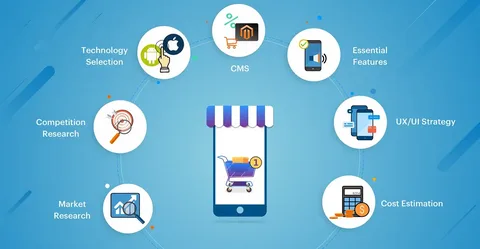
The development of modern shopping applications involves multiple technologies working together, including AI models, cloud infrastructure, APIs, payment systems, and user experience design. An ecommerce app development company working within this evolving industry usually focuses on building platforms that can support advanced features while maintaining speed, security, and scalability.
The important shift is that mobile commerce apps are no longer created only as digital product catalogs. They are becoming data-driven platforms where every interaction provides insights that improve future experiences.
For businesses entering mobile commerce, understanding AI integration is becoming essential because customers now expect faster searches, smarter recommendations, and personalized experiences.
AI-Based Personalization: Creating Individual Shopping Journeys
Personalization has become one of the strongest factors influencing online shopping behavior.
Traditional websites often show the same homepage to every visitor. AI-powered mobile commerce platforms can create different experiences depending on the user.
For example:
A first-time visitor may see:
- Popular products
- New arrivals
- Beginner-friendly recommendations
A returning customer may see:
- Previously viewed items
- Similar products
- Personalized offers
- Faster checkout options
This approach reduces the effort required from customers. Instead of searching through hundreds of products, users discover relevant items naturally.
Example: AI Recommendation System
Imagine a customer purchases a fitness tracker through a mobile app.
An AI system may analyze:
- Previous purchase data
- Product category
- Customer interests
- Related buying patterns
The app may then suggest:
| Customer Action | AI Analysis | Possible Recommendation |
|---|---|---|
| Buys fitness tracker | Interested in health products | Smartwatch accessories |
| Searches workout equipment | Fitness-related intent detected | Exercise gear |
| Views running shoes repeatedly | Strong purchase signal | Running shoe suggestions |
This type of recommendation improves user experience because it feels helpful rather than random.
AI-Powered Search and Voice Commerce
Search is one of the most important parts of any shopping application.
A user usually does not want to type long descriptions. They want quick answers.
AI improves search through:
- Natural language processing (NLP)
- Voice recognition
- Semantic search
- Typo correction
- Visual search
For instance, instead of typing “black leather office shoes under 5000,” a user can say:
“Show me formal shoes similar to my last purchase.”
AI can understand the context and provide better results.
Voice commerce is also becoming an important trend because smart devices and mobile assistants are changing how people interact with technology.
Improving Customer Support Through AI Automation
Customer service is another area where AI is creating major improvements.
Many common customer questions involve:
- Order tracking
- Return policies
- Payment issues
- Product availability
AI chat systems can handle these repetitive queries instantly.
A good AI support system does not replace human assistance completely. Instead, it manages routine requests and allows support teams to focus on complex problems.
This creates faster communication and reduces waiting time for customers.
AI and Data Security in Mobile Commerce
As mobile commerce grows, security becomes a major concern.
Shopping applications manage sensitive information such as:
- Payment details
- Personal information
- Purchase history
AI helps improve security through:
- Fraud detection algorithms
- Unusual activity monitoring
- Risk prediction models
- Automated transaction analysis
For example, if a payment system detects an unusual purchase pattern from a new location, AI can identify the risk and trigger additional verification.
Security is becoming an essential part of modern mobile commerce architecture.
Key Technologies Behind Next-Generation Commerce Apps
Modern mobile commerce solutions combine multiple technologies.
| Technology | Role in Mobile Commerce |
|---|---|
| Artificial Intelligence | Personalization, recommendations, automation |
| Machine Learning | Predicting customer behavior |
| Cloud Computing | Handling large-scale data and traffic |
| APIs | Connecting payment, shipping, and services |
| Augmented Reality | Virtual product visualization |
| Blockchain | Improving transaction transparency |
These technologies work together to create shopping experiences that are faster and more adaptive.
Future Trends in AI-Driven Mobile Commerce
The next stage of mobile commerce will focus on deeper automation and more natural interactions.
Some emerging trends include:
AI Shopping Assistants
Future shopping apps may include intelligent assistants that understand customer preferences and help users make buying decisions.
Augmented Reality Shopping
Customers may be able to preview products before purchasing. For example, furniture apps can show how a product looks inside a room using a smartphone camera.
Predictive Shopping
AI may predict customer needs before they actively search. For example, a grocery app could remind users to reorder frequently purchased items.
Hyper-Personalized Experiences
Instead of basic recommendations, AI systems will create complete shopping journeys based on individual behavior patterns.
Final Thoughts
Mobile commerce is becoming more intelligent with the integration of artificial intelligence. The focus is shifting from simply selling products online to creating meaningful digital experiences.
AI helps businesses understand customers better, improve search, automate support, strengthen security, and deliver personalized interactions.
The future of shopping will not only be about where customers buy products. It will be about how naturally technology connects people with what they need, whenever and wherever they need it.