




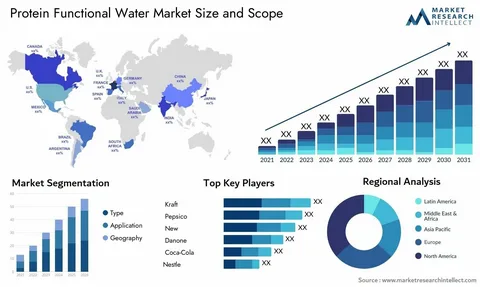
The global Protein Water market is witnessing exceptional growth as consumers increasingly shift toward low-calorie, high-protein hydration products. In 2024, the market was valued at approximately USD 2.9 billion and is projected to reach USD 8.9 billion by 2035, expanding at a CAGR of 10.8%. More than 64% of global consumers now actively purchase functional beverages, while demand for protein-enriched hydration products has increased by nearly 41% during the last five years.
Protein Water has emerged as a preferred alternative to sugary sports drinks and carbonated beverages. Global health-conscious populations, fitness enthusiasts, and younger consumers are accelerating category growth. Surveys conducted across major economies indicated that nearly 59% of consumers prefer beverages containing added nutritional benefits, including protein, vitamins, and electrolytes.
Strong Historical Growth
The Protein Water industry has demonstrated consistent expansion since 2015 due to increasing awareness regarding sports nutrition and muscle recovery. Market value nearly tripled between 2015 and 2024.
Historical market performance:
| Year | Market Value (USD Billion) |
|---|---|
| 2015 | 0.95 |
| 2016 | 1.10 |
| 2017 | 1.28 |
| 2018 | 1.45 |
| 2019 | 1.83 |
| 2020 | 2.00 |
| 2021 | 2.18 |
| 2022 | 2.41 |
| 2023 | 2.64 |
| 2024 | 2.90 |
| 2025* | 3.22 |
Year-over-year growth remained highly stable:
- 2020 growth: 9.3%
- 2021 growth: 9.0%
- 2022 growth: 10.6%
- 2023 growth: 9.5%
- 2024 growth: 9.8%
Global annual consumption crossed 5.8 billion bottles in 2024 compared with only 2.6 billion bottles in 2017. Production output increased at an average annual rate of 11.4%.
Fitness Participation Boosting Protein Water Demand
Fitness participation and active lifestyle trends are directly influencing Protein Water sales globally. More than 1.2 billion individuals worldwide now participate in fitness or sports-related activities regularly.
Recent consumer surveys revealed:
- 68% purchase Protein Water for post-workout recovery.
- 61% consume functional beverages weekly.
- 59% prefer low-sugar hydration drinks.
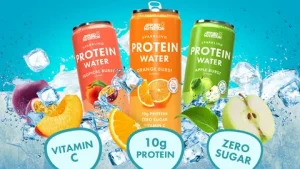
- 51% prioritize beverages with over 10 grams of protein.
- 43% seek ready-to-drink nutritional products.
- 37% use Protein Water as a meal supplement.
Consumers aged 18–39 contributed approximately 62% of global Protein Water purchases in 2024. Women represented 46% of category consumption, reflecting widening demographic appeal beyond traditional sports nutrition consumers.
Regional Analysis Shows
North America continues dominating the Protein Water market due to high sports nutrition awareness and premium beverage spending.
Regional market share in 2024:
- North America: 39.2%
- Europe: 25.6%
- Asia Pacific: 24.1%
- Latin America: 6.0%
- Middle East & Africa: 5.1%
North America generated approximately USD 1.14 billion in revenue during 2024. The United States represented nearly 81% of regional demand. Europe reached market value of USD 742 million, supported by increasing adoption of protein-enriched wellness beverages.
Asia Pacific remains the fastest-growing regional market with projected CAGR of 12.4% through 2035. China accounted for approximately 28% of Asia Pacific demand, while Japan contributed 19% and India represented 14%. Urban consumers contributed nearly 74% of total global sales.
Product Segmentation
The Protein Water market has diversified significantly with multiple formulations and flavor innovations.
Product segmentation in 2024:
- Whey Protein Water: 44%
- Plant Protein Water: 28%
- Collagen Protein Water: 17%
- Hybrid Protein Formulations: 11%
Plant-based Protein Water products recorded annual growth exceeding 15.3% from 2021 to 2024.
Products containing 10–20 grams of protein accounted for nearly 48% of total revenue. Sugar-free formulations represented 36% of global launches, while low-calorie beverages captured approximately 57% of market share.
Fruit-based flavors contributed nearly 63% of category sales. Citrus, berry, tropical fruit, and lemon-lime flavors remained the highest-selling varieties globally. More than 900 new Protein Water products were launched worldwide in 2024 alone.
Manufacturing Expansion
Investment activity across the Protein Water industry increased substantially as beverage manufacturers expanded production capacity and automation capabilities.
Key investment statistics between 2020 and 2024:
- Functional beverage investments exceeded USD 15.6 billion.
- Packaging innovation spending crossed USD 1.8 billion.
- Beverage manufacturing modernization reached USD 4.3 billion.
- Cold-chain infrastructure investment rose by 21%.
- Automated bottling adoption exceeded 53%.
Manufacturing capacity expanded approximately 29% globally during the period. Average production efficiency improved by 18%, while production cost per liter declined nearly 11% due to automation and supply chain optimization. Global production facilities dedicated to Protein Water increased from 190 facilities in 2018 to more than 340 facilities in 2024.
E-Commerce and Retail Expansion
Retail transformation continues reshaping the Protein Water market. Online purchasing behavior significantly accelerated following digital grocery expansion.
Sales channel contribution in 2024:
- Supermarkets and hypermarkets: 46%
- Online retail: 31%
- Convenience stores: 17%
- Specialty nutrition stores: 6%
Online retail sales nearly doubled from 16% share in 2020 to 31% in 2024. Subscription-based beverage delivery services increased by 26% year-over-year.
Retail shelf allocation for Protein Water products expanded by approximately 23% globally. Premium products priced above standard sports drinks generated nearly 34% of total category revenue. Global export value exceeded USD 1.4 billion during 2024.
Landscape and Industry Statistics
Competition within the Protein Water market continues intensifying as major beverage companies and emerging startups expand portfolios.
Industry indicators include:
- Top 10 companies controlled approximately 55% of global revenue.
- Product innovation cycles shortened from 16 months to 10 months.
- Marketing expenditure increased by 18% across leading brands.
- Sustainable packaging adoption exceeded 39%.
- Recyclable bottle usage increased by 27%.
Private-label Protein Water products expanded from 8% market share in 2019 to nearly 15% in 2024. Research and development investment rose by approximately 24% globally between 2020 and 2024.
Future Outlook: 2026–2035 Forecast
The Protein Water market is expected to maintain strong double-digit growth throughout the forecast period due to expanding wellness culture and increasing product accessibility.
Projected market values:
| Year | Market Value (USD Billion) |
|---|---|
| 2026 | 3.58 |
| 2027 | 3.96 |
| 2028 | 4.39 |
| 2029 | 4.87 |
| 2030 | 5.39 |
| 2031 | 5.96 |
| 2032 | 6.62 |
| 2033 | 7.29 |
| 2034 | 8.05 |
| 2035 | 8.90 |
Additional industry projections include:
- Annual production exceeding 13 billion bottles by 2035.
- Plant-based Protein Water reaching 41% market share.
- Digital commerce contributing more than 45% of revenue.
- Premium category growth exceeding 12.6% annually.
- Asia Pacific contributing nearly USD 2.3 billion in revenue by 2035.
Conclusion
The Protein Water market has rapidly evolved into one of the most dynamic segments within the global functional beverage industry. Market value increased from USD 0.95 billion in 2015 to USD 2.9 billion in 2024 and is projected to surpass USD 8.9 billion by 2035 at a CAGR of 10.8%. Rising health awareness, expanding fitness participation, increasing product innovation, growing e-commerce penetration, and substantial manufacturing investments are expected to sustain long-term industry growth globally.