



The global biosimilar market continues to expand as healthcare providers seek cost-effective alternatives to reference biologics. As you work on developing biosimilar products, one of the most important challenges is achieving high-quality antibody purification while maintaining consistency, scalability, and regulatory compliance. This is where Protein G Column Antibody Purification becomes a valuable tool in your manufacturing and research workflow.
Protein G-based purification technologies have become widely used for isolating antibodies with exceptional purity and recovery rates. Whether you are involved in early-stage development, process optimization, or commercial-scale production, understanding how Protein G purification supports biosimilar development can help you achieve better outcomes.
Role of Antibody Purification in Biosimilars
Biosimilars are highly similar versions of approved biologic medicines. Although they are not identical to the original products, they must demonstrate comparable safety, efficacy, and quality characteristics.
During biosimilar development, antibody purification is a critical step because impurities, host cell proteins, aggregates, and contaminants can affect product performance and regulatory approval. You need a purification strategy that delivers consistent results across multiple production batches.
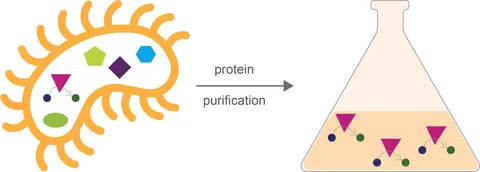
Protein G affinity chromatography has become a preferred solution because it selectively binds immunoglobulins while removing unwanted materials from complex biological samples.
High Selectivity Improves Product Quality
One of the biggest advantages of Protein G purification is its strong affinity for many IgG subclasses. This selective binding allows you to isolate antibodies with exceptional purity from cell culture supernatants or biological samples.
By reducing contaminants early in the purification process, you can simplify downstream processing and improve overall product quality. High-purity antibodies also make analytical characterization easier, helping you demonstrate biosimilarity more effectively.
When you use advanced Protein G Column Antibody Purification for high-purity biosimilar antibody production, you can achieve cleaner preparations that support quality control and regulatory expectations.
Supports Consistent Manufacturing
Consistency is one of the most important factors in biosimilar development. Regulatory agencies expect manufacturers to demonstrate minimal batch-to-batch variation.
Protein G columns provide reproducible purification performance under controlled conditions. Because the binding mechanism is highly specific, you can obtain similar purification outcomes across multiple production runs.
This consistency helps you:
- Maintain product quality standards
- Reduce process variability
- Improve manufacturing efficiency
- Support regulatory submissions
- Enhance process validation efforts
Reliable purification methods contribute significantly to establishing a robust biosimilar manufacturing platform.
Enhances Recovery Rates
Product yield directly impacts manufacturing costs and commercial viability. Low recovery rates can increase production expenses and reduce profitability.
Protein G affinity columns are designed to maximize antibody capture while minimizing product loss. High recovery rates allow you to obtain more purified antibody from each production batch.
As biosimilar manufacturers focus on cost-effective production, improved recovery becomes a significant competitive advantage. Higher yields can reduce manufacturing costs while maintaining product quality standards.
Facilitates Process Scale-Up
A purification strategy that works in the laboratory must also perform effectively during large-scale manufacturing. Many purification techniques encounter challenges when transitioning from research-scale operations to commercial production.
Protein G chromatography offers excellent scalability. The same purification principles used during development can often be adapted to pilot-scale and commercial-scale processes.
This scalability allows you to:
- Accelerate development timelines
- Simplify technology transfer
- Reduce process redevelopment
- Improve manufacturing flexibility
As a result, your biosimilar project can move more efficiently from research to commercialization.
Supports Regulatory Compliance
Regulatory agencies require extensive documentation regarding purification processes and product quality. A well-established purification platform helps simplify compliance efforts.
Protein G chromatography is a widely accepted and extensively characterized purification technology. Its established performance history provides confidence when preparing regulatory submissions.
Using validated Protein G Column Antibody Purification methods for biosimilar manufacturing compliance can strengthen your quality strategy and support successful regulatory reviews.
Reduces Downstream Processing Complexity
Complex downstream workflows often increase production time, labor requirements, and operational costs.
Because Protein G purification removes many impurities during the initial capture step, subsequent purification stages become more efficient. You may require fewer polishing steps, resulting in a streamlined purification process.
Benefits include:
- Faster processing times
- Lower operational costs
- Reduced resource consumption
- Improved manufacturing productivity
- Simplified process optimization
A more efficient workflow can help you meet development deadlines while maintaining product quality.
Supports Analytical Characterization
Biosimilar developers must perform extensive analytical studies to demonstrate similarity to the reference product.
High-quality purified antibodies improve the accuracy of analytical testing methods such as:
- Mass spectrometry
- Binding assays
- Structural characterization
- Functional activity testing
- Stability studies
By providing cleaner samples, Protein G purification helps generate reliable analytical data that supports biosimilar comparability assessments.
Enables Flexible Antibody Development Programs
Many biosimilar development programs involve multiple antibody candidates, process variants, and formulation studies.
Protein G columns offer flexibility for handling diverse antibody purification requirements. This adaptability allows you to evaluate multiple candidates without completely redesigning purification workflows.
The ability to efficiently purify antibodies across different development stages helps accelerate decision-making and improve research productivity.
Choosing the Right Purification Partner
Successful biosimilar development depends not only on selecting the right purification technology but also on working with experienced partners who understand antibody production challenges.
Organizations seeking advanced Protein G Column Antibody Purification solutions for biosimilar antibody development and manufacturing can benefit from specialized expertise, optimized purification strategies, and reliable technical support.
For organizations looking to discuss purification requirements, process optimization opportunities, or customized antibody solutions, Contact us today to explore available options and expert guidance.
Conclusion
As biosimilar development continues to grow worldwide, efficient antibody purification remains a cornerstone of successful manufacturing. Protein G affinity chromatography offers high selectivity, strong recovery rates, scalability, reproducibility, and regulatory support that make it highly valuable for biosimilar production.
By incorporating Protein G Column Antibody Purification into your workflow, you can improve product quality, streamline manufacturing operations, reduce process variability, and strengthen your path toward successful biosimilar commercialization.
Frequently Asked Questions
What is Protein G Column Antibody Purification?
Protein G Column Antibody Purification is an affinity chromatography technique that uses Protein G ligands to selectively bind and purify antibodies, particularly IgG subclasses, from complex biological mixtures.
Why is Protein G purification important for biosimilars?
It helps achieve high antibody purity, consistent manufacturing performance, and reliable analytical results, all of which are essential for biosimilar development and regulatory approval.
Does Protein G purification improve antibody recovery?
Yes. Protein G columns are designed to capture antibodies efficiently, resulting in high recovery rates and improved manufacturing yields.
Can Protein G chromatography be scaled for commercial production?
Yes. Protein G purification methods are highly scalable and can be adapted from laboratory research to large-scale manufacturing environments.
How does Protein G purification support regulatory compliance?
Protein G chromatography is a well-established purification technology with documented performance characteristics, making it easier to support validation, quality control, and regulatory submissions.
What types of antibodies can be purified using Protein G?
Protein G effectively binds many mammalian IgG subclasses and is commonly used for monoclonal antibody purification in research, diagnostics, and biopharmaceutical manufacturing.