





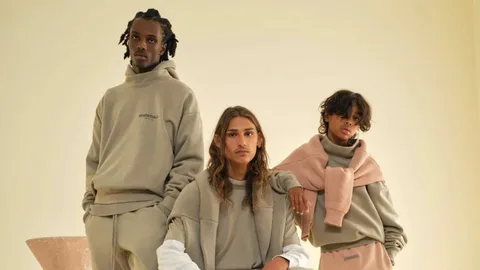
People have been asking whether Essentials Tracksuit has peaked since about 2021. Every year the conversation happens — usually triggered by someone noticing the tracksuit on a person they didn’t expect to see wearing it, or seeing it appear somewhere that feels slightly removed from the culture it came from. “It’s gone mainstream.” “Everyone has one now.” “It’s not what it was.”
And every year the drops sell out. The resale premiums hold. The community engagement around new colourways stays active. The brand keeps making pieces that people who know about this stuff keep genuinely wanting. The “is it over” conversation and the “this sold out in eight minutes” reality exist simultaneously, which tells you something about the gap between cultural commentary and actual market behaviour.
2026 is not different from any of those previous years in the ways that actually matter. The question is still being asked. The tracksuit is still selling. Both of those things are true at once and neither cancels the other out.
What “Relevant” Actually Means Here
Worth unpacking the question before trying to answer it. Relevant to what, exactly? To the leading edge of streetwear — the people who are always on the next thing before everyone else knows it exists? To the broader market of people who want quality casual clothing with genuine cultural credibility? To resale investors tracking secondary market performance? To someone who just wants a tracksuit that looks good and lasts?
The essentials tracksuit gives different answers to each of those questions. At the leading edge of streetwear — where things have to be new or they’re invisible — it’s been around long enough that it’s not going to generate excitement just by existing anymore. That’s just what happens to anything that succeeds. It becomes known. Known things stop being exciting to people who need the next thing.
To everyone else — which is most people — it’s still one of the better things you can buy in its category. The quality holds up. The design is considered. The cultural credibility is real even if it’s no longer novel. Relevant in the sense of being worth buying, wearing, and paying attention to? Yes. Relevant in the sense of being the thing everyone in a certain conversation is currently most excited about? Probably not. Those are different questions with different answers and conflating them is where the “is it over” narrative goes wrong.
The Oversaturation Argument — Is It Actually True
The oversaturation claim is the most common version of the “it’s peaked” argument and it deserves a straight look. The argument goes: too many people have it now, it’s everywhere, the exclusivity that made it desirable is gone and therefore the piece itself has lost something.
There are two problems with this. First, the tracksuit was never purely exclusivity-driven. The design, the quality, the colourways — these have independent value that doesn’t require scarcity to exist. A bone Essentials tracksuit that fits well and is made from genuine heavyweight cotton is a good garment regardless of how many other people own one. The goodness of the garment isn’t a function of its rarity. Many fashion lovers use stussy hoodie alongside Essential Hoodies to add variety and style to their streetwear wardrobe.
Second, “everyone has one” is always more perception than reality. Yes, more people own Essentials tracksuits now than owned them in 2019. That’s what happens when something good finds a larger audience. But the drops still sell out. Stock is still genuinely limited each season. The feeling of saturation often comes from social media making visible what was always more present than people realized, not from actual availability changing as dramatically as it feels.
What Has Actually Changed Since the Early Years
Being honest about this matters. Some things genuinely have changed about the Essentials tracksuit’s position in the market since the early drops, and pretending otherwise doesn’t serve anyone well.
The novelty is gone. That’s real. There was a period when wearing Essentials signaled that you were paying attention to something before most people were — and that signal has weakened as the label has grown. People who needed that signal to feel the purchase was worthwhile have moved on to find it elsewhere. Fair enough. That’s how novelty works — it depreciates.
The community around the brand has also changed in character. Bigger, more diverse, less insular. The conversations that happen in Essentials communities in 2026 are different from the ones that happened in 2020 — broader but sometimes shallower, more people who bought one tracksuit alongside people who’ve bought six across multiple seasons. Neither group is wrong for being there. But the texture of the community has shifted in ways that long-term followers notice even if they can’t always articulate what exactly has changed.
What Hasn’t Changed — and This Is the More Important List
The fabric quality hasn’t dropped in the way that sometimes happens when brands scale rapidly. The construction is still considered. The colourway selection is still done with care — the restraint that defined the early drops is still present in the palette decisions each season, even if the brand is operating at a different scale than it was when fewer people knew about it.
The resale market still prices the pieces above retail when they sell out. Not always dramatically — the premiums on mainline seasonal pieces are more modest than they were at peak hype — but the floor of secondary market value has held in a way that reflects genuine ongoing demand rather than a market propped up by speculation. That’s what sustained relevance looks like in practice. Not exponential growth. Just a floor that doesn’t collapse.
The design language hasn’t chased trends to stay relevant. The dropped shoulders, the tonal branding, the considered seasonal palette — none of these have been dramatically altered to respond to what’s happening elsewhere in fashion. That consistency, which could read as stagnation if you want it to, is also the thing that makes the pieces feel reliable in a way that trend-responsive clothing doesn’t. You know what you’re getting. That’s worth something.
Who Is Still Buying It and Why
The buyer profile for the Essentials tracksuit in 2026 is broader than it was in 2020 and probably different in composition. The early-adopter streetwear contingent is still present but smaller as a proportion of the total. The group that’s grown is people who found the brand after it reached a certain scale of awareness — people who want quality casual clothing that has genuine design thinking behind it without paying mainline Fear of God prices.
That’s actually a more durable buyer base than pure hype-driven early adoption. Hype buyers move on when the novelty goes. Quality buyers come back when the next drop has something they want. The shift in buyer composition from novelty-driven to quality-driven is what a successful brand transition looks like — uncomfortable if you were there for the novelty, reassuring if you care about whether the brand is still around in five years.
Women buying Essentials in 2026 are also a noticeably larger part of the market than they were in the early years. The sizing guidance has improved as more women have published detailed fit feedback. The community knowledge around women’s sizing in the unisex template is significantly better than it was. That expanded audience doesn’t dilute the brand — it reflects the tracksuit genuinely working for more people than its original core.
The Honest Answer to the Question
Yes. Still relevant in 2026. Not in every sense of the word to every person who might be asking — but in the ways that matter for whether something is worth buying, wearing, and paying attention to, the Essentials tracksuit hasn’t lost the things that made it worth those things in the first place.
The novelty has gone and it’s not coming back. That’s a real loss for the people who valued it. The community has changed and not everyone prefers what it’s changed into. Those things are true and worth saying clearly rather than papering over with enthusiasm about resale charts and sell-out speeds.
But the garment itself — the fabric, the construction, the design, the colourways, the fact that it holds its value and earns compliments and lasts longer than it should for what it costs — none of that has meaningfully declined. Something that’s still genuinely good at what it does is still relevant. Full stop. The more interesting question isn’t whether it’s relevant in 2026. It’s whether relevance was ever the right thing to be looking for from a tracksuit in the first place.
Frequently asked questions
Is the Essentials tracksuit still worth buying in 2026?
Yes — for the same reasons it was worth buying before. The quality holds up, the design is considered, the resale value is consistent, and the drops still sell out which tells you the demand is real rather than propped up by reputation alone. The novelty has gone but the garment hasn’t changed in the ways that actually matter for whether something is worth spending money on.
What has changed about the Essentials tracksuit in 2026 compared to earlier years?
The novelty has gone. The community is bigger and more diverse in character. The early-adopter proportion of the buyer base has shrunk relative to quality-driven buyers who found the brand later. Resale premiums on mainline pieces are more modest than at peak hype. None of these things affect the actual garment — they affect the social context around it.
Does the Essentials tracksuit still hold its resale value in 2026?
Yes, reasonably well. The premiums on mainline seasonal pieces are more modest than they were at peak hype, but the floor of secondary market value has held rather than collapsing. Limited colourways and collaboration pieces still command meaningful premiums above retail. That’s what sustained demand looks like — not dramatic spikes, just a floor that doesn’t fall away.
Should I still buy an Essentials tracksuit if I missed the early hype?
Yes — if you’re buying it because you want a well-made tracksuit with genuine design thinking behind it, missing the early hype doesn’t change the garment you end up with. If you were buying it specifically to be early on something, that moment has passed. But most people who actually wear the thing regularly weren’t buying it for that reason anyway.