




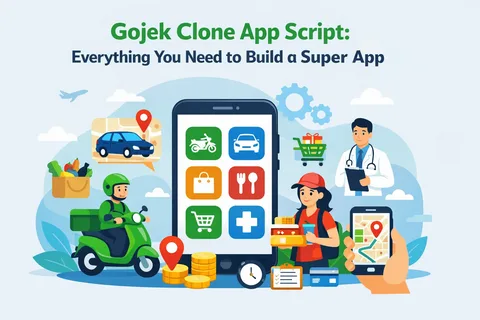
Launching a Gojek clone app starts with understanding how the original platform works. Gojek began as a simple ride-hailing service and quickly evolved into a powerful super-app. Today, it offers multiple services such as transportation, food delivery, logistics, and digital payments within a single ecosystem.
This multi-service model works because it connects users, drivers, and service providers on one platform. As a result, users enjoy convenience, while businesses gain multiple income channels. Revenue comes from commissions, service fees, advertising, and subscriptions. This diversified structure helps the platform stay profitable even when one service slows down. When building your own Gojek clone, you must study this structure carefully. It helps you design a system that is both scalable and sustainable in the long run.
Market Research and Identifying Your Audience
Before developing your app, you must clearly understand your target market. Different users have different needs. Some may want quick ride services, while others may focus on food delivery or home services.
Start by analyzing your audience demographics. Look at age groups, income levels, and lifestyle habits. For example, urban professionals often prefer fast and reliable on-demand services, while students look for affordability and discounts.
Next, study your competitors. Identify what they are doing well and where they are failing. If existing apps have slow response times or poor customer support, you can turn those weaknesses into your strengths. This research helps you build a more competitive and user-focused platform.
Also, keep track of market trends. Today’s users prefer cashless payments, eco-friendly services, and fast delivery. When you align your app with these expectations, you increase your chances of success significantly.
Essential Features of a Gojek Clone App
A successful Gojek clone app must include powerful and user-friendly features. The core features should support both customers and service providers.
- First, create a smooth user interface. Users should be able to book services, track orders, and make payments easily. At the same time, drivers or service providers need a separate dashboard to manage requests and earnings.
- Second, add multiple service options. Do not limit your app to ride-hailing. Instead, include food delivery, grocery services, parcel delivery, and home services. This expands your revenue potential.
- Third, integrate secure payment gateways. Offer options like credit cards, debit cards, mobile wallets, and even cash payments where needed. Security is also important, so use encryption and authentication features to protect user data.
- Additionally, include real-time tracking, push notifications, ratings, and customer support features. These elements improve user satisfaction and trust.
Choosing the Right Development Approach
When building your app, you must decide between in-house development and outsourcing. In-house development gives you full control over the project. Your team works closely together, and you can make changes quickly. However, this approach is often more expensive and requires skilled developers.
On the other hand, outsourcing allows you to hire experienced development companies at a lower cost. This can speed up your project, but you must choose your partner carefully. Always check their previous work, client reviews, and communication quality. Your decision should depend on your budget, timeline, and technical expertise. Both approaches can work if managed properly.
Budget Planning and Cost Management
Budgeting is one of the most important parts of launching a Gojek clone app. Development costs depend on features, design complexity, and the development team you choose.
You should also plan for hidden expenses such as server maintenance, app updates, marketing campaigns, and customer support systems. Many startups fail because they underestimate these long-term costs. To avoid this, create a detailed budget plan. Break your expenses into categories and track them regularly. This will help you stay financially stable during and after the launch phase.
Post-Launch Growth and Scaling Strategy
After launching your app, your work is far from over. In fact, this is where real growth begins. Start by collecting user feedback. Listen to what your customers are saying. If they report bugs or suggest improvements, act quickly. This builds trust and improves your app quality over time.
Next, focus on scaling your operations. As your user base grows, you will need stronger servers, better infrastructure, and more support staff. Scaling ensures your app remains fast and reliable even under heavy demand.
You should also explore long-term growth strategies. This may include expanding into new cities, adding new services, or partnering with local businesses. Staying flexible helps your app stay relevant in a competitive market.
Final Thoughts
Building a Gojek clone app is not just about copying a successful idea. It is about creating a smart, scalable, and user-focused platform that solves real problems. With proper planning, strong features, and continuous improvement, your app can become a powerful player in the on-demand service industry. Focus on user needs, stay consistent, and keep improving your platform to achieve long-term success. At the same time, invest in reliable technology and scalable infrastructure to handle growing demand. Regularly analyze user feedback to identify gaps and opportunities for enhancement. Additionally, strengthen your marketing efforts to attract new users while retaining existing ones through loyalty programs and personalized experiences.