




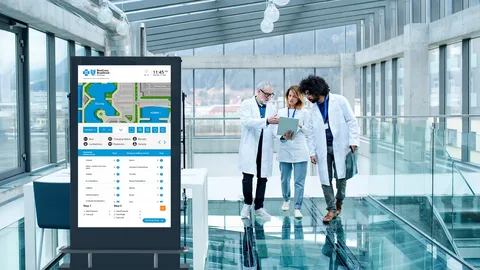
Healthcare environments can feel overwhelming, particularly for patients who may already be anxious about appointments or treatments. Navigating large hospitals, clinics, or specialized centers without clear direction adds unnecessary stress and confusion. A well-designed wayfinding system supports smooth movement, reduces delays, and improves overall satisfaction. By combining clarity, accessibility, and thoughtful design, healthcare facilities can create an environment that is easier to navigate, ensuring patients and visitors reach their destinations confidently and without frustration.
What is Wayfinding in Healthcare?
Wayfinding in healthcare refers to the systems and tools used to guide patients, visitors, and staff through medical environments. It is not limited to signs alone but includes spatial design, visual cues, and digital solutions.
A complete wayfinding system typically includes:
- Directional signage
- Maps and directories
- Color-coded zones
- Architectural cues such as lighting or flooring
- Digital navigation tools
Healthcare facilities often have complex layouts, multiple departments, and specialized areas. Without a structured navigation system, patients may struggle to find their way, leading to delays and confusion. Wayfinding ensures that movement within the facility is intuitive and efficient.
Why Wayfinding Matters in Healthcare Settings
Effective wayfinding is not simply about convenience; it plays a crucial role in the overall functioning of healthcare environments.
Reduces Patient Stress
Hospitals can be intimidating spaces. Clear directions help patients feel more at ease, especially when attending appointments or visiting loved ones.
Improves Efficiency
When patients can navigate independently, staff spend less time giving directions and more time focusing on care delivery.
Supports Accessibility
Well-designed navigation systems accommodate individuals with different needs, including those with visual impairments, mobility challenges, or language barriers.
A strong wayfinding strategy ensures that everyone, regardless of their circumstances, can move through the facility with confidence.

Key Elements of Effective Wayfinding Systems
Clear Signage
Signage must be easy to read, well-lit, and placed at key decision points. The use of simple language and recognisable symbols is essential.
Logical Layout
The physical layout of a healthcare facility should support intuitive navigation. Corridors, entrances, and departments should be arranged in a way that naturally guides movement.
Consistent Design Language
Consistency in colors, fonts, and symbols helps users recognize patterns and follow directions more easily.
Digital Integration
Modern healthcare facilities increasingly incorporate digital tools such as interactive maps or mobile navigation apps, which complement traditional signage systems.
Role of Wayfinding Signage in Patient Experience
Wayfinding signage plays a central role in shaping how patients interact with a healthcare environment. It acts as a constant guide, offering reassurance and clarity.
Key aspects include:
- Visibility: Signs should be positioned where decisions are made, such as intersections or entrances.
- Readability: Clear fonts and appropriate sizing ensure information can be understood quickly.
- Consistency: Uniform design avoids confusion and supports faster recognition.
Effective wayfinding signage reduces hesitation and helps patients feel more in control of their journey. This is particularly important in healthcare settings, where emotional comfort is just as valuable as physical care.
Benefits for Healthcare Staff and Operations
While patients benefit significantly from wayfinding systems, staff also experience noticeable improvements in their daily routines.
Reduced Interruptions
Staff are often approached for directions. Clear navigation systems minimize these interruptions, allowing professionals to focus on their responsibilities.
Better Workflow
Efficient patient movement reduces congestion in corridors and waiting areas, improving overall workflow.
Time Efficiency
Appointments are less likely to be delayed when patients arrive at the correct location on time.
These operational benefits contribute to a smoother, more organized healthcare environment.
Importance of Personalized Outdoor Signs
Navigation begins before a patient even enters the building. Personalized outdoor signs play a vital role in guiding visitors from the moment they arrive.
These signs help with:
- Identifying entrances and parking areas
- Directing patients to specific departments
- Creating a welcoming first impression
Personalized outdoor signs also reinforce branding, ensuring a consistent visual identity from the exterior to the interior of the facility. When designed thoughtfully, they reduce confusion and make the entire navigation process more seamless.
Designing Wayfinding Systems for Accessibility
Accessibility is a critical consideration in healthcare design. Wayfinding systems must cater to a diverse audience with varying needs.
Visual Clarity
High contrast colors and large text improve visibility for individuals with visual impairments.
Multilingual Support
Healthcare facilities often serve diverse communities. Including multiple languages ensures that information is accessible to a wider audience.
Inclusive Design
Symbols, tactile elements, and audible cues can support individuals with different abilities.
An inclusive approach ensures that navigation systems are not only functional but also equitable, allowing everyone to move through the space with ease.
Common Challenges in Healthcare Navigation
Despite its importance, wayfinding in healthcare settings often faces several challenges.
- Complex layouts: Large facilities with multiple departments can be difficult to navigate.
- Inconsistent signage: Lack of uniformity can confuse users.
- Overcrowding: High foot traffic may obscure signs or create bottlenecks.
- Poor planning: Wayfinding is sometimes considered late in the design process, leading to inefficiencies.
Addressing these challenges requires careful planning and a user-centered approach.
Best Practices for Implementing Wayfinding Solutions
Creating an effective wayfinding system involves more than installing signs. It requires a strategic and structured approach.
Planning and Auditing
Conducting a thorough assessment of the facility helps identify navigation challenges and opportunities for improvement.
Consistency
Using uniform colors, symbols, and terminology ensures clarity throughout the environment.
Maintenance and Updates
Signage must be kept up to date to reflect changes in layout or services.
Strategic Placement
Signs should be positioned at key decision points to guide users effectively.
By following these practices, healthcare facilities can create systems that are both functional and user-friendly.
Future Trends in Healthcare Wayfinding
As technology continues to evolve, healthcare wayfinding is becoming more advanced and interactive.
Smart Signage
Digital displays can provide real-time information and updates, improving accuracy and responsiveness.
Digital Kiosks
Interactive kiosks allow users to search for directions and receive personalized guidance.
Mobile Integration
Mobile apps enable patients to navigate facilities using their smartphones, offering step-by-step directions.
These innovations are shaping the future of healthcare navigation, making it more intuitive and efficient.
Conclusion
Effective navigation systems are essential in healthcare environments, ensuring patients, visitors, and staff can move with ease and confidence. From clear interior guidance to well-placed personalized outdoor signs, every element contributes to a seamless experience. Investing in thoughtful wayfinding signage supports efficiency, accessibility, and overall satisfaction. For healthcare providers aiming to improve navigation and communication, working with experts such as Sign Company London can make a meaningful difference in delivering clear, reliable, and user-friendly solutions.