






Concrete is one of the most essential construction materials used worldwide. It forms the foundation of buildings, bridges, roads, and other infrastructure projects. Because of its widespread use, ensuring its quality is extremely important for safety and long-term durability.
One of the most important methods used in Construction Material Testing is the compressive strength test of concrete. This test helps determine how much load concrete can withstand before it fails.
Understanding the Compressive Strength Test of Concrete Explained allows engineers, contractors, and builders to ensure that structures are safe, stable, and durable. Professional testing services like Ubixa Lab Testing play a key role in delivering accurate and reliable results for construction projects.
What Is the Compressive Strength Test of Concrete?
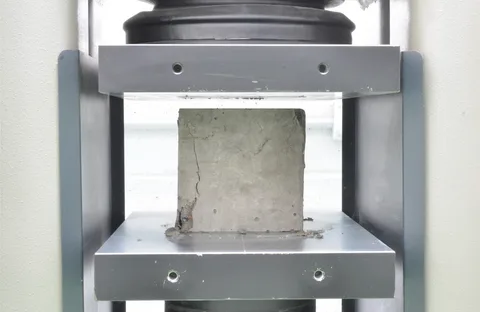
The compressive strength test is a fundamental procedure used to measure the ability of concrete to resist compressive loads. In simple terms, it checks how much pressure concrete can handle before it breaks or cracks.
Concrete is naturally strong in compression but weak in tension. Therefore, this test is essential to evaluate whether the material can safely support structural loads throughout its lifespan. At Ubixa Lab Testing, this test is conducted in NABL-accredited laboratories using advanced equipment. The process follows international standards to ensure accuracy, consistency, and reliability in results.
Purpose of the Compressive Strength Test
The compressive strength test serves several important purposes in construction and engineering.
- First, it ensures structural safety. By testing the strength of concrete, engineers can confirm whether it is capable of handling design loads without failure.
- Second, it supports quality control. Each batch of concrete must meet required strength standards to ensure consistency across the project.
- Third, it ensures compliance with industry standards such as IS, ASTM, and other construction codes.
- Finally, it helps predict durability. Stronger concrete generally leads to longer-lasting structures with better resistance to environmental conditions.
Together, these factors make the test essential for safe and reliable construction practices.
Procedure of the Compressive Strength Test
The compressive strength test follows a standardized process to ensure accuracy and consistency. It is usually performed on concrete cubes or cylinders.
- First, concrete samples are prepared by pouring fresh concrete into molds. These molds are carefully compacted to remove air gaps and ensure uniform density.
- Next, the samples are cured under controlled conditions. This curing process typically lasts for 7, 14, and 28 days, depending on testing requirements. Proper curing is important because it allows concrete to gain its full strength.
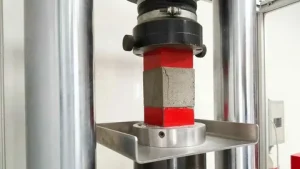
- After curing, the specimens are placed in a compression testing machine. Gradually, pressure is applied until the concrete sample breaks. The maximum load at failure is recorded.
- Finally, compressive strength is calculated by dividing the load at failure by the cross-sectional area of the specimen.
Ubixa Lab Testing ensures that each step is carried out with precision and follows NABL-accredited laboratory standards.
Importance of the Compressive Strength Test
The compressive strength test plays a crucial role in ensuring construction quality and safety.
- First, it ensures structural safety. Buildings, bridges, and infrastructure must withstand heavy loads, and this test confirms that requirement.
- Second, it supports quality assurance. Engineers can verify that the concrete mix meets design specifications before use in construction.
- Third, it improves project efficiency. Early testing helps identify problems in the concrete mix, reducing delays and avoiding costly rework.
- Fourth, it enhances durability. Strong concrete structures can resist environmental stress such as weather changes, moisture, and load pressure.
- Finally, it helps reduce construction costs by preventing failures and ensuring long-term performance.
Role of Ubixa Lab Testing
Ubixa Lab Testing is a trusted name in Construction Material Testing, offering accurate and reliable compressive strength testing services. The laboratory is NABL-accredited, ensuring that all tests meet national and international quality standards. Experienced professionals handle each test using advanced equipment, which ensures precise and consistent results.
Ubixa Lab Testing also provides timely reporting, helping engineers and contractors make quick and informed decisions for their projects. In addition, the company offers comprehensive concrete testing solutions, making it a one-stop destination for construction quality assurance needs.
Benefits of Compressive Strength Testing
Compressive strength testing provides several benefits to construction projects.
- First, it improves safety by ensuring that concrete structures can withstand applied loads without failure.
- Second, it enhances quality control by confirming that concrete meets required standards before use.
- Third, it reduces risks by identifying weak concrete batches early in the construction process.
- Fourth, it improves cost efficiency by preventing structural damage and reducing repair expenses in the future.
- Finally, it increases confidence among engineers, contractors, and clients by ensuring reliable and tested materials are used.
Why Accurate Testing Matters in Construction
Accurate testing is essential because even small errors in concrete strength can lead to serious structural issues. Weak concrete can cause cracks, instability, or even collapse under heavy loads. Therefore, professional testing laboratories like Ubixa Lab Testing play a vital role in maintaining construction safety. By following strict testing procedures, they ensure that only high-quality concrete is used in projects.
This helps engineers design stronger structures and ensures long-term durability.
Conclusion
The compressive strength test of concrete is a key part of Construction Material Testing and plays an essential role in ensuring structural safety and durability. It helps engineers understand how much load concrete can handle and ensures compliance with quality standards.
The Compressive Strength Test of Concrete Explained highlights its importance in preventing structural failures and improving construction quality. From sample preparation to final load testing, every step is crucial for accurate results.
With trusted providers like Ubixa Lab Testing, construction professionals can ensure precise, reliable, and NABL-accredited testing services. This guarantees stronger structures, better performance, and long-lasting safety in every construction project.