






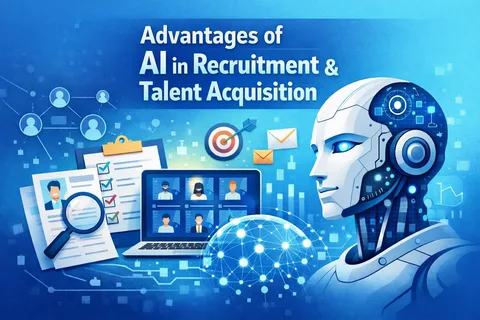
Organizations across the world are competing to achieve faster growth and stronger market positions. However, many still struggle to secure top talent. According to a McKinsey report, one of the key challenges is a shortage of skilled professionals. For decades, companies have depended on traditional hiring methods. These include manual resume screening, subjective evaluations, and reactive recruitment processes. This is where AI in talent acquisition is making a major impact. It transforms hiring through data, automation, and predictive insights.
While these approaches once worked, they are no longer effective in today’s fast-moving digital economy. As demand for skilled IT professionals increases, businesses need smarter solutions.
Traditional Hiring Methods Are No Longer Effective
Traditional recruitment systems face several limitations in today’s competitive environment.
- First, the process is slow. Manual resume screening and interview scheduling often take weeks. This delays hiring and causes companies to lose top candidates.
- Second, bias remains a challenge. Even with the best intentions, human decision-making can unintentionally favor certain candidates. This reduces diversity and fairness in hiring.
- Third, costs are high. Recruitment agencies, multiple interview rounds, and manual coordination increase overall hiring expenses.
- Finally, inconsistency in decision-making leads to poor hiring choices. Without data-driven evaluation, companies may select candidates who are not the right fit, increasing turnover rates.
Transformation of AI In Talent Acquisition
AI is reshaping recruitment by introducing speed, accuracy, and automation into the hiring process. One major advantage is faster hiring. AI quickly scans resumes and shortlists candidates in a fraction of the time compared to manual processes.
Another benefit is cost reduction. Automation reduces dependency on external agencies and lowers internal workload. AI also improves hiring quality. Instead of relying only on resumes, it evaluates skills, experience, and job fit using advanced algorithms. In addition, AI can handle large volumes of applications easily. This allows companies to scale recruitment without increasing workload or delays.
How AI Is Redefining IT Recruitment Pipelines
AI is significantly improving enterprise IT hiring by making the entire process more efficient and data-driven.
Automated Resume Screening
AI tools scan resumes in seconds and identify the most qualified candidates. This reduces manual workload and helps HR teams focus on strategic tasks like interviews and onboarding.
Bias Reduction in Hiring
AI evaluates candidates based on objective data such as skills, qualifications, and experience. This helps reduce human bias and ensures fairer hiring decisions.
Faster Candidate Shortlisting
AI systems rank candidates based on relevance and job requirements. As a result, recruiters can quickly focus on top talent without wasting time on unqualified applications.
Improved Candidate Matching
AI considers both technical skills and soft skills to match candidates with suitable roles. Predictive analytics also helps estimate long-term job performance.
Better Candidate Experience
AI enhances communication by providing instant updates, feedback, and personalized job recommendations. This keeps candidates engaged throughout the hiring process.
Top AI Recruitment Tools in 2026
Many AI-powered tools are reshaping modern recruitment. Here are some widely used platforms:
- HireVue – Uses AI for video interviews and candidate scoring, helping reduce hiring time.
- Pymetrics – Uses neuroscience-based games to match candidates with suitable roles and reduce bias.
- Hiretual – Helps recruiters source talent efficiently using AI-driven search capabilities.
- XOR.ai – Automates candidate communication through conversational AI, improving engagement.
- Eightfold AI – Offers advanced talent matching and helps improve long-term employee retention.
These tools demonstrate how AI can simplify hiring while improving accuracy and efficiency.
Challenges of Implementing AI in Recruitment
Despite its advantages, AI adoption in hiring comes with challenges.
Resistance to Change
Many HR teams hesitate to adopt AI due to fear of job replacement or lack of technical knowledge. Training and workshops can help ease this transition.
Data Privacy Concerns
Recruitment involves sensitive candidate data. Companies must ensure compliance with regulations like GDPR and maintain strong data security practices.
AI Bias Risks
If not trained properly, AI systems can still reflect biases. Regular audits and updates are necessary to maintain fairness.
High Initial Investment
AI tools require upfront investment. However, over time, they reduce hiring costs and improve efficiency, delivering strong ROI.
System Integration Issues
Integrating AI tools with existing HR systems can be complex. Choosing compatible platforms and vendor support helps ensure smooth implementation.
The Role of IT Staff Augmentation in AI Hiring
While AI improves recruitment efficiency, many organizations still face urgent skill gaps. In such cases, partnering with IT staff augmentation providers can be a practical solution.
These providers help companies access skilled IT professionals quickly for short-term or project-based needs. This ensures businesses continue operations without delays while building long-term hiring strategies supported by AI-driven insights.
Conclusion
AI is no longer just an optional tool in recruitment—it is becoming a core part of modern hiring strategies. It transforms talent acquisition from a slow, manual process into a fast, intelligent, and data-driven system.
By automating repetitive tasks, improving candidate matching, and reducing bias, AI allows HR teams to focus on what truly matters: hiring the right people.
However, successful adoption requires careful planning, ethical implementation, and the right tools. Companies that embrace AI in talent acquisition today will gain a strong competitive advantage in tomorrow’s talent-driven economy.