






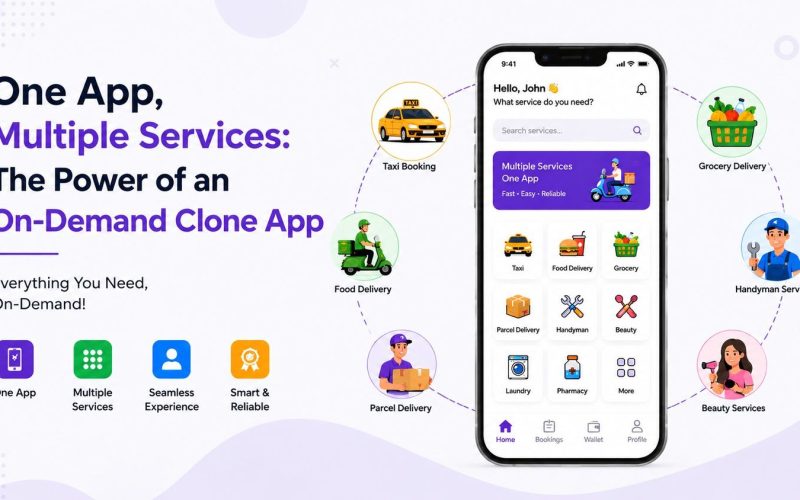
In today’s lightning-fast digital world, on-demand clone apps have transformed from simple copies into powerful engines for business growth. These platforms allow companies to streamline their operations while dramatically improving the customer experience. By offering multiple services through a single, unified interface, these apps simplify life for the user and provide a cost-effective way for businesses to enter diverse markets.
As the craving for convenience hits an all-time high, understanding the dynamics of clone apps is no longer optional—it is a survival skill. This article explores the core characteristics, benefits, and future trends of this evolving sector.
What Exactly Are On-Demand Clone Apps?
A Fresh Definition
Think of an on-demand clone app as a high-quality “remix” of a popular service. Just as a musician might cover a hit song with a new beat, entrepreneurs use clone apps to replicate proven business models. These apps are not just blatant copies; they are functional frameworks that allow startups to hit the ground running. By using a blueprint that already works, you avoid the expensive and time-consuming “trial and error” phase of software development.
Original Apps vs. Clone Apps
Original apps, like the early versions of Uber or Airbnb, often require years of research and millions in venture capital. In contrast, clone apps focus on speed and adaptability. While the “original” acts as a trendsetter, the “clone” acts as a smart optimizer. Developers take the core functionality—like GPS tracking or secure payments—and tweak it to serve a specific niche, such as a local delivery service or a specialized home-repair platform.
Success Stories in the Market
You already know the giants, but their “clones” are equally impressive. For example, Lyft effectively mirrored Uber’s ride-sharing model but carved out its own space through different branding and driver-centric policies. Similarly, Oyo Rooms adapted the Airbnb concept to fit the specific needs of the budget hotel market in Asia. These examples prove that you don’t have to be the first to market to be the best in your category.
The Anatomy of a Successful Clone App
To thrive in a crowded app store, a clone app must do more than just function. It needs a specific set of features that drive user loyalty.
1. Customizability and Scalability
A great clone app acts like a flexible foundation. You must be able to customize the design to reflect your brand’s unique voice. Furthermore, scalability is non-negotiable. If your user base jumps from 100 to 100,000 overnight, your server shouldn’t crash. A well-built clone handles growth without a technical tantrum.
2. Intuitive User Interface (UI)
First impressions are everything. If a user spends more than ten seconds trying to figure out how to book a service, they will delete your app. High-performing clones prioritize a sleek, “thumb-friendly” design. Everything should feel natural, from the login screen to the final checkout.
3. The “Swiss Army Knife” Approach
Modern users suffer from “app fatigue.” They don’t want fifteen different icons cluttering their home screen. The most successful clone apps integrate multiple services—like ride-hailing, food delivery, and pharmacy pick-ups—into one Super App. This consolidation creates a one-stop-shop that makes your platform indispensable.
Why Consolidation Wins the Market
Maximum Convenience
Why would a customer open three different apps when they can find everything in one place? Consolidation eliminates friction. When you offer a seamless transition between booking a taxi and ordering dinner, you provide a level of convenience that builds an emotional connection with the user.
Business Cost Efficiency
Building five separate apps requires five separate budgets for development, security, and marketing. However, a multi-service clone app allows you to share resources across different verticals. This efficiency lets you allocate more money toward customer acquisition and better service quality.
Stickier Customer Retention
Offering a variety of services keeps users within your ecosystem. If a customer uses your app for their morning commute and their evening meal, they are far less likely to switch to a competitor. This “sticky” behavior is the holy grail of digital marketing.
Mastering the User Experience (UX)
Navigating with Ease
Intuitive navigation acts as a silent guide for your users. Clear categories, a powerful search bar, and rapid loading times are the ingredients for success. If the navigation feels effortless, users will return. If it feels like a maze, they will vanish.
The Power of Personalization
Data is the new oil, and personalization is the engine. By analyzing user behavior, your app can suggest services that actually matter to the individual. For instance, if a user frequently orders vegan food, the app should highlight plant-based restaurants on the home screen. This makes the user feel valued, shifting the relationship from a mere transaction to a personal partnership.
Feedback Loops
The launch is only the beginning. You must integrate feedback tools that allow users to rate their experience. Use this data to polish the rough edges of your service. Continuous improvement ensures that your app stays modern and relevant as consumer tastes change.
How to Make Money: Monetization Strategies
Subscriptions and “Freemium” Models
Many clones use a subscription model to generate steady, recurring revenue. You might offer the basic service for free but charge a monthly fee for “Gold” features, such as zero delivery fees or priority support. This provides a predictable cash flow that helps you scale.
Smart Advertising
While ads can be annoying, they are a powerful revenue stream if handled correctly. The key is relevance. Show users ads that complement their current activity. For example, show a discount for a local car wash to someone who just booked a car detailing service.
Strategic Partnerships
Don’t go it alone. Partner with local vendors and take a small commission for every lead you generate. This creates a “win-win” scenario: the local business gets a new customer, the customer gets a great service, and you earn a fee for facilitating the match.
Navigating Challenges and Roadblocks
Legal and Ethical Guardrails
Developing a clone app requires a careful legal strategy. You must respect trademarks and copyrights. Ensure your code is original, and your branding is distinct enough to avoid “confusing similarity” lawsuits. Furthermore, prioritize data privacy laws like GDPR to build long-term trust with your audience.
Technical Hurdles
Merging different services into one app is technically demanding. You have to manage multiple APIs (Application Programming Interfaces) and ensure they communicate perfectly. Extensive testing is your best friend here. A single bug in the payment gateway can ruin your reputation instantly.
Standing Out in a Crowd
Because clone apps are easier to build, the market is competitive. To win, you need a “unique selling proposition” (USP). Perhaps your app offers the fastest delivery in the city, or maybe it supports local charities with every purchase. Find a way to be different, even if your technology is similar to others.
The Future of the On-Demand Economy
Emerging Tech
We are entering the era of AI and Augmented Reality (AR). Future clone apps will likely use AI to predict when a customer is about to run out of groceries, automatically adding items to their cart. AR could allow users to “see” a service provider’s location in real-time through their camera lens.
Changing Consumer Habits
The “instant gratification” culture is here to stay. Consumers now expect services to be faster, cheaper, and more personalized. Apps that fail to adapt to these shifting rhythms will quickly become obsolete.
Final Thoughts
On-demand clone apps offer a golden opportunity for savvy entrepreneurs. By taking a proven idea and adding a layer of local expertise and superior UX, you can build a massive business in a fraction of the time it takes to build from scratch. As technology moves forward, the “Super App” model will likely become the standard for how we interact with the world around us.
Frequently Asked Questions
-
Is it legal to build a clone app? Yes, as long as you do not steal proprietary code, images, or trademarks. You are replicating a business model, not stealing intellectual property.
-
How long does it take to launch? Unlike custom apps that take a year to develop, a high-quality clone can often be launched in 3 to 6 months.
-
Do I need a large team? No. Many clone app frameworks are “white-label” solutions, meaning you can start with a small team focused on marketing and operations.