





Handling large crowds has always been one of the worst headaches for law enforcement agencies. Whether at protests, public events, or in emergencies, maintaining order while keeping the public safe is a delicate balance. Force was seen as the first response, which could often escalate tensions and lead to unintended consequences.
Less-lethal munitions have changed crowd control tactics in recent years. These tools offer law enforcement alternatives, enabling them to control a situation with less potential for serious injury or even death. While new technology has been often called on to improve policing, the use of less-lethal options is increasingly seen as an essential component at a time when public expectations for accountability and restraint are robust.
Understanding Less-Lethal Munitions
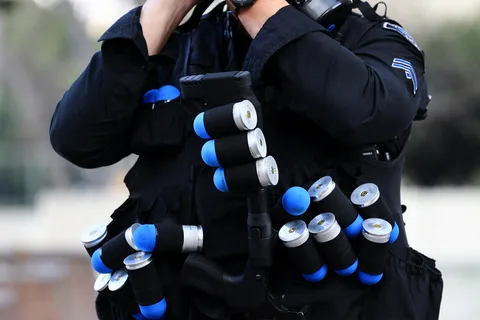
Less-lethal munitions are intended to incapacitate or deter a subject without causing permanent injury. These tools balance the need to minimize fatalities in an alternative way from conventional firearms, especially for law enforcement action that is potentially dangerous. These can include impact rounds, chemical agents and other dispersal mechanisms. Each does a specific job, from dispersing aggressive crowds to putting space between officers and people. The true versatility of these bananas makes them an important resource for a variety of situations.
Knowing how to use these munitions and when is a vital part of using them effectively and safely.
Enhancing Officer Safety Without Escalation
The main advantage of less-lethal munitions is that they can help protect officers without quickly resorting to deadly force. In volatile situations, officers can be threatened, requiring prompt action. Less-lethal options offer a third way, giving officers the ability to act with force but avoiding irreversible results.
Officers should be able to protect themselves without heightening the risk of grave injuries by keeping a safer distance and using controllable force. Doing so not only enhances operational effectiveness but also mitigates the emotional and legal ramifications of employing lethal force.

Accuracy and Predictability
Less-lethal munitions have the distinct advantage of being directed at minimizing harm. No tool is without risk, but these munitions are purposely designed to minimize the chance of death or life-changing injuries. The accuracy and predictability of these tools have improved thanks to advancements in materials and design. This enables officers to focus their efforts and act with greater precision. Consequently, there is very little risk of accidental injuries when using these devices as opposed to the cutting methods.
This all includes reducing harm, not only for those directly involved but also in terms of sustaining public trust and confidence in law enforcement.
Supporting De-Escalation Strategies
Modern crowd control techniques encourage de-escalation when feasible. Key to achieving that goal is the use of less-lethal munitions, which offer options to deter aggressive behavior without escalating conflicts. For instance, the people, whose crowds can be persuaded to move away from without direct physical force through controlled dispersing mechanisms. This allows communication and negotiation to take place, which are crucial elements in de-escalation.
As less forceful responses become a priority, law enforcement agencies are better able to control the situation at hand.
Increasing Flexibility in Tactical Response
Law enforcement must adapt quickly, as crowd dynamics can change in an instant. Less-lethal munitions provide a continuum of responses that can be calibrated to various situations. Commands from small teams to large-scale disturbances are provided within these tools on-demand and in response. In the case of serious and less serious events, officers may choose different levels of force.
This flexibility is critical when dealing with situations that are more nuanced and would respond poorly to a universal approach.
Improving Public Perception and Trust
Law enforcement efficacy is largely contingent on public perception. Abuse of force can erode trust and negatively affect community relations for decades. Less toxic munitions maintain safety and prevent harm. If used responsibly, they can help ensure confidence in police practices.”
This trust is bolstered by transparency, adequate training and specific outlines. By demonstrating the measures taken to ensure limited exposure, agencies can bolster their rapport with service communities.
Connected to Training and Policy Development
The use of less-lethal munitions depends significantly on appropriate training and policy clarity. Law documentaries are also more common, possibly with the conscious risk of allowing viewers to watch law enforcement methods and techniques. The training includes scenario-based exercises, decision-making frameworks, and guidance on proportionality of force. Policies are being updated too to reflect best practices and ensure accountability.
The synergy between technology, training, and policy provides a more managed and accountable interaction with the social groups.
Leveraging Technology for Better Outcomes
Technology is improving the effectiveness of less-lethal munitions. Enhanced targeting systems and data tracking is making real-time monitoring of these tools increasingly effective and reliable. Some systems, for example, now offer tracking and performance analytics capabilities for agencies. Such data may be useful for identifying lessons learned and improving future responses.
Technology also provides better coordination of officers so that actions within operations are well-aligned and consistent.
Challenges and Considerations
While less-lethal munitions have many advantages, they also come with challenges. Injuries and escalation of dangerous situations are still a risk when used improperly or without proper training. Such risks pose a need for agencies to be able to train and evaluate some of these issues. Moreover, public worries about misuse or overuse should be taken seriously. To ensure responsible use of Ai, open communication and stewardship of potential dangers are key.
This is a continuous process of balancing effectiveness and ethical concerns that needs careful attention and engagement.
Conclusion: A more clever system for crowd control
According to Combined Systems Less-lethal munitions that are changing the paradigm of crowd control by making it safer, more flexible and effective for law enforcement. They allow officers to more accurately control potentially volatile scenarios—without the likelihood of serious injury.
Will be essential in ensuring public safety as technology and training advance further. Law enforcement agencies can formulate approaches that keep officers and the communities they serve safe by placing a premium on de-escalation, accountability and innovation.
However, in a context where demands for responsible policing have never been higher, less-lethal munitions serve as an essential component to delivering safer and more humane crowd management.