





Mobile Application Development has become a cornerstone for businesses aiming to connect with their audience, streamline operations, and enhance customer experiences. With billions of smartphone users worldwide, mobile apps provide a powerful platform to engage users, build brand loyalty, and drive revenue growth. Whether you are a startup, entrepreneur, or enterprise, understanding the fundamentals of Mobile Application Development is essential for long-term success.
What is Mobile Application Development?
Mobile Application Development in Noida refers to the process of designing, building, testing, and maintaining applications that run on mobile devices such as smartphones and tablets. These applications are typically available through app stores and are built to perform specific tasks, ranging from communication and entertainment to e-commerce and productivity.
Mobile apps are designed to leverage device features such as cameras, GPS, sensors, and push notifications, offering users a more interactive and personalized experience compared to traditional web applications.
Types of Mobile Applications
Understanding the different types of apps is crucial when starting a Mobile Application Development project:
1. Native Applications
2. Hybrid Applications
3. Web Applications
Web apps are not installed on the device but are accessed through web browsers. While they are easier to maintain and develop, they may not provide the same level of performance or user experience as native or hybrid apps.
Key Steps in Mobile Application Development
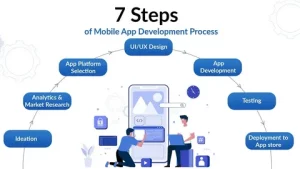
A successful Mobile Application Development process involves several structured stages:
1. Idea and Strategy
Every app begins with an idea. Establish the aim of your application, determine your intended users, and summarize the main functionalities. A well-defined strategy sets the foundation for the entire development process.
2. Market Research
Research your competitors and analyze market trends. This helps you identify gaps, understand user expectations, and refine your app concept for better success.
3. UI/UX Design
User Interface (UI) and User Experience (UX) design play a vital role in the success of any mobile application. A visually appealing, clean, and easy-to-use interface helps attract and retain users. Good UX ensures smooth interaction, making the app simple to navigate and understand. Developers should focus on intuitive navigation, fast loading speed, responsive design, and accessibility. Prioritizing user needs and comfort leads to higher engagement, better satisfaction, and overall improved performance of the application.
4. Development
This phase involves coding the app using suitable programming languages and frameworks. Developers work on both frontend (user interface) and backend (server, database, APIs) components.
5. Testing and Quality Assurance
Testing ensures that your app is free from bugs and performs smoothly across different devices and operating systems. It includes functional testing, usability testing, performance testing, and security testing.
6. Deployment
Once testing is complete, the app is launched on platforms like the Google Play Store and Apple App Store. Proper optimization and compliance with store guidelines are essential during this phase.
7. Maintenance and Updates
Mobile Application Development does not end with deployment. Consistent updates, repairs, and improvements are essential to maintain the app’s relevance and competitiveness
Technologies Used in Mobile Application Development
Choosing the right technology stack is a critical aspect of Mobile Application Development. Some commonly used technologies include:
- Programming Languages: Java, Katlin, Swift, Dart, JavaScript
- Frameworks: Flutter, React Native, Xamarin, Ionic
- Backend Technologies: Node.js, Python, Ruby on Rails
- Databases: Firebase, MongoDB, MySQL
- Cloud Services: AWS, Google Cloud, Microsoft Azure
The choice of technology depends on your app’s requirements, scalability needs, and budget.
Benefits of Mobile Application Development
Investing in Mobile Application Development offers numerous advantages for businesses:
1. Enhanced Customer Engagement
Mobile apps allow businesses to interact directly with users through notifications, updates, and personalized content.
2. Improved Brand Visibility
Having a mobile app increases your brand’s presence on users’ devices, making it easier to stay top-of-mind.
3. Better User Experience
Apps provide faster performance and smoother navigation compared to mobile websites, resulting in a better user experience.
4. Increased Revenue Opportunities
Mobile apps open up new revenue streams through in-app purchases, subscriptions, and advertising.
5. Access to User Data
Businesses can gather valuable insights through analytics, helping them make data-driven decisions.
Challenges in Mobile Application Development
Despite its advantages, Mobile Application Development comes with certain challenges:
1. Device Fragmentation
There are numerous devices with different screen sizes, resolutions, and operating systems, making development and testing complex.
2. Security Concerns
Protecting user data is critical. Developers must implement strong security measures to prevent data breaches.
3. Performance Optimization
Ensuring that the app runs smoothly without crashes or slow loading times is essential for user retention.
4. Cost and Time Constraints
Developing a high-quality app requires significant investment in terms of time, money, and resources.
5. Continuous Updates
Technology evolves rapidly, and apps need regular updates to stay relevant and functional.
Best Practices for Successful Mobile Application Development
To ensure success in Mobile Application Development, follow these best practices:
- Focus on user-centric design
- Keep the interface simple and intuitive
- Optimize app performance and speed
- Ensure strong security measures
- Conduct regular testing and updates
- Gather user feedback and improve continuously
Future Trends in Mobile Application Development
The future of Mobile Application Development is shaped by emerging technologies and innovations:
1. Artificial Intelligence (AI) and Machine Learning (ML)
AI-powered apps can provide personalized experiences, chatbots, and predictive analytics.
2. Augmented Reality (AR) and Virtual Reality (VR)
These technologies are enhancing user engagement, especially in gaming, retail, and education.
3. 5G Technology
Faster internet speeds will enable more advanced and feature-rich mobile applications.
4. Internet of Things (IoT)
Mobile apps are increasingly being used to control smart devices, creating a connected ecosystem.
5. Blockchain Technology
Blockchain enhances security and transparency, especially in financial and data-sensitive applications.
Conclusion
Mobile Application Development in India is a dynamic and rapidly evolving field that plays a vital role in today’s digital landscape. From idea generation to deployment and beyond, each stage requires careful planning, technical expertise, and a user-focused approach. Businesses that invest in high-quality mobile apps can significantly improve their customer engagement, brand visibility, and overall growth.
By understanding the development process, choosing the right technologies, and staying updated with the latest trends, you can create powerful mobile applications that deliver real value to users. As technology continues to advance, Mobile Application Development will remain a key driver of innovation and digital transformation.