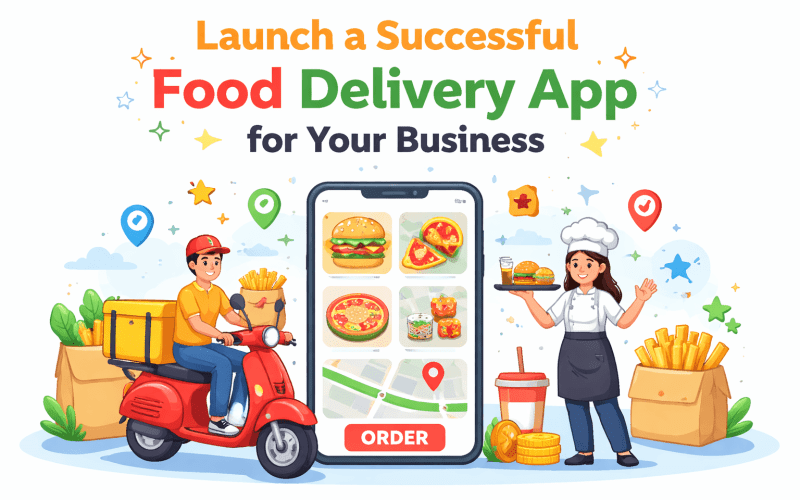
The digital food revolution is no longer a future concept; it is a current reality that has fundamentally altered how the global population consumes meals. For entrepreneurs and restaurateurs, launching a mobile platform is no longer just an upgrade—it is a strategic survival tactic. However, entering this crowded arena requires more than just a functional interface. Success demands a deep understanding of hyper-local trends, psychological user triggers, and robust logistics. This comprehensive guide outlines the essential blueprint for building a food delivery app that captures market share and fosters long-term user loyalty.
1. Analyzing the 2026 Delivery Ecosystem
Before writing a single line of code, you must understand the environment. The “delivery” label now encompasses much more than standard takeout.
-
Emerging Models: Ghost kitchens (delivery-only facilities) and AI-driven meal subscription services are currently dominating the industry.
-
Sustainability as a Standard: Modern consumers prioritize eco-friendly initiatives. Brands that offer carbon-neutral delivery or biodegradable packaging often see higher retention rates.
-
The Niche Advantage: Major players like Uber Eats or DoorDash offer everything, but they often lack specialization. Opportunities exist in underserved sectors, such as farm-to-table logistics, hyper-local ethnic cuisines, or specialized dietary kits (e.g., medical-grade keto or allergen-free zones).
2. Defining the Human Element: User Personas
An app designed for “everyone” often resonates with “no one.” To succeed, you must build for specific human behaviors. Use data to create detailed personas:
-
The “Time-Poor Professional”: Prioritizes speed and one-click reordering.
-
The “Health-Conscious Parent”: Needs detailed ingredient transparency and family-sized nutritional bundles.
-
The “Social Explorer”: Looks for trending dishes and “limited-time” influencer collaborations.
Conducting focus groups and digital surveys ensures your app solves real-world frustrations rather than perceived ones.
3. Essential Features of a High-Performance App
To compete in 2026, your app must provide a frictionless journey from hunger to satisfaction.
Intuitive Browsing and Personalization
Users should never feel overwhelmed. Implement smart filters that learn from past behavior. If a user frequently orders vegan Thai food, your interface should prioritize similar high-rated options. High-definition photography and clear customization toggles (e.g., “extra spice” or “no cilantro”) are non-negotiable.
Secure, Multi-Channel Payments
A clunky checkout process is the leading cause of cart abandonment. Integrate a variety of secure options, including digital wallets (Apple Pay, Google Pay), credit cards, and even local loyalty points. Ensure your encryption protocols are bank-grade to build immediate trust.
The “Live Map” Experience
Real-time GPS tracking has moved from a “luxury” to an “expectation.” Providing a live visual of the courier’s progress reduces “order anxiety” and keeps the user engaged with the app during the wait time.
4. Choosing the Right Technology Stack
Your technology choices dictate your app’s speed, security, and ability to grow.
| Component | Recommended Technology | Why It Matters |
| Frontend | React Native or Flutter | Allows for a single codebase that runs perfectly on both iOS and Android. |
| Backend | Node.js or Python (Django) | Handles high volumes of simultaneous requests with stability. |
| Database | PostgreSQL or MongoDB | Efficiently manages complex menus and user data. |
| Cloud Hosting | AWS or Google Cloud | Provides the scalability to handle “Friday night rushes” without crashing. |
5. UI/UX: Designing for “Hungry Eyes”
The user interface (UI) is your digital storefront. A successful design prioritizes minimalism and accessibility.
-
Mobile-First Mentality: Since over 90% of orders occur on mobile devices, the thumb-friendly design is critical. Navigation buttons should be within easy reach.
-
Accessibility: Ensure your app is inclusive. High-contrast modes, screen-reader compatibility, and voice-command integration allow users of all abilities to enjoy your service.
-
Visual Hierarchy: Use color and size to lead the eye. The “Order Now” button should be the most prominent element on the screen.
6. Marketing and Brand Authority
In a world of endless choices, your brand identity is your “secret sauce.”
-
Social Media and Influencers: Platforms like Instagram and TikTok are visual-first. Partner with local food influencers to create “crave-worthy” content that drives immediate downloads.
-
Incentive Programs: “Refer-a-friend” discounts and “First Order” promos are classic but effective tools to lower your customer acquisition cost (CAC).
-
Consistent Branding: Ensure your logo, tone of voice, and color palette remain consistent across all touchpoints, from the app icon to the delivery driver’s thermal bag.
7. Logistics: The Final Mile
Reliable logistics are the backbone of your reputation. If the food arrives cold, the best UI in the world cannot save the user experience.
-
Courier Management: Whether using a private fleet or third-party contractors, implement a driver-side app that optimizes routes using real-time traffic data.
-
Support Systems: Establish a proactive customer support team. If a delay occurs, notifying the customer before they ask shows transparency and professional care.
8. Measuring Success and Constant Iteration
A successful app is never “finished.” You must constantly analyze Key Performance Indicators (KPIs) to refine the experience.
-
User Retention Rate: How many people return for a second order within 30 days?
-
Average Order Value (AOV): Are your “upsell” features (like “add a drink”) working?
-
Delivery Time Accuracy: How often does the actual arrival match the estimated time?
Conclusion
Building a successful food delivery app in 2026 requires a harmonious blend of empathy and engineering. By focusing on a mobile-first user experience, leveraging a scalable tech stack, and maintaining a transparent logistics chain, you can transform a simple delivery service into a beloved household brand. The market is vast, but it rewards those who prioritize the customer’s journey from the first click to the final bite.
Frequently Asked Questions (FAQ)
Which features are most critical for a new food delivery app?
At a minimum, you need a searchable menu, secure payment gateways, real-time order tracking, and a two-way rating system for restaurants and drivers.
How can I make my app stand out against giants like Uber Eats?
Focus on a specific niche or “hyper-local” experience. Superior customer service and a loyalty program that rewards frequent users can often outperform the impersonal nature of global apps.
Is it better to build a native app or a cross-platform app?
For most startups, cross-platform frameworks like Flutter or React Native are ideal. They reduce development costs and time-to-market while providing a high-quality experience on both iPhone and Android.