


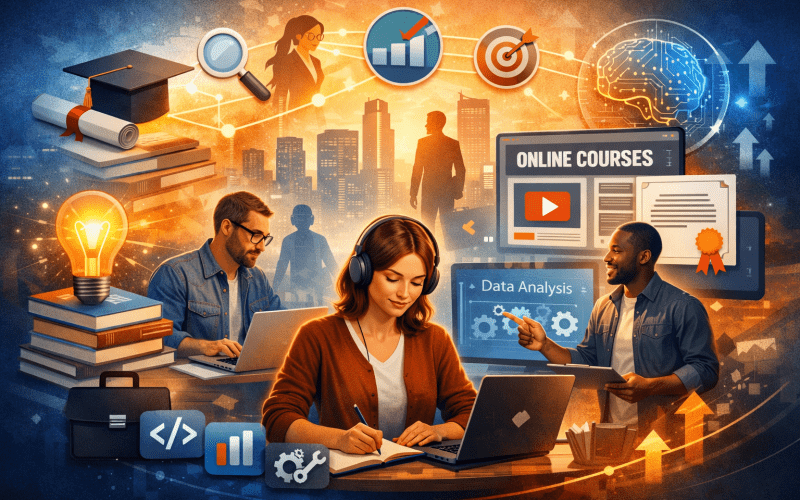
In the not-too-distant past, just having a degree was good enough to get a stable career. This is no longer true. The modern job market is more dynamic than traditional education systems can comfortably handle. New tools are introduced regularly, roles evolve quickly, and employers expect candidates to contribute meaningful value from their very first day at work.
It is this shift that has turned online skill-based learning from a nice-to-have option into something many professionals actively use to strengthen their career prospects. As competition grows across industries, individuals are increasingly looking for ways to stay relevant and job-ready.
Why Skills Matter More Than Titles Today
Employers across industries are rethinking how they evaluate candidates. While formal education still holds importance, it no longer guarantees workplace readiness. What matters more today is whether a candidate can actually perform the required tasks.
Hiring managers are carefully looking for:
- Practical, job-ready skills
- Proof of hands-on experience
- The ability to adapt quickly
- Familiarity with current tools and workflows
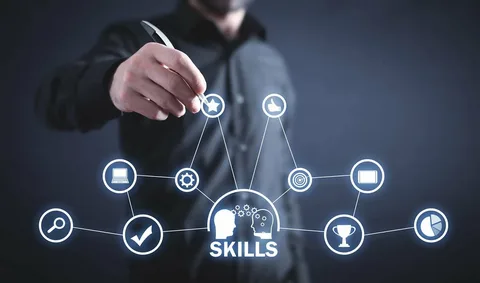
This is where skill-based online courses are making a noticeable difference. They focus on what professionals actually use at work, not just what they are expected to know in theory. By prioritizing application over memorization, these programs help learners become productive faster.
How Online Learning Fits Modern Careers
Career paths today are rarely linear. Many professionals change roles, industries, or even entire career directions over time. At the same time, people are managing work responsibilities, family commitments, and personal goals.
Traditional classroom learning does not always fit into this reality. Online learning for career growth offers the flexibility that both working professionals and students need. Courses can be accessed after office hours, during weekends, or at an individual’s own pace.
Another important advantage is speed. Online programs are often updated more frequently than traditional academic curricula. When industries evolve or new tools emerge, digital learning platforms can revise their content much faster, helping learners stay aligned with current market demands.
What Makes Skill-Based Learning Different
Skill-based learning is not about memorizing concepts for exams. It is about real-world application and practical understanding.
A well-designed online skill-based learning program typically focuses on:
- Real-world scenarios
- Practical assignments and projects
- Tools commonly used in the workplace
- Problem-solving rather than rote learning
Learners are trained to apply their knowledge immediately, whether they are analyzing data, building marketing campaigns, managing digital systems, or improving professional communication.
This practical approach significantly reduces the gap between learning and working. Instead of spending months adjusting to job requirements, skill-focused learners often adapt more smoothly to professional environments.
Who Benefits Most From Skill-Based Online Courses
Skill-based learning is not limited to one type of learner. It assists people at various points in their professional journeys.
Students often use these courses to build employable skills before entering the job market. Working professionals rely on them to upskill, reskill, or prepare for promotions. Career switchers use focused programs to transition into new fields without starting their education journey from scratch.
In many situations, short and targeted courses create more immediate impact than long academic programs, especially for learners who already have some professional exposure. The ability to learn specific, in-demand skills quickly is one of the biggest advantages of this model.
The Role of Online Platforms in Career Growth
Online learning platforms play a major role in making skill development more accessible. They remove geographic limitations and often reduce the financial barriers associated with traditional education.
Well-structured platforms offering skill-based online courses focus on relevance rather than volume. They guide learners toward skills that actually matter in the job market and provide structured pathways for improvement.
Platforms like Q Academy, for example, offer online programs designed around practical, job-relevant capabilities. The emphasis is on learning that connects directly to workplace expectations, which is what many learners are actively seeking in today’s competitive environment.
Why Employers Trust Skill-Based Learning More Than Before
Employers are no longer just accepting online learning — many actively encourage it. The reason is straightforward: candidates with applied skills tend to integrate faster into real work environments.
Skill-based learners often demonstrate:
- Faster onboarding
- Better adaptability
- Stronger problem-solving ability
- Greater confidence with tools and processes
When candidates can showcase their abilities through projects, portfolios, or applied training, it reduces uncertainty in hiring decisions. This growing trust is one of the key reasons online learning for career growth continues to gain acceptance across industries.
Long-Term Career Impact of Skill-Based Learning
Skill-based learning does not replace formal education; it strengthens it. Professionals who combine academic qualifications with continuous skill development are often better positioned for long-term success.
They tend to:
- Advance faster in their careers
- Stay relevant as industries evolve
- Navigate career transitions more smoothly
- Build stronger professional confidence
As the pace of change accelerates across sectors, the shelf life of skills continues to shrink. Those who develop a habit of continuous learning are better prepared to handle uncertainty and seize new opportunities.
Final Thought
Today, careers are defined less by where someone studied and more by what they are capable of doing in real work situations. Online skill-based learning offers a practical way to keep up with change, build confidence, and grow professionally.
For both students and working professionals, investing in skills is no longer optional. It is becoming an essential strategy for staying future-ready in a world where industries, tools, and job expectations continue to evolve.