





Training a puppy is full of small decisions that add up fast. One of the most overlooked choices is what we use as rewards. Treats are powerful tools, especially during the early months, but when used without intention, they can quietly undermine a puppy’s health.
For owners raising Bernedoodle puppies, this balance matters even more. These intelligent, food-motivated dogs learn quickly, but they also thrive best when nutrition and training work together instead of against each other.
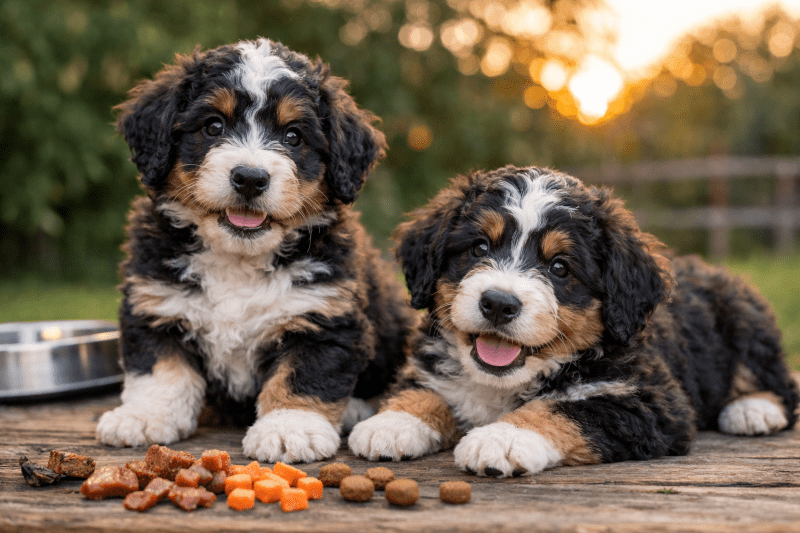
At Doodling Pups, LLC, the philosophy is simple: rewards should support growth, not sabotage it. Treats can reinforce good behavior, strengthen trust, and make training enjoyable, all while keeping puppies healthy, energetic, and well-balanced.
This guide breaks down how to use treats with purpose, what to look for in healthy rewards, and how real families successfully train Bernedoodles without overfeeding or compromising long-term wellness.
Why Treats Matter More Than You Think for Bernedoodle Puppies
Bernedoodle puppies are known for their sharp minds and eager-to-please personalities. This makes them ideal candidates for reward-based training. When used correctly, treats speed up learning and reduce frustration for both the puppy and the owner. The problem arises when treats are treated casually, given too often, or chosen without regard to nutritional value.
Because Bernedoodles are a cross between Bernese Mountain Dogs and Poodles, they can inherit sensitivities from either parent. Poor-quality treats loaded with fillers, artificial dyes, or excess fat can contribute to digestive upset, itchy skin, or unhealthy weight gain. Over time, these small choices can affect joint health, energy levels, and even behavior.
Using treats with purpose means understanding that every bite counts, especially during the rapid growth stages of puppyhood.
The Hidden Risks of Over-Treating
Many new owners assume that small treats do not add up, but they do. Puppies are small, and their calorie needs are limited. Even a few extra treats a day can quickly exceed what their bodies are designed to handle.
Some common risks of over-treating include:
- Unbalanced nutrition when treats replace real meals
- Weight gain that puts stress on developing joints
- Decreased motivation for regular food
- Digestive issues caused by inconsistent ingredients
- Training dependency where puppies only respond when food is visible
For Bernedoodle puppies, joint health is particularly important. Excess weight during growth can place unnecessary strain on hips and elbows, areas already watched closely in larger breeds.
Purpose-driven treat use avoids these pitfalls while still delivering results-driven training outcomes.
What Makes a Treat “Healthy” for Bernedoodle Puppies
Not all treats are created equal. A healthy reward supports training goals while complementing a puppy’s daily nutrition. The best treats share a few key qualities.
First, ingredient quality matters. Look for treats made with simple, recognizable ingredients. High-quality proteins, limited carbohydrates, and minimal processing are signs of a trusted and reliable option.
Second, size matters. Treats should be small enough to be consumed quickly. Training works best when the puppy can refocus immediately after the reward. For Bernedoodle puppies, pea-sized or smaller treats are ideal.
Third, consistency matters. Puppies benefit from predictable digestion. Rotating too many different treats can upset sensitive stomachs. Choose a few proven options and stick with them.
Many well-experienced breeders and trainers recommend using part of the puppy’s daily kibble allowance as training treats. This approach is affordable, scalable, and nutritionally balanced.
Using Regular Food as a Training Tool
One of the most effective and often overlooked strategies is turning meals into training opportunities. Instead of placing food in a bowl and walking away, owners can hand-feed portions during short training sessions.
This method offers several advantages:
- It reinforces focus and engagement
- It prevents overfeeding
- It strengthens the human-dog bond
- It builds polite food manners
For Bernedoodle puppies, this approach is especially user-friendly. Their natural desire to work with people makes them responsive even to simple rewards like kibble, particularly in low-distraction environments.
High-Value Treats: When and How to Use Them
High-value treats have their place. These are typically softer, smellier, and more exciting than everyday rewards. They are best reserved for moments when motivation truly matters.
Examples include:
- Learning a new command
- Working through distractions
- Overcoming fear or hesitation
- Reinforcing recall training
The key is restraint. High-value treats should not become the default. When everything is special, nothing is. By saving these rewards for specific situations, training remains effective without becoming excessive.
For Bernedoodle puppies, high-value treats can be particularly helpful during socialization, such as meeting new people or encountering unfamiliar environments.
Real-World Example: Training Without Overfeeding
A family who adopted a Bernedoodle puppy from Doodling Pups, LLC shared their early training experience. Like many first-time doodle owners, they were enthusiastic and generous with treats. Within weeks, they noticed their puppy was less interested in meals and gaining weight faster than expected.
With guidance, they adjusted their approach. Meals were split into training sessions throughout the day. Treats were switched to smaller, single-ingredient options, and high-value rewards were reserved for outdoor recall and leash training.
Within a month, the puppy showed improved focus, healthier eating habits, and steady growth. Training progress continued without the need for constant treats, proving that a thoughtful approach delivers long-term results.
This case highlights how small adjustments can create cutting-edge, high-performance outcomes without sacrificing health.
Treat Timing and Frequency: The Often-Ignored Factor
What you give matters, but when you give it matters just as much. Treats should be delivered immediately after the desired behavior. Delayed rewards confuse puppies and weaken the association.
Frequency should also decrease over time. Early training benefits from frequent reinforcement, but as behaviors become reliable, rewards should shift to a variable schedule. This keeps puppies engaged while preventing dependency.
Bernedoodle puppies are especially quick learners. With consistent timing and clear expectations, many behaviors can move from treat-based reinforcement to verbal praise and physical affection.
Non-Food Rewards That Still Work
Treats are not the only rewards that matter. Many Bernedoodles respond strongly to non-food reinforcement once a foundation is built.
Effective alternatives include:
- Verbal praise with enthusiasm
- Brief play sessions
- Toys used only during training
- Physical affection, such as chest rubs
Using a mix of rewards keeps training dynamic and prevents overreliance on food. It also supports emotional development, teaching puppies that connection and interaction are just as valuable as snacks.
Building Lifelong Habits Through Purposeful Rewards
Puppyhood sets the tone for adulthood. When treats are used thoughtfully, they help establish healthy eating habits, consistent behavior, and a positive relationship with training.
Purpose-driven reward systems are proven to support long-term wellness. They are reliable, adaptable, and aligned with how dogs naturally learn. For owners of Bernedoodle puppies, this approach protects both physical health and mental development.
Doodling Pups, LLC encourages families to view treats not as shortcuts, but as tools. When chosen wisely and used intentionally, rewards become part of a holistic, industry-leading approach to raising confident, well-mannered dogs.
Final Thoughts
Treats are not the enemy of health. Misuse is. By focusing on quality, portion control, timing, and variety, owners can enjoy the benefits of reward-based training without unintended consequences.
Bernedoodle puppies flourish when structure and kindness go hand in hand. Purposeful treats reinforce good behavior while respecting the body and mind of a growing dog. With a thoughtful plan, training becomes smoother, health remains a priority, and the bond between puppy and owner grows stronger every day.