



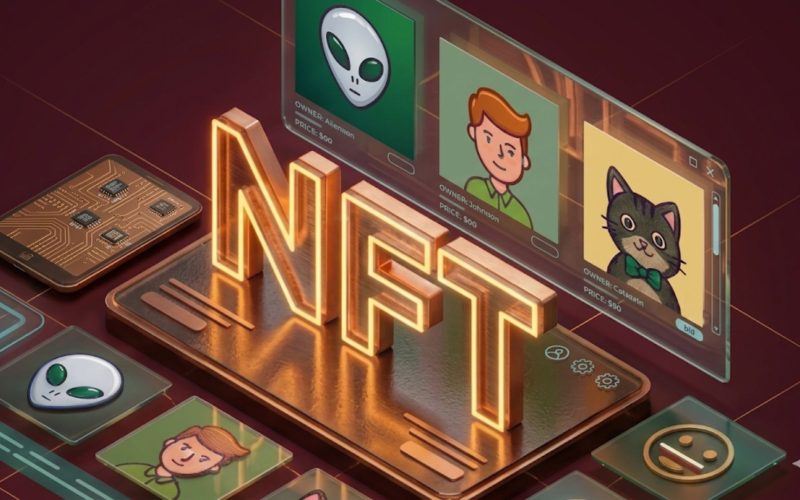
Not long ago, most people assumed that digital marketplaces built around tokens were a passing wave. Something speculative. A trend that would peak and dissolve. But that is not what happened. Rather, the ecosystem subtly evolved, grew, and began to perform tasks that no one initially expected.
The role of an nft art marketplace development company has transformed right along with it, and understanding that transformation matters whether you are a creator, a business, or simply someone paying attention.
What is happening goes far deeper than digital art. That is the part worth sitting with.
Why the Original Model Was Never Going to Be Enough
Think about what early digital asset platforms actually offered. You could buy an image. You could sell it. That was largely the extent of it. For a while, that simplicity was enough to generate enormous excitement. People loved the novelty. They loved the idea of owning something verifiably scarce on the internet.
But novelty wears off. And when it did, the weaknesses of that original model became obvious. There was no real utility baked in. No reason to hold. Nobody was creating ongoing value. Collectors were essentially making bets on cultural momentum, and cultural momentum is unpredictable.
That gap between what the technology could do and what platforms were actually building became the central opportunity. Any serious nft art marketplace development company worth its reputation started looking at that gap and asking the right questions. What would it mean to build something genuinely useful? Something people return to not because of hype but because the product delivers real value over and over again?
Utility Driven Assets Are Changing What Ownership Actually Means
Here is something that gets overlooked in most mainstream discussions about digital ownership. Ownership without utility is just possession. And possession alone does not build ecosystems.
The shift toward utility driven assets is fixing that. When a token unlocks access to exclusive content, grants governance rights over a project, triggers royalty distributions automatically, or evolves in response to holder behavior, it becomes something living. Something dynamic. The owner is not just holding an asset. They are participating in something ongoing.
For any nft art marketplace development company building in this space, that distinction changes everything about how a platform gets designed. The architecture, the smart contract logic, the dashboard a user sees every morning, all of it needs to support relationships, not just transactions.
Industries That Had Nothing to Do With Art
This is where things get genuinely interesting. The token infrastructure that was built to sell digital paintings is proving to be useful in places most people did not expect.
Music is one example. Independent artists have long struggled with the economics of how creative work gets valued and distributed. Tokenization offers a model where a fan does not just stream a song. They own a piece of it. They benefit when it grows in cultural relevance. The artist builds a community of stakeholders rather than a passive audience. That is a fundamentally different kind of relationship.
The same pattern is showing up in sports, intellectual property, supply chains, and digital identity. The common thread is that tokenization offers verifiable, programmable ownership. And that turns out to be useful in a surprising number of places.
What Interoperability Gets Right That Earlier Platforms Got Wrong
One of the quiet frustrations of early digital ownership was the walled garden problem. Your assets lived on one platform. If that platform changed its policies, lost funding, or simply shut down, your ownership became meaningless. You were not really owning anything. You were renting access inside someone else’s system.
Interoperability is the answer to that problem. When assets are genuinely portable, when a token minted on one platform works on another without friction, ownership becomes real in a way it never was before. Users carry their value with them. They are not dependent on any single company staying solvent or staying ethical.
An nft art marketplace development company that builds with interoperability as a genuine priority is making a statement about the kind of ecosystem it wants to be part of. It is choosing lasting trust over the convenience of locking users in. That choice matters enormously to users who already lost trust in platforms that let them down.
The Creator Economy Pushed Platforms to Grow Up
Nothing accelerated the maturation of digital marketplaces faster than the demands of serious creators. Hobbyists and casual collectors are forgiving. A professional artist whose livelihood depends on the platform they use is not.
Professional creators need royalty structures that work reliably and automatically. Direct tools to build and engage their communities are not optional. Transparency matters too. They want to know who discovers their work, who buys it, and what happens with it after the sale. And when something goes wrong, real support has to be there.
Platforms that treated creators as a supply source rather than a core constituency started losing them. The ones that listened built features that actually addressed the real problems creators face. A thoughtful nft art marketplace development company understood this early. Creator satisfaction is not a soft metric. It determines whether a platform has a long term supply of compelling content or whether it slowly empties out.
Trust Is the Infrastructure Nobody Talks About Enough
There is a temptation, when discussing digital platforms, to focus entirely on the visible product. Interface. Features. Transaction volume. But the real infrastructure that makes any marketplace work is trust, and trust is harder to build than any technical feature.
Trust means a user submits a transaction and knows it will execute exactly as expected. It means audit trails are real, fees are transparent, and the platform is not playing games with how royalties get distributed. It means that when something goes wrong, there is a real team that responds.
Security is a massive part of this. Smart contracts that have not been rigorously audited are liabilities. Platforms that rush to launch without stress testing their infrastructure are gambling with their users’ assets. An experienced nft art marketplace development company does not treat security as a launch requirement. It treats security as an ongoing practice.
The platforms that have earned lasting credibility did so by making hard choices. They delayed launches to fix vulnerabilities. Incidents got handled with transparency rather than silence. Prioritizing the user who had never touched a digital wallet before, not just the experienced one, set them apart from competitors who only built for insiders. That kind of commitment is what turns a platform into something people actually recommend.
Where the Space Is Heading and Why It Is Worth Paying Attention
The trajectory here is not subtle. Digital marketplaces are becoming full ecosystems. The boundary between a marketplace, a community platform, a financial tool, and a creative hub is dissolving. Users expect all of those things to coexist in a single coherent experience.
Automation and machine learning now weave through discovery, fraud detection, and creator support, pushing platforms to operate at a meaningfully smarter level. Not in a gimmicky way. In a way that reduces friction, surfaces the right content to the right audience, and makes the whole system more efficient for everyone using it.
Any nft art marketplace development company that wants to be a serious player in this environment needs to think beyond the feature roadmap. It needs a genuine point of view on what digital ownership should feel like and what it should enable. That kind of vision is what separates platforms people remember from platforms people forget.
Conclusion
The story of how digital marketplaces evolved beyond collectibles is really a story about what happens when a powerful technology finds its footing. The early chaos was real. So were the failures. But the underlying idea, that ownership can be programmable, portable, and verifiable, is proving out in ways that matter across industries.
A great nft art marketplace development company does not just build software. It builds the conditions for trust, creativity, and genuine economic participation. If you are thinking about what it means to build or participate in this space, you are already asking the right questions. Find a team that has real answers, and build something that stands up over time.