




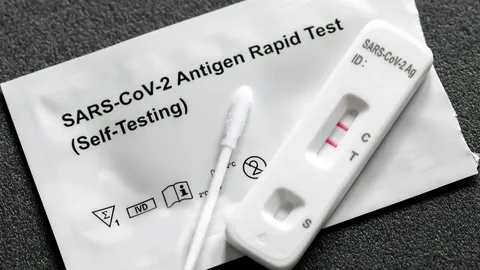
A covid rapid test is often the fastest way to get an answer when you are not feeling well or when you need to know whether you might be contagious. CDC guidance says viral tests look for a current infection, and antigen tests are the rapid option that usually gives results in 15 to 30 minutes. PCR and other NAAT tests are more likely to detect the virus and are considered the gold standard.
That is why the “best” COVID-19 rapid test kit is not always the most expensive one or the one with the most packaging claims. It is the one that matches your situation. For some people that means a quick at-home COVID test. For others it means a lab test or a provider-ordered test that gives a more reliable answer.
What a COVID antigen test actually does
A COVID antigen test looks for proteins from the virus. It is designed to tell you whether you likely have a current infection. These tests are popular because they are fast and simple to use. They can be done at home or at a testing site and they usually do not require a lab visit. CDC notes that self-tests are antigen tests that can be taken anywhere and that users should read the instructions closely before testing.
A positive antigen result is usually a strong signal. CDC says positive antigen results are accurate and reliable. The bigger caution is with negative results. A single negative antigen test cannot rule out infection. If symptoms are present and you still suspect COVID-19 CDC recommends repeat testing.
The main COVID-19 testing options
Most people are choosing between two paths. One is a home antigen test. The other is a professional test ordered or performed through a healthcare provider or testing location. CDC says you can buy self-tests online or in pharmacies and retail stores. It also says testing locations such as pharmacies and health centers may offer NAAT including PCR or antigen tests and some local health departments may provide low- or no-cost testing.
An at-home test is a good choice when you need a quick answer. It is easy to use and gives results within minutes. A laboratory NAAT or PCR test is a better option when you need the most reliable result. The CDC considers NAATs including PCR tests the gold standard because they are more likely to detect the virus than antigen tests.
How to choose the best COVID test kit
The best COVID test kit depends on what you need from it. If you want fast results at home and your symptoms are mild, a rapid antigen kit is often enough to get started. If you are testing before visiting older relatives or someone with risk factors for severe illness you may want a more sensitive test or repeat testing. If your school or employer wants quick screening a home kit can be practical. If a doctor needs a more certain answer, lab testing may be better.
Ease of use is just as important. A test kit should be simple to understand and easy to use even when you are not feeling your best. That becomes even more important when you are testing a young child before school or helping another family member. Always read the instructions carefully because missing a step can affect the result. The CDC also advises following the instructions exactly as provided to help ensure the test works as intended.
Rapid COVID test accuracy and what affects results
A rapid COVID test can be very useful. But it is not perfect. CDC says antigen tests are less likely to detect the virus than NAATs especially when symptoms are not present. That is why a negative rapid test does not always mean you are in the clear.
Timing matters. If you test too early after exposure the virus may not be detectable yet. If you use an antigen test and it is negative CDC recommends repeat testing. For people with symptoms the guidance is two negative antigen tests 48 hours apart. For people without symptoms, it is three tests 48 hours apart.
This is one of the biggest points to remember about rapid COVID test accuracy. A rapid test can be very helpful for quick decision-making. It is just not the same as a more sensitive lab test. That is why the result should always be read in context. How you feel. When you tested. Whether you have symptoms. Whether you had a recent exposure. Those things matter.
At-home COVID testing in real life
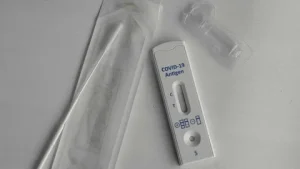
An at-home COVID test is a good fit for everyday situations. A parent may use one before sending a child to school. An employee may test before returning to the office after feeling unwell. A traveler may test before a trip. A family member may test after a sore throat or cough starts. The value here is speed and convenience. You can test on your own schedule and get an answer quickly. CDC says self-tests can be taken anywhere, and antigen tests usually give results in 15 to 30 minutes.
That convenience is especially helpful when you are trying to protect older relatives or people with higher risk factors. If the test is positive, you can start thinking about how to reduce spread and whether treatment might be needed. CDC says people with risk factors for severe illness should seek health care right away because treatment may be an option if started within a few days of symptom onset.
When professional testing may be the better choice
Sometimes a home test is enough. Sometimes it is not. If symptoms are strong but the home test is negative, you may need a more sensitive test. If you are trying to confirm infection before seeing someone vulnerable a lab test may be the safer choice. If a healthcare provider is deciding whether treatment could help a PCR or other NAAT may be the better next step because CDC says these tests are more likely to detect the virus.
That does not mean home tests are not useful. It means they serve a different purpose. A rapid test is best for quick screening and practical day-to-day decisions. Professional testing is better when you need a stronger answer.
Home test vs professional testing
At-home testing wins on convenience and speed. Professional testing wins on sensitivity and clinical supervision. At-home testing is easier to do quickly and privately. Professional testing is often the better option when a more reliable result matters more than convenience. CDC notes that NAATs including PCR are more likely to detect the virus and may take up to 3 days for results while antigen tests usually return results in 15 to 30 minutes. So, the choice is not really “which one is better” in every situation. It is which one fits the situation you are in.
What to do after a positive or negative result
If your COVID rapid test is positive CDC says the virus was detected and you have or recently had an infection. You should take steps to prevent spreading COVID-19 and watch your symptoms. If you have emergency warning signs, seek emergency care immediately. If you have risk factors for severe illness, seek health care right away because treatment may be an option.
If your test is negative CDC says that does not rule out infection. You may have tested before the virus was detectable or you may have another respiratory illness. If you used an antigen test, follow repeat testing guidance and contact a healthcare provider if you have questions about the result.
Final thoughts
The best covid rapid test is the one that fits your real situation. If you want fast and easy COVID-19 home testing a rapid antigen kit may be the right place to start. If you need the most reliable answer possible or you are testing someone at higher risk a lab test may be the better choice. The key is to think about your symptoms you’re timing and why you are testing in the first place.
That usually tells you which option makes the most sense. If you are exploring reliable COVID-19 rapid testing products or broader healthcare solutions providers such as RCS Healthcare offer testing options and product information, including infectious disease testing and a Hilgen™ SARS-CoV-2/Flu A+B Rapid Antigen Test in its product spotlight.