






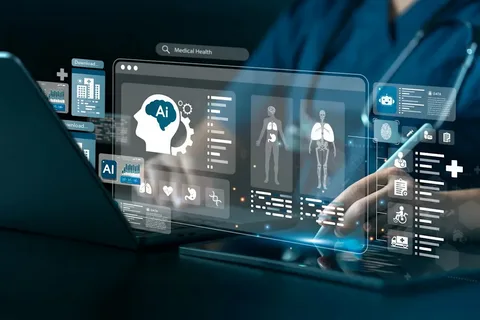
This challenge has increased demand for AI-powered healthcare platforms that can analyze complex medical datasets quickly and accurately. Healthcare providers are now adopting intelligent systems that support personalized treatment planning, disease prediction, and clinical decision-making across multiple specialties.
An AI Precision Medicine System helps healthcare organizations combine patient data, genomic analysis, predictive models, and clinical insights within a unified platform. These systems are becoming increasingly important in oncology, cardiovascular care, rare disease research, and population health management.
This article explains how AI precision medicine systems work, the technologies behind them, their healthcare applications, and the challenges organizations face during implementation.
AI Precision Medicine System
Core Definition
An AI Precision Medicine System is a technology platform that uses artificial intelligence to analyze patient-specific data and support personalized healthcare decisions. These systems combine clinical information, genomics, imaging, laboratory data, and predictive analytics to guide diagnosis and treatment planning.
Unlike traditional healthcare software, AI-driven systems continuously process and interpret large datasets to identify patterns, predict risks, and recommend potential treatment strategies.
The primary goal of a precision medicine platform is to help clinicians provide care based on individual patient characteristics rather than generalized treatment methods.
Key Components of the AI Precision Medicine System
Most healthcare AI systems include several connected components that work together within clinical environments.
Data Collection
AI systems collect information from multiple healthcare sources, including:
- Electronic health records
- Genomic sequencing platforms
- Medical imaging systems
- Laboratory databases
- Wearable devices
This creates a more complete patient profile for analysis.
AI Analytics Engine
The analytics engine processes healthcare data using machine learning, predictive analytics, and statistical models. This engine identifies patterns linked to diseases, treatment responses, and patient outcomes.
Clinical Decision Support
An AI clinical decision system helps physicians evaluate treatment options and diagnostic findings based on patient-specific information.
For example, an oncology platform may recommend therapies linked to particular genetic mutations.
Reporting and Visualization
Most AI healthcare platforms include dashboards and visualization tools that present complex medical information in a readable format for clinicians and researchers.
Traditional Healthcare and AI Precision Medicine System
Traditional healthcare software mainly stores and organizes patient records. These systems generally require manual interpretation and decision-making by healthcare professionals.
AI precision medicine systems operate differently because they actively analyze incoming data, generate insights, and support clinical recommendations in real time.
This creates a more dynamic healthcare infrastructure capable of supporting personalized medicine strategies.
AI Precision Medicine System Works
Collecting Genomic and Clinical Data
The first step involves gathering patient information from multiple clinical sources. Genomic data is particularly important because genetic variations often influence disease risk and treatment response.
Clinical records, laboratory reports, imaging scans, medication history, and lifestyle information are also integrated into the system.
Data Processing and Normalization
Healthcare data often exists in inconsistent formats across different hospitals and providers. AI systems must standardize and organize this information before analysis.
Normalization processes help remove duplicate records, correct formatting inconsistencies, and improve data quality for predictive modeling.
AI-Based Pattern Recognition
Machine learning algorithms identify relationships within large healthcare datasets. These systems can detect disease markers, treatment response trends, and patient risk patterns that may be difficult to identify manually.
For example, a genomic AI platform may identify mutation combinations associated with specific cancer therapies.
Personalized Treatment Recommendation Engines
AI systems compare patient-specific information against medical research, historical patient outcomes, and clinical guidelines.
Treatment recommendation engines may suggest:
- Targeted therapies
- Clinical trial eligibility
- Medication adjustments
- Risk-based treatment plans
This supports more individualized patient care.
Continuous Learning and Feedback Loops
Some AI systems improve over time through continuous learning. As new clinical data becomes available, predictive models update their recommendations and improve analytical accuracy.
This allows healthcare AI systems to remain aligned with current medical research and patient outcomes.
Technologies Behind AI Precision Medicine Systems
Machine Learning Models
Machine learning models form the foundation of predictive healthcare systems. These algorithms analyze patient data and identify patterns associated with diseases, treatment effectiveness, and clinical risks.
The systems become more accurate as additional healthcare data is introduced.
Natural Language Processing
Healthcare records often contain large amounts of unstructured text, including physician notes and discharge summaries.
Natural language processing allows AI systems to interpret this information and convert it into usable clinical insights.
Big Data Infrastructure
Precision medicine platforms depend heavily on large-scale data infrastructure capable of processing genomic datasets, imaging records, and clinical research databases efficiently.
This infrastructure supports high-volume healthcare analysis without major performance limitations.
Cloud Computing
Cloud platforms provide scalable storage and computing resources for healthcare organizations. Cloud systems also support collaboration between hospitals, research institutions, and pharmaceutical companies.
Many healthcare AI systems rely on cloud environments to manage complex workloads securely.
APIs and Interoperability Standards
Healthcare systems often operate across multiple software environments. APIs and interoperability standards help AI platforms communicate with electronic health records, laboratory systems, and imaging databases.
This integration improves clinical workflow efficiency.
Key Use Cases Across Healthcare
Precision Oncology
Precision oncology remains one of the strongest applications for AI precision medicine systems. AI tools help clinicians analyze tumor profiles, identify biomarkers, and recommend targeted therapies.
This supports more personalized cancer treatment planning.
Cardiovascular Risk Prediction
Predictive healthcare systems analyze patient history, lifestyle factors, and clinical measurements to estimate cardiovascular disease risk earlier.
This allows physicians to introduce preventive treatment strategies sooner.
Rare Disease Identification
Rare diseases are often difficult to diagnose because symptoms may overlap with common conditions.
AI systems improve pattern recognition and help physicians identify potential rare disease cases more efficiently.
Drug Response Prediction
Patients often respond differently to medications based on genetics and biological factors. AI systems help predict how patients may react to specific therapies.
This reduces ineffective treatment approaches and improves treatment precision.
Population Health Analytics
Healthcare organizations use AI-driven patient management systems to analyze trends across large patient populations.
These insights help identify disease outbreaks, high-risk groups, and preventive healthcare opportunities.
Benefits of AI Precision Medicine Systems
Faster Data Analysis
AI Precision Medicine System process complex healthcare data significantly faster than traditional manual analysis methods.
Better Clinical Accuracy
Machine learning models improve diagnostic consistency and support evidence-based treatment planning.
Improved Treatment Personalization
Personalized medicine platforms help clinicians select therapies based on patient-specific characteristics rather than broad treatment averages.
Reduced Healthcare Costs
Earlier diagnosis, more accurate treatments, and reduced trial-and-error approaches can lower healthcare expenses over time.
Better Research Collaboration
AI healthcare infrastructure supports collaboration between researchers, hospitals, and pharmaceutical organizations by improving data accessibility and analysis.
Challenges in Implementing
Data Security and Compliance
Healthcare organizations must protect sensitive patient information while complying with regulations such as HIPAA and GDPR.
Integration With Legacy Systems
Many hospitals still rely on outdated software systems that are difficult to integrate with modern AI platforms.
AI Bias and Transparency
AI models can reflect biases present within training datasets. Transparent decision-making remains important for clinical trust.
Infrastructure Costs
Building scalable healthcare AI Precision Medicine System often requires significant investment in computing resources, cloud environments, and specialized expertise.
Clinical Adoption Resistance
Healthcare professionals may hesitate to rely on AI systems without sufficient validation, explain ability, and regulatory approval.
Future Trends in AI Precision Medicine Systems
Real-Time Clinical Intelligence
Future systems may provide continuous treatment recommendations based on live patient monitoring and updated clinical information.
Autonomous Diagnostic Systems
AI-powered diagnostic systems are becoming more capable of analyzing imaging scans, pathology reports, and laboratory data independently.
Digital Twin Technology
Digital twin systems may allow clinicians to simulate patient responses to treatments before applying therapies in real-world settings.
Multi-Agent AI Healthcare Architectures
Some future healthcare environments may rely on multiple AI agents working together across diagnostics, treatment planning, monitoring, and administrative workflows.
Conclusion
AI precision medicine systems are becoming increasingly important because modern healthcare depends heavily on personalized treatment planning and large-scale medical data analysis. These systems support clinicians by improving diagnostic accuracy, treatment selection, predictive analytics, and healthcare research.
The future success of AI-powered healthcare ecosystems will depend on scalable infrastructure, transparent AI models, strong regulatory oversight, and clinical trust. As healthcare organizations continue investing in intelligent systems, AI precision medicine platforms are likely to become a central part of future clinical care and medical research environments.