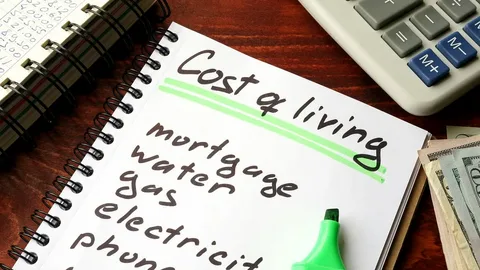
Some bills you barely notice. Others land in your inbox, and your stomach drops a little. If that second feeling has become a bit too familiar lately, you’re in good company. Cost have crept up on nearly everything, and the worry that comes with it doesn’t exactly clock off at the end of the day.
It tags along to bed. It’s there over breakfast. So let’s talk about what actually helps not vague reassurance, but the practical stuff that gives you a bit of your head back.
Why do a few extra pounds feel like so much more?
Here’s the thing about rising costs. It’s rarely one big shock. It’s the slow drip.
The shop costs a few quid more than it did. The energy direct debit nudges up again. Nothing dramatic on its own, but together they quietly eat the wiggle room you used to have, and that’s exhausting in a way the numbers don’t quite capture.
And that’s really the heart of it. Money stress isn’t only about money. It’s the not-knowing, the mental tab you keep running in the background. Take that uncertainty away, even a little, and most of the pressure starts to ease.
First job: Actually Look
Nobody enjoys this part. Checking your balance when things are tight feels a bit like opening a letter you suspect is bad news. But the avoidance is usually worse than the looking.
So grab a tea, sit down, and write out what comes in and what goes out. All of it, including the bits that are easy to “forget”, like that subscription you’ve not used since spring.
It tends to fall into three rough piles:
- The non-negotiables: rent or mortgage, council tax, energy, food, getting to work
- The fixed bits: loan repayments, insurance, the phone contract
- And everything else: streaming, the odd treat, days out
Write it down or chuck it in a free budgeting app; it doesn’t matter which. The point is seeing it. Nine times out of ten, the leak isn’t where you assumed it was.

Not all debts are equal — pay the right ones first.
This one trips a lot of people up, so it’s worth being clear about.
If there genuinely isn’t enough to cover everything in a given month, the order you pay things in matters enormously. Some debts bite far harder than others when you fall behind.
- Priority debts are the ones with teeth: rent or mortgage, council tax, energy, and court fines. Miss these, and you risk your home or your heating.
- Non-priority debts – credit cards, overdrafts, catalogues, and personal loans – still need paying, but the consequences of being a bit late are usually less frightening.
Cover the priority ones first, always. And if the rest is what’s keeping you up at night, that’s your cue to get free debt advice.
The bills you’re probably overpaying.
A lot of households are handing over more than they need to, purely out of habit. Worth an hour of your time to fix:
- Ring your broadband, mobile and insurance providers when the contract’s up. The good deals nearly always go to new customers, so ask — or threaten to leave. It works more often than you’d think.
- Kill the subscriptions you’d genuinely forgotten about. You know the ones.
- Trim the energy where you can. A degree off the thermostat, cooler washes, only boiling the water you’ll actually drink. Small, dull, effective.
- Plan the food shop around a list. And don’t go when you’re starving — that’s how a £40 shop becomes £60.
None of these is a game-changer by itself. But stacked up? That’s a proper bit of breathing space.
Claim what’s actually yours!
Now this is the bit people skip, and it drives me a bit mad, because there’s real help going begging.
- Run a free benefits check through Turn2us or Entitledto. Honestly, do it even if you’re convinced you won’t qualify — billions go unclaimed every year on exactly that assumption.
- Look into your local council’s support. The old Household Support Fund has now been replaced by the Crisis and Resilience Fund, handed out through councils across England, and it can help with essentials like food and energy. You don’t always have to be on benefits to apply, so check what your area offers.
- Behind on energy? Tell your supplier before it snowballs. Most have hardship schemes and will sort an affordable payment plan rather than let arrears pile up.
- On a low income, you might also pay less council tax. Worth asking.
Half an hour of poking around could put real money back in your pocket. That’s a good hourly rate by anyone’s maths.
Mind the head, not just the bank balance
Money worry wears you down — that’s just the truth of it. And keeping it to yourself? That only adds weight you don’t need to carry.
So talk to somebody. It could be your partner; it could be a mate over a pint. Or one of the free, confidential services that handle this stuff day in, day out. The popular examples are Citizens Advice, StepChange, National Debtline, and MoneyHelper.
Nothing to pay, nobody tutting at you, no big speech. Whatever’s going on, trust me, they’ve sat across from worse and didn’t blink.
And if it’s started creeping into your sleep, or you’re snappier than usual, have a word with your GP as well. Money and your head are tied together more tightly than people let on. Pull on one and, sure enough, the other shifts.
A few rules I’d stick to no matter what:
- Only borrow what you can comfortably pay back. Slot the repayment into your budget before you sign anything, not after.
- Stick to regulated lenders. Anything promising cash with “no questions asked” is a hard no.
- Read the whole cost, not the shiny monthly figure. APR, fees, how long you’re tied in. That’s where the real number hides.
And if your credit’s a bit bruised, you’ve still got choices. Comparing the best loans for bad credit is a sensible way to find a regulated lender that fits your circumstances, often on clearer terms than you’d expect. Just keep it in its lane a loan is a stepping stone back to solid ground, not somewhere to live.
One more thing. If existing debt is what’s really driving the stress, get free advice before taking on anything new. Every time.
Then build yourself a tiny cushion.
Once the worst of the pressure lifts, try to squirrel a little away. A few quid a week is plenty to start.
Even £100 to £200 sitting in a separate pot can be the difference between “annoying surprise bill” and “full-blown crisis”. Set up a standing order for payday so it leaves before you can spend it. Boring? Completely. Brilliant when you need it? Absolutely.
You’re more in control than it feels right now.
Look — the cost of living isn’t going to sort itself out by Friday, and a budget doesn’t make any of this easy. I’m not going to pretend otherwise.
But the stress shrinks the moment you stop letting it run quietly in the background. Face the figures. Cut what you can. Claim what’s yours. Lean on the free help that’s there for exactly this. And borrow only when it genuinely makes sense, on terms you actually understand. One steady step, then the next. That’s how the weight comes off.