




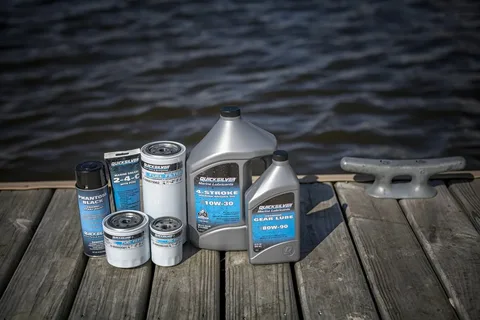
The global marine lubricants market is expanding steadily as international shipping activity continues to grow. According to recent industry research, the market was valued at approximately USD 8,102.4 million in 2022 and is projected to reach around USD 10,957.02 million by 2030. This reflects a compound annual growth rate (CAGR) of 3.92% during the forecast period.
This consistent growth shows how important marine lubricants have become in global trade and transportation. As shipping companies focus on efficiency, fuel performance, and environmental compliance, demand for advanced lubricant solutions continues to rise. The industry now plays a critical role in improving vessel performance, reducing engine wear, and supporting sustainable maritime operations.
This report provides a detailed breakdown of market trends, growth drivers, segmentation, regional performance, and competitive dynamics. It also helps investors, businesses, and stakeholders understand where future opportunities may emerge in this evolving sector.
1. Market Growth Drivers and Key Trends
Several strong factors are driving the growth of the marine lubricants market. First, global seaborne trade has increased significantly. As more goods are transported through sea routes, shipping fleets are expanding. This directly increases the demand for high-performance lubricants used in ship engines and machinery.
In addition, environmental regulations are becoming stricter. Governments and international maritime organizations are pushing for cleaner fuel usage and lower emissions. As a result, shipping companies are investing in advanced lubricant solutions that reduce engine friction and improve fuel efficiency. These modern lubricants help vessels meet compliance standards while maintaining operational performance.
Another major driver is technological advancement. Lubricant manufacturers are developing synthetic and bio-based products that perform better under extreme marine conditions. These products offer improved thermal stability, longer service life, and reduced environmental impact.
Moreover, rising awareness about maintenance and operational efficiency is also supporting market expansion. Shipping operators now understand that high-quality lubricants can significantly reduce repair costs and extend engine lifespan. Therefore, preventive maintenance strategies are becoming more common across the industry.
Overall, these combined factors are shaping a strong and stable growth path for the marine lubricants market.
2. Competitive Landscape and Key Market Players
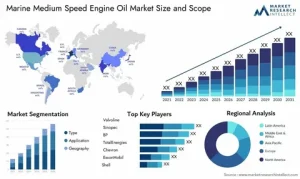
The marine lubricants market is highly competitive and includes several global energy and chemical companies. These players compete through innovation, pricing strategies, product expansion, and long-term supply agreements with shipping operators.
Some of the leading companies operating in this market include Exxon Mobil Corporation, Shell International B.V., BP p.l.c., Chevron Corporation, ENEOS Corporation, Sinopec Lubricant Pte Ltd, Repsol, Gazpromneft Lubricants Ltd., LUKOIL, SK ZIC, Calumet Branded Products, Klüber Lubrication München GmbH & Co. KG, and Eni live S.p.A.
These companies focus heavily on research and development to create high-performance lubricant solutions. Many of them are also investing in environmentally friendly products to align with global sustainability goals.
For example, several manufacturers are expanding their bio-based and synthetic lubricant portfolios. These products are designed to reduce carbon emissions and support cleaner shipping operations. At the same time, companies are strengthening their global distribution networks to ensure timely supply to ports and shipping hubs worldwide.
Competition in this market is not only based on product quality but also on service support. Many providers offer technical assistance, oil monitoring services, and predictive maintenance solutions.
As the market continues to grow, collaboration, mergers, and strategic partnerships are expected to increase further.
3. Market Segmentation and Regional Insights
The marine lubricants market is divided into several segments based on oil type, product type, ship type, and geography. This segmentation helps businesses understand demand patterns and identify high-growth areas.
By oil type, the market includes mineral oil, synthetic oil, and bio-based oil. Mineral oil remains widely used due to its cost-effectiveness and availability. However, synthetic and bio-based oils are gaining popularity because of their superior performance and environmental benefits.
By product type, the market is categorized into engine oils, cylinder oils, system oils, hydraulic fluids, compressor oils, and others. Engine oils hold a significant share because they are essential for vessel operation. Cylinder oils are also important, especially for large marine engines used in cargo ships.
By ship type, the market includes bulk carriers, tankers, container ships, and other vessels. Container ships represent a major segment due to the rising global demand for goods transportation. Tankers also contribute significantly due to oil and chemical transport activities.
From a regional perspective, Asia Pacific dominates the marine lubricants market. This region has a strong shipping industry, especially in countries like China, Japan, and India. Europe follows closely, driven by strict environmental regulations and advanced maritime infrastructure. North America also holds a significant share due to its strong trade networks and technological advancements.
Overall, regional dynamics show a clear shift toward Asia Pacific as the fastest-growing and most influential market.
Conclusion
The global marine lubricants market is on a steady growth path, supported by rising international trade, stricter environmental regulations, and continuous technological innovation. With a projected value of nearly USD 10,957.02 million by 2030, the industry presents strong opportunities for manufacturers, suppliers, and investors.
As shipping companies focus more on efficiency and sustainability, the demand for advanced lubricant solutions will continue to rise. Companies that invest in innovation, eco-friendly products, and strong global distribution networks will likely gain a competitive advantage in the years ahead.
In the long run, marine lubricants will remain a vital component of the global shipping industry, ensuring smoother operations, better engine performance, and reduced environmental impact.