

Why Online Programs in India for Career Skills Are Gaining Momentum
Most of you can relate to the fact that career planning in India comes with a well-expected script, starting with finishing school, enrolling in a degree program, graduating, and then learn the actual job on the ground. This script worked fairly well for years. However, in this day and age, not everyone can relate to this series, and it doesn’t fit the ambitions of everyone.
Learners are making various decisions across cities and careers. Many are replacing years of conventional degrees with online programs in India as a source of career skills; programs that are not so much theory but what employers actually would like people to know.
This is not a change that comes overnight. It is a reaction to the way work itself has evolved.
Skills Are Moving Faster Than Degrees
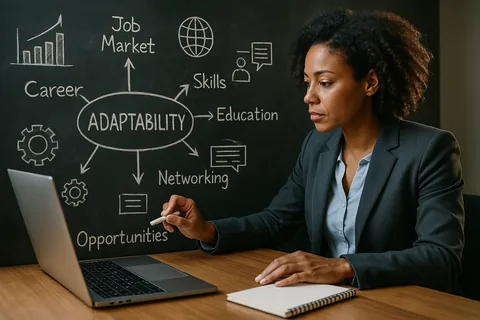
Talk to recruitment experts in technology, analytics, digital marketing, finance operations, or even customer experience, and quickly a pattern appears. Job descriptions are changing at a higher rate than the school curriculum. Tools change. Processes change. Expectations change.
Degrees are still important, but no longer sufficient to be job-ready. Employers are posing more practical questions:
- Does this candidate know how to use our tools?
- Do they understand real workflows, not just concepts?
- Do they have the ability to change with the requirements?
This disconnect between learning and work has become apparent to many learners, particularly early-career professionals. Online career-focused programs are bridging that gap by being either more focused and applied skills oriented instead of having a wide academic coverage.
Flexibility Is No Longer a “Nice to Have”
The learner base in India is simply very heterogeneous. Some are full-time students. Many are already working. Others have to deal with family matters or reside in urban areas where they can only afford to attend poor offline institutions.
Internet learning is much more compatible with these realities than the one on campuses. Students are also able to learn during the nights, weekends, or in short spurts between the working periods. No one has to change their location, travel, and put their careers on hold.
This is one of the most effective reasons why online programs have become popular, not because students want an easy way out, but because they need a realistic one.
Why Short-Term Programs Make Sense Now
Traditional degrees are designed to build foundations over several years. That structure still serves certain goals well. But many learners today are opting for targeted results.
Short-term online programs tend to focus on:
- A clearly defined skill set
- Hands-on assignments instead of long examinations
- Exposure to tools and platforms used in real jobs
- Learning cycles are measured in months, not years
For someone looking to switch roles, upskill quickly, or stay relevant in a changing field, this approach often feels more practical. The question learners are asking has changed from “What degree should I pursue?” to “What skills will help me move forward right now?”
Digital Access Has Changed the Equation
The digital infrastructure of India has silently revolutionized the consumption of education. The availability of affordable data, the prevalence of smartphones, and the improved connection have helped to open the door to online learning far beyond the largest metropolitan regions.
Students in Tier 2 and Tier 3 cities are no longer restricted by their locations. This allows them to receive structured programs, industry-led content, and interactive learning experiences that were formerly localized in several urban areas.
People have become more familiar with digital platforms, and this has increased trust. Online learning is not considered informal and secondary anymore. To most people, it has turned out to be the major mode of skill development.
Working Professionals Are Driving Adoption
One of the most noticeable shifts is the number of working professionals enrolling in online career programs. These learners aren’t starting from scratch. They already understand workplace realities and are often responding to very specific pressures.
Some are adapting to automation. Others are preparing for role changes or promotions. Many are simply trying to remain relevant in competitive environments.
Online programs allow them to learn without stepping away from their jobs. More importantly, they can apply what they learn immediately, which reinforces understanding and makes the effort feel worthwhile.
Platforms Reflecting This Shift
Within this broader movement, platforms like MSM Grad reflect how online education in India is being reshaped around employability. Instead of positioning learning as a long academic journey, such platforms focus on structured, industry-aligned programs designed to help learners build practical career skills.
This approach mirrors what learners are actively seeking: clarity, relevance, and outcomes that connect directly to work.
Looking Ahead
Online career-focused programs in India are expected to continue gaining momentum in the future. As industries keep developing, learning will become an aspect that goes with work, but not a pre-work activity.
To lots of learners, convenience is not all that matters. It is control, decision-making, what to study, when to study, and why it is important. Online programs that uphold this mentality are taking an indispensable place in the education system of India.