




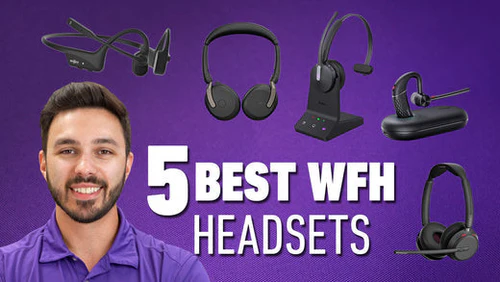
In today’s hybrid and remote-working world, choosing the right voip wireless headset ranks among the most important decisions for productivity, clarity, and comfort. At VoIP Tech Support, we genuinely believe the proper headset can make or break your call-centre experience, virtual meeting success, or simply your everyday business communications. Below, you’ll find what to look for, some leading models worth evaluating, and how to determine the best fit for your use-case.
Why investing in a quality voip wireless headset matters
When you’re frequently using VoIP (Voice over Internet Protocol) systems, your headset becomes much more than a peripheral. A high-quality voip wireless headset offers:
- Clear audio & mic quality: Because digital voice traffic leaves little room for distortion or drop-outs. A good headset helps you sound professional.
- Mobility and freedom: Wireless means you’re not tethered to your desk, allowing multitasking or movement without losing connection.
-
Sound isolation and comfort: Especially in open-office or home environments, a comfortable VOIP wireless headset with noise management makes extended periods tolerable
- Compatibility with UC/VoIP platforms: Since many businesses use platforms such as Microsoft Teams, Zoom, or unified communications apps, your headset must integrate seamlessly.
In short: if you rely on calls, virtual meetings or VoIP systems regularly, the right voip wireless headset doesn’t just support your work—it enhances it.
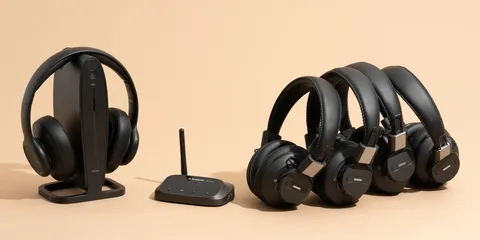
Essential characteristics and purchasing factors for a wireless VoIP headset
Before you pick a headset, make sure you compare these core aspects. These are the “must-haves” for a professional-grade voip wireless headset:
Connectivity & compatibility
- Ensure the headset supports USB, Bluetooth, or DECT wireless standards, matching your PC, desk phone or mobile device.
- Check certification for your VoIP/UC platform: Microsoft Teams, Zoom, Cisco, etc. This ensures built-in controls and compatibility.
- Range matters if you’ll move around while on calls—look for models with strong wireless range.
Audio & microphone quality
- Noise-canceling microphones, or beam-forming mic arrays, make a big difference in background noise.
- Good speakers and audio drivers aid not just your calls but streaming, music or side tasks while working.
Comfort & wear ability
- Professionals often wear headsets for hours. The voip wireless headset you choose should be lightweight, well-cushioned, and adjustable.
- All-day battery life or quick-charge features reduce interruptions.
Noise cancellation & environment fit
- In noisy work-environments (open office, home with kids/pets), active noise-cancellation (ANC) or ambient/hybrid modes are highly beneficial.
Mobility & multi-device use
- For those moving between desk phone/PC/mobile, look for models supporting multiple device connectivity and long wireless range.
Cost vs benefit & support
- More advanced models cost more—but often deliver better longevity, comfort and features. Don’t just buy the cheapest.
- Also check warranty, firmware updates and support from the brand—important for business-use reliability.
Top voip wireless headset picks for professionals in 2025
Here are three strong options that meet professional requirements and represent different use-cases. Each of these would be well-worth considering at VoIP Tech Support when advising professionals.
1. Jabra Evolve2 75
This is a premium voip wireless headset built for serious professionals.
-
8-microphone array designed for superior voice capture and reduction of background noise
- Fully adjustable advanced ANC (Active Noise Cancellation) plus “HearThrough” mode so you can let in ambient sound when needed.
- Wireless range up to ~30 m (via USB dongle) so you’re not strictly desk-bound.
- Certified for leading UC platforms (Teams, Zoom etc.).
- Ideal for hybrid workers, open offices, high-demand call environments where clarity matters.
Use-case: If you’re a professional who spends hours on calls in varied locations (desk, home, office), and want best-in-class sound and comfort.
2. Yealink WH66
A strong choice for high-density professional setups, focusing on office or contact-centre style usage.
- DECT wireless technology offering up to ~120–160 m range in open space.
- Lightweight design, dual-microphone Noise-cancelling “Acoustic Shield” tech.
- Works with PC, desk phone, mobile via USB/Bluetooth. Certified variants for Teams/Zoom.
- Ideal for users who may need to move around work-stations or multi-device connectivity.
Use-case: A call-centre agent, office professional or hybrid user who values wireless range and flexibility more than ultra-premium stereo audio.
3. (Additional option) – A Best-Value Wireless VoIP Headset
While not cited in full detail here, there are more budget-friendly voip wireless headset models suited for smaller teams or home-office professionals. The important part is to make sure they address the basics: wireless connection, good microphone and sound, comfort. Refer to buying guides for picking them.
Use-case: Professionals or small teams who require reliable voice calls but don’t need top tier features like dual-device connectivity, ultra-long range or premium audio.
Recommendation summary for “VoIP Tech Support” customers
- If you’re advising someone who is on calls all day, moves between home/office and values premium call clarity → recommend the Jabra Evolve2 75.
- If mobility within an office environment, multi-device connectivity and wireless range are important → the Yealink WH66 is a strong pick.
- For budget-conscious professional buyers: pick a wireless voip headset that meets comfort/clarity criteria rather than go cheapest.
- Always match the headset to the platform (Teams, Zoom, soft-phone) and to the working environment (quiet room vs noisy open office).
- Encourage users to test comfort, mic clarity, battery life and wireless functionality before wide deployment
Frequently Asked Questions (FAQs)
Q1. What exactly is a “voip wireless headset”?
A “voip wireless headset” refers to a headset designed for use with VoIP systems (Voice over Internet Protocol) that offers wireless connectivity (Bluetooth, DECT or USB dongle) rather than being tethered by a cord. It enables mobility, wireless freedom and is tailored for internet-based voice communications.
Q2. Do I always need active-noise-cancellation (ANC)?
While not absolutely mandatory, ANC is highly beneficial if you work in noisy environments (open offices, home with distractions). It helps your voice come through more clearly and improves your listening comfort. If you’re in a quiet dedicated space, you may opt for non-ANC wireless models to save cost.
Q3. How important is compatibility with platforms like Teams or Zoom?
Very important. Headsets certified for specific platforms often offer better integration (e.g., call-answer button, mute indicator, busylight) and fewer technical issues. For professional use, these certifications reduce deployment problems.
Q4. Is wired always inferior to wireless for VoIP?
Not necessarily. Wired headsets may offer slightly more stable connectivity and won’t run out of battery, which is an advantage in some fixed-desk setups. But for mobility, freedom of movement and modern workflows, wireless voip headsets dominate.
Q5. How do I choose between mono (single-ear) and stereo (dual-ear) headsets?
- Mono headsets (one ear) let you stay aware of your surroundings—useful in open-offices, offices where you need to hear ambient sound.
- Stereo (dual-ear) provide better immersive audio and focus—ideal for heavy call-use, noisy environments or music/voice transitions.
In either case, comfort and mic clarity remain top considerations.
Q6. What about battery life and range for a wireless VoIP headset?
Look for headsets with talk-time or battery life that exceed your longest expected session (e.g., 8-10 hours or more). Range depends on environment—open-floor offices with obstacles reduce effective range. DECT offers strong range; Bluetooth/USB dongle models vary. The Yealink WH66 for example offers up to ~120-160 m of range in open space.
Q7. Do I need to invest in the most expensive headset?
Not always. The “best” headset is the one that matches your actual workflow, environment and budget. If you’re in a quiet home-office and do only occasional calls, a mid-range model will suffice. If you spend all day in calls, move around, and hear a lot of background noise—investing in a high-end voip wireless headset makes sense.
Conclusion
Selecting the right voip wireless headset is a strategic decision for professionals who rely on high-quality voice calls, remote collaboration or customer-facing work. At VoIP Tech Support, we emphasize fit-for-purpose: matching a headset’s connectivity, comfort, mic/audio quality and mobility to the user’s real working conditions. Whether you’re in a bustling open-plan office, working from home, or moving between settings, prioritize a wireless headset that supports your workflow, enhances your voice clarity and keeps you comfortable through long work-days. The three models above illustrate the range of options—from premium to office-range to budget-friendly—that meet professional demands in 2025 and beyond.