


Think about those moments when a meeting room buzzes with a brilliant idea that could streamline processes or create new revenue streams. The vision is clear on the whiteboard, but momentum fades when it’s time to translate that vision into action.
You find yourself waiting for a first draft, something concrete to show for all the planning. This is where the momentum is most fragile.
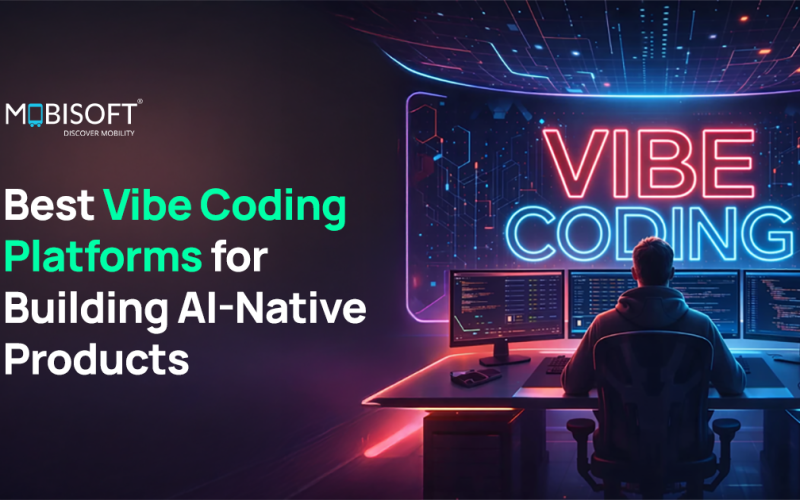
But what if you could compress that timeline? Enter vibe coding—a development approach supported by AI collaboration and platforms designed to accelerate early product execution.
Vibe coding allows teams to describe logic and interfaces in plain language, transforming conversations into working software.
What is Vibe Coding?
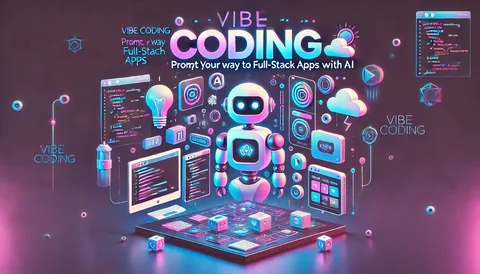
Vibe coding, a term coined in late 2024, describes an AI-driven development process where both developers and non-developers articulate their needs in natural language, prompting AI to generate code and applications.
This is in stark contrast to traditional coding, which demands extensive technical knowledge. With vibe coding, intent is communicated conversationally while AI manages the technicalities.
This method has gained popularity due to advancements in large language models, which now power many tools capable of generating production-quality code. The term highlights the intuitive and natural way users interact with these systems.
Platform Categories
The platforms in this guide fall into three distinct categories:
Web-Based AI App Builders
These tools let you describe your needs in plain language, and the platform constructs not just the front end but a complete application. They aim to deliver a working, deployable product from conversation.
Best for: Non-developers, rapid prototyping, full-stack apps
Skill level: Beginner to Intermediate
AI-Enhanced Desktop IDEs
These are traditional integrated development environments enhanced with AI capabilities, acting as an AI pair programmer within your existing workflow.
Best for: Developers who want to stay in their IDE workflow
Skill level: Intermediate to Advanced
Command-Line AI Tools
Terminal-based tools that integrate AI into your command-line workflow, working alongside existing tools and IDEs.
Best for: Advanced developers comfortable with terminal workflows
Skill level: Advanced
Vibe coding works best when integrated with broader AI services that address data pipelines, model selection, and system architecture.
Leading Vibe Coding Platforms for Teams
Lovable
Lovable believes that software should start with dialogue. It is designed for teams where product vision, design intent, and engineering reality must align from the first moment. It allows product leaders, designers, and engineers to build a shared understanding from the ground up.
Strengths:
- Turns natural language discussions into functional code.
- Live previews sync with code generation for immediate feedback.
- Reduces the learning curve for non-coders.
- Aligns cross-functional teams on technical scope early on.
However, it may become constrained when implementing highly custom business logic or integrating with legacy systems.
Replit
Replit provides a cloud-based development environment where teams can think, build, and react together without the overhead of local setups. Its integration of AI automates mundane tasks, allowing the team to focus on creative challenges.
Strengths:
- Enables real-time collaboration in a unified workspace.
- AI agents handle routine setup and coding tasks.
- Ideal for collaborative brainstorming and drafting.
While it fosters a nurturing environment for ideas, it lacks a structure for governance and scalability.
Cursor
Cursor acts as an expert pair programmer that integrates deeply into your development environment. It helps generate targeted code suggestions and structural refinements without disrupting established workflows.
Strengths:
- Integrates seamlessly into existing development environments.
- Provides context-aware assistance for code generation and problem-solving.
- Produces production-ready code that feels like a natural extension of the team’s work.
Designed for developers who want to utilize AI without changing their usual practices, it empowers teams to tackle intricate challenges.
v0 by Vercel
Originally a UI generator, v0 has evolved into a full agentic AI builder, now handling planning, task creation, and full-stack app generation. It allows you to describe what you want, and it manages the complexity across every aspect of an app.
Strengths:
- Generates complete full-stack applications.
- Manages databases and APIs alongside frontend design.
- Outputs clean, standard code that is easy to extend.
Ideal for building functional MVPs, landing pages, or internal dashboards, it bridges the gap between concepts and prototypes.
Bolt
Bolt is designed for engineering teams that use Git. It integrates prompt-driven development into a browser-based workflow, providing complete control over the development environment.
Strengths:
- Full-stack development in the browser without local setup.
- AI has complete environment control for autonomous development.
- Supports major JavaScript frameworks and Node packages.
It is suited for teams that want to move quickly without breaking their development flow, while also requiring some technical knowledge.
Nowa
Nowa specializes in building mobile applications with Flutter. Using a hybrid workflow that combines AI generation, visual editing, and direct code access, it supports developers looking for speed without losing control over their codebase.
Strengths:
- AI generation for Flutter development.
- Hybrid workflow allows switches between AI chat, visual editing, and direct code editing.
- Supports various APIs and database connections.
Great for mobile-first products, Nowa provides flexibility while ensuring quality code generation.
Conclusion
Vibe coding transforms strategic intent into working software significantly faster, balancing speed with essential engineering control. Choosing the right platform is critical as each tool serves different needs and team dynamics.
Evaluate your project’s complexity, team workflow style, and technical proficiency to find the best fit. Always consider governance controls, output ownership, and long-term maintenance to ensure sustainable development.
FAQs
How do we prevent “generation drift” where AI-built features deviate from core standards?
Establish a guardrail process early by dedicating a senior engineer to review all AI-generated modules. They ensure alignment with your cleanest code examples.
Our product leaders are excited, but our engineers are skeptical. How do we bridge this cultural gap?
Frame the tool as an assistant for the tedious tasks. Start with concrete pilots like generating repetitive code to demonstrate its value.
Can these platforms handle complex legacy integrations?
Most excel with modern APIs. Consider building new services while engineers create the “translation layer” for legacy systems.
What is the learning curve for non-technical team members?
The initial curve is shallow; however, teams will benefit from learning to write concise, context-rich prompts.
How do we manage audit trails in compliance-heavy industries?
Choose platforms that incorporate this into their workflow, ensuring every change is traceable to a human author.
What if our chosen platform changes pricing or is acquired?
Prioritize platforms that generate standard, framework-agnostic code that you can run independently, ensuring portability