







Introduction
Building a profitable retail business depends on strong sourcing decisions, long term supplier relationships, and smart product positioning. In the apparel sector, the foundation of profitable retailing often starts with the right T Shirt Wholesaler. Retailers who manage supply chains effectively gain higher margins, faster scaling options, and consistent product quality that keeps customers returning.
This blog offers a comprehensive and semantically rich exploration of the role of a T Shirt Wholesaler, the key elements of wholesale partnerships, sourcing strategies, bulk apparel advantages, cost structures, product selection, retail pricing models, private label opportunities, and distribution insights. The goal is to help retailers achieve sustainable profit growth without adding extra fluff.
Why a T Shirt Wholesaler Matters in Retail Profitability
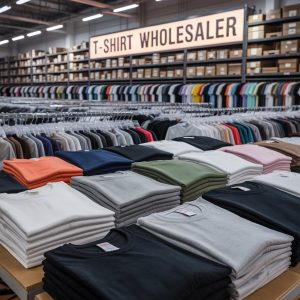
A T Shirt Wholesaler is more than a supplier. In modern retail, wholesalers act as strategic partners. Their production capacity, material sourcing, quality consistency, fabric technology, and pricing structure directly influence retail markup.
When a retailer builds a stable connection with a T Shirt Wholesaler, the entire retail system becomes more stable. Supply shortages reduce. Costs decrease. Order fulfillment becomes predictable. Retailers also gain access to seasonal trends, bulk discounts, and customized manufacturing options that competitors without wholesale relationships cannot match.
Example: A small boutique that buys 100 T shirts per month from distributors pays a high unit cost. When the same boutique shifts to a T Shirt Wholesaler with a minimum order of 500 pieces, the unit cost decreases significantly. This increases the retail profit margin by 20 to 40 percent without changing the selling environment.
Essential Qualities of a Reliable T Shirt Wholesaler
A strong wholesaler partnership allows retailers to scale while maintaining brand reputation. The following qualities define a dependable supplier relationship:
1. Fabric Quality and Material Integrity
Quality determines the lifespan of the product and customer satisfaction. Wholesalers that offer cotton, blended fabrics, organic materials, and durable stitching give retailers stronger confidence. Quality control processes such as fabric grading, shrink resistance testing, and colorfast checks enhance overall product value.
2. Pricing Structure and Bulk Advantages
Bulk wholesale pricing reduces per unit cost. Retailers can implement better pricing strategies based on wholesale tiers, minimum quantities, and seasonal promotions. Smart retailers combine bulk buying with inventory planning to avoid stockouts and slow inventory turnover.
3. Inventory Range and Product Variety
A T Shirt Wholesaler with diverse styles helps retailers reach multiple customer groups. Variants include crew neck, V neck, oversized, fitted, long sleeve, athletic, graphic ready, and plain blank shirts for printing. Retailers gain flexibility for niche markets.
4. Consistent Supply and Fast Fulfillment
Reliable order timelines matter. Retailers need steady replenishment to avoid lost sales. A T Shirt Wholesaler with strong logistics, advanced warehousing, and automated distribution creates a smoother supply chain.
5. Customization and Private Label Options
Private label manufacturing increases brand control. Retailers can customize labels, tags, colors, cuts, and packaging. This turns general wholesale stock into brand-ready merchandise with higher perceived value.
How a T Shirt Wholesaler Helps Retailers Scale Faster
Scaling involves more than adding stock. It requires systems. Wholesalers support this in several ways:
1. Cost Efficiency
Lower production cost and predictable pricing allow retailers to allocate budgets wisely.
2. Trend Adaptation
Wholesalers stay connected to apparel manufacturing trends. Retailers receive insights into new fits, fabrics, printing technologies, and seasonal colors.
3. Multi Channel Fulfillment
Retailers selling both offline and online require steady inventory. A T Shirt Wholesaler that supports large batch shipping and drop bulk distribution strengthens multi channel operations.
Understanding Wholesale Pricing Models
Wholesale pricing affects the retail markup. Common wholesale structures include:
- Tiered Pricing: Price decreases as quantity increases.
- Fixed Bulk Pricing: One fixed rate for all bulk packages.
- Per Unit Manufacturing Pricing: Used for custom orders and private label production.
- Seasonal Clearance Pricing: Wholesalers release unsold stock at discounted rates that retailers can resell profitably.
How to Choose the Best T Shirt Wholesaler
The selection process should follow practical criteria:
- Review sample products for stitching quality, fabric weight, softness, and fit accuracy.
- Examine wholesale pricing and discount tiers.
- Check minimum order requirements and delivery timelines.
- Analyze customer service and communication standards.
- Evaluate customization capacity for private label options.
-
Review return policies and defect handling processes.
Retailers with long term goals align with wholesalers who support growth, not just one time purchases.
The Role of Fabric Technology in Wholesale T Shirt Supply
Modern wholesalers integrate advanced textile technology for premium product performance. Retailers benefit from:
- Moisture wicking fabrics
- Anti shrink technology
- Pre washed materials
- Soft touch finishing
- Eco friendly textile production
- Durable knitting techniques
- Print ready fabric structures
Product quality becomes more predictable and brand friendly.
Retail Pricing Strategies Using Wholesale Inventory
Retailers can create strong profit models using wholesale supply. Effective pricing methods include:
- Keystone Markup: Retailers double the wholesale price.
- Value Based Pricing: Price set according to perceived value of fabric, brand, and fit.
- Competitive Pricing: Pricing aligned with local or online market competitors.
- Bundle Pricing: Selling two or more T shirts together for a higher average order value.
- Seasonal Upsell Pricing: Higher prices during peak seasons and promotional cycles.
Case Example of Wholesale Retail Profit Growth
A retailer sources 1000 pieces from a T Shirt Wholesaler at a bulk rate. The retailer divides inventory into styles, sizes, and colors. By combining bundle pricing and private label packaging, the retailer increases profit by 35 percent in 60 days. This model grows even faster when paired with online ads and marketplace selling.
The Value Chain Impact of a T Shirt Wholesaler
The T shirt category is a stable revenue generator. A wholesaler strengthens every part of the value chain:
- Product development
- Bulk production
- Quality control
- Warehousing
- Shipping
- Inventory management
- Retail preparation
- Private label finishing
- Long term forecasting
Retailers who collaborate closely experience smoother scaling and stronger brand perception.
Table: Retail Benefits of Working with a T Shirt Wholesaler
| Benefit Category | Impact on Retail Business |
|---|---|
| Bulk Pricing | Higher profit margins |
| Product Variety | More customer segmentation |
| Quality Assurance | Fewer returns and complaints |
| Private Label Options | Brand control and uniqueness |
| Fast Delivery | Reduced stockouts |
| Predictable Costs | Better financial planning |
| Trend Updates | Stronger product relevance |
Advantages of Buying in Bulk
Purchasing T-shirts in bulk from wholesalers offers several benefits for retailers:
- Cost Savings: Bulk orders often come with discounts, reducing the cost per unit.
- Stock Availability: Retailers can meet high demand without frequent orders.
- Consistent Quality: Buying from the same wholesaler ensures uniformity in product quality.
- Customization Options: Some wholesalers offer bulk customization, allowing retailers to create exclusive designs for their store.
Tips for Profitable Retailing with T Shirts
To maximize profits when selling T-shirts, retailers should consider these strategies:
1. Understand Your Target Audience
Knowing the preferences of your customers helps in selecting the right T-shirt designs, sizes, and styles. For example, teenagers may prefer graphic T-shirts, while adults may prefer plain or premium options.
2. Offer Seasonal and Trendy Designs
Keep up with current fashion trends and seasonal themes. Limited edition or seasonal T-shirts create excitement and encourage customers to make purchases.
3. Focus on Quality
High-quality T-shirts lead to satisfied customers who are likely to return. Avoid overly cheap products that may tear or shrink easily, as this can harm your store’s reputation.
4. Competitive Pricing
Set prices that attract customers while ensuring a good profit margin. Consider the cost of the T-shirts, shipping, and operational expenses before determining retail prices.
5. Marketing and Promotions
Promotions such as bundle deals, discounts, or loyalty programs can boost sales. Social media marketing and in-store displays also attract attention and increase visibility.
Conclusion
Partnering with a reliable T-shirt wholesaler is essential for successful and profitable retailing. Quality products, a wide variety, competitive pricing, and timely delivery are key factors in building a thriving business. By understanding the target audience, offering trendy designs, and maintaining strong relationships with wholesalers, retailers can maximize profits and ensure customer satisfaction. Efficient inventory management, marketing strategies, and a focus on quality further enhance the chances of long-term success. Choosing the right T-shirt wholesaler sets the foundation for a growing and profitable retail business.
Frequently Asked Questions
Q1. What does a T Shirt Wholesaler do for retail growth?
A wholesaler supplies bulk T shirts at competitive prices, improves profit margins, and supports retailers with consistent stock and product variety.
Q2. How does bulk buying support profitability?
Bulk orders reduce the cost per unit, allowing retailers to set higher profit margins without raising retail prices.
Q3. Is private label manufacturing possible through wholesalers?
Many wholesalers offer private label services including custom tags, packaging, and color options that help retailers build unique brands.
Q4. How can a retailer check product quality before buying?
Retailers request samples, check stitching, measure fabric weight, and verify color consistency before confirming the bulk order.
Q5. Does a T Shirt Wholesaler support online retailers?
Yes, wholesalers provide large order shipping and inventory support that online retailers need for consistent order fulfillment.