




Mining Industry Software Solutions in South Africa are becoming central to how modern mines plan, operate, and stay compliant. The sector faces pressure from rising costs, stricter safety standards, and growing environmental oversight. At the same time, ore grades are declining in many regions, which makes efficiency more important than ever.
Traditional paper-based reporting and disconnected legacy systems struggle to keep up with these demands. Manual logs can be delayed or incomplete, and critical decisions may rely on outdated information. This creates risk across production, maintenance, and worker safety.
Digital mining solutions address these gaps by connecting equipment, people, and data in real time. Instead of isolated tools, mining operations are moving toward integrated platforms that support daily decisions from the pit to the control room.

What Are Mining Industry Software Solutions?
Definition and Core Purpose
Mining Industry Software Solutions in South Africa refer to specialized platforms built to manage exploration, production, safety, maintenance, and compliance. These systems combine mining automation software, data management tools, and operational dashboards into a unified environment.
Their core purpose is to give operators, engineers, and managers accurate visibility into what is happening on site. This includes equipment status, production volumes, geotechnical data, and workforce activity. With reliable information, teams can act earlier and reduce costly surprises.
How These Solutions Fit into Modern Mining Operations
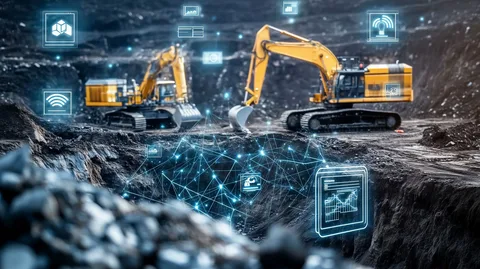
Modern mines operate as complex networks of machines, sensors, and teams working across large areas. Software acts as the coordination layer between these elements. It collects data from fleet management systems, drilling equipment, processing plants, and environmental sensors.
Mining data management systems then organize this information so it can be analyzed and shared. Control rooms use dashboards to track key metrics such as tonnage moved, equipment health, and shift performance. Field supervisors access mobile tools for inspections, incident reporting, and task updates.
This integration turns raw operational data into practical insight for daily decision making.
Key Features of Mining Industry Software Solutions in South Africa
Real Time Equipment and Fleet Monitoring
Fleet monitoring is one of the most widely adopted features. Sensors and onboard devices send continuous data on vehicle location, fuel use, engine temperature, and idle time. Supervisors can see where each truck or loader is working and identify delays or misuse.
Maintenance teams benefit as well. Early warnings about abnormal vibration or temperature can trigger inspections before a major breakdown occurs. This reduces unplanned downtime and extends asset life.
Production Planning and Scheduling Tools
Production planning tools help mines set realistic targets and track performance against them. Engineers can model drilling, blasting, hauling, and processing schedules based on resource availability and site constraints.
When conditions change, such as weather disruptions or equipment issues, schedules can be adjusted quickly. Managers can compare planned versus actual output and investigate the causes of shortfalls. This level of visibility supports more disciplined production control.
Safety and Compliance Management
Mining safety software plays a critical role in a high-risk industry. Digital systems record safety observations, incidents, and near misses in a structured format. This makes it easier to analyze trends and identify recurring hazards.
Access control, fatigue monitoring, and location tracking also support worker protection. In underground operations, knowing the exact position of personnel during an emergency can be lifesaving. Software tools also assist with compliance reporting required by South African regulators.
Geological Data and Resource Modeling
Exploration and geology teams rely on specialized tools to store and interpret drilling results, assay data, and geophysical surveys. These platforms build three-dimensional models of ore bodies and geological structures.
Accurate models guide decisions about where to mine next and how to design pits or stopes. They also help estimate reserves and plan long-term production. Integrating geological data with operational systems ensures that planning and execution stay aligned.
Environmental Monitoring and ESG Tracking
Environmental oversight is increasing across South Africa. Software systems collect data on water use, dust levels, tailings storage, and emissions. This information supports both internal management and external reporting.
Digital mining solutions make it easier to track performance against environmental targets. Alerts can be set when thresholds are exceeded, allowing faster corrective action. Transparent reporting also helps maintain community trust and investor confidence.
Benefits for South African Mining software solutions Companies
Improved Productivity and Reduced Downtime
Real-time data allows teams to spot inefficiencies early. If haul trucks are queuing at a loading point or a crusher is underperforming, supervisors can intervene quickly. Maintenance planning based on actual equipment condition reduces sudden failures.
Over time, these improvements add up to higher equipment availability and more consistent production. Even small percentage gains can have a large financial impact in high-volume operations.
Enhanced Worker Safety
Better visibility into site conditions directly supports safer work practices. Digital checklists, incident reporting tools, and hazard alerts keep safety at the forefront of daily tasks. Managers can track whether corrective actions are completed on time.
Wearables and proximity detection systems, often linked to mining safety software, reduce the risk of collisions between vehicles and workers. Data from past incidents can also guide training and policy updates.
Better Regulatory Compliance
South African mining companies operate under strict legal and environmental requirements. Software systems create structured records of inspections, emissions data, and safety performance. This makes audits more straightforward and reduces the chance of missing critical documentation.
Automated reporting also reduces the administrative burden on technical staff, who can focus more on operational improvement rather than paperwork.
Data Driven Decision Making
With integrated mining software solutions data management systems, decisions rely less on intuition and more on verified information. Managers can compare performance across shifts, sites, or equipment types using consistent metrics.
Historical data supports longer term planning as well. Trends in equipment reliability, ore grade variability, or energy use can guide investment and operational strategies.
Key takeaway: Reliable data, delivered at the right time, supports safer operations and more stable production.
Common Use Cases Across Mining Operations
Mining Industry Software Solutions in South Africa are used across both open-pit and underground environments. In open-pit mines, fleet management and dispatch systems are especially important due to the scale of hauling operations. Underground mines focus more on ventilation monitoring, ground control data, and personnel tracking.
Asset tracking and maintenance is another widespread use case. From drilling rigs to conveyor belts, each critical asset can be monitored for performance and service needs. Maintenance histories stored in the system help plan future work and manage spare parts.
Ore grade control and resource planning also rely heavily on software. Blending decisions at processing plants depend on accurate grade information. Geological models, linked with production data, help ensure that the right material reaches the mill at the right time.
Future Outlook for Mining Technology in South Africa
The future of mining software solutions technology in South Africa is closely tied to greater connectivity and automation. Internet of Things devices will continue to expand the volume of real-time data from equipment and environmental sensors. This will improve situational awareness across large and remote sites.
Artificial intelligence techniques are being tested for predictive maintenance, drilling pattern design, and processing plant control. While adoption is gradual, these tools show promise in handling complex data sets that are difficult to analyze manually.
There is also growing demand for integrated platforms rather than isolated applications. Mines want systems that share data easily and provide a single source of truth for operations, safety, and environmental performance.
Conclusion
Mining Industry Software Solutions in South Africa have moved from optional tools to essential operational systems. They support production planning, equipment monitoring, safety management, and environmental reporting within a single digital framework. As mines face tighter margins and higher expectations, dependable software infrastructure plays a central role in maintaining safe, efficient, and compliant operations.