





Introduction
In today’s fast-moving work culture, keeping track of who’s in and who’s out shouldn’t feel like solving a puzzle. Attendance tracking, once managed through paper registers and spreadsheets, has evolved into something much more efficient and intelligent. Yet, for many businesses, it still remains a daily struggle — chasing attendance data, dealing with manual errors, and worrying about compliance.
Simplifying attendance tracking isn’t just about saving time; it’s about creating clarity, transparency, and trust within the workplace. With the growing use of payroll software in Chennai, organizations are discovering smarter ways to integrate attendance management seamlessly into their daily operations. When attendance management runs smoothly, productivity flows naturally. So, let’s explore some smart, modern ways to make attendance tracking effortless and reliable.
Smart Ways to Simplify Employee Attendance Tracking
1. Go Beyond Manual Tracking
If you’re still relying on spreadsheets or punch cards, it’s time to move ahead. Manual tracking might seem simple, but it eats up valuable hours and leaves room for human errors. Instead, digital attendance systems or automated tracking tools can completely change how attendance is recorded.
Automation eliminates duplicate entries, forgotten log-ins, and the tedious task of compiling data at the end of the month. More importantly, it brings transparency every clock-in and clock-out is recorded in real time, so there’s no confusion about working hours or leave balances.
2. Adopt Real-Time Tracking
Real-time attendance tracking has become a game-changer for modern organizations. Imagine being able to see who’s currently at work, who’s working remotely, and who’s on leave all at a glance. This kind of visibility helps managers make better decisions instantly.
Whether your team is in the office, at a client site, or working from home, real-time systems offer a single, unified view of attendance. It’s not just about monitoring; it’s about empowering both managers and employees with clear, up-to-the-minute information.
3. Integrate Biometric or Mobile Attendance
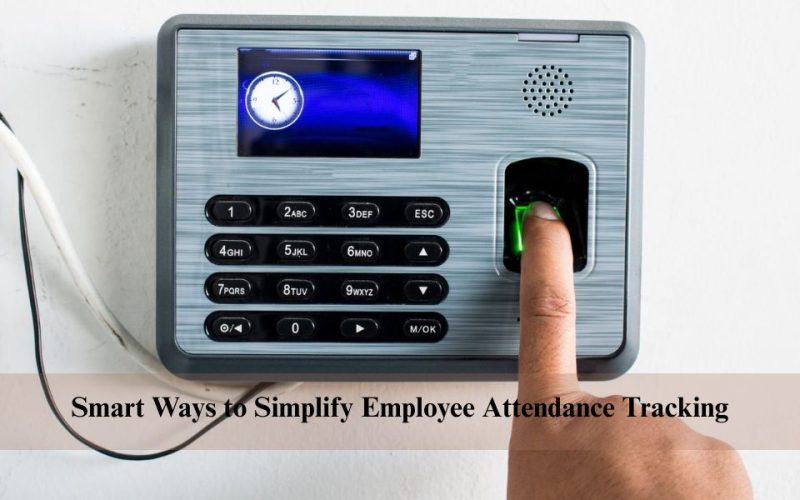
Biometric systems — using fingerprints, facial recognition, or even iris scans add a layer of accuracy that manual systems simply can’t match. They prevent proxy attendance (the old “buddy punching” trick) and ensure that attendance data is authentic.
For hybrid or field-based teams, mobile-based attendance tracking is another smart solution. With GPS-enabled check-ins, employees can mark attendance from any location, giving flexibility without compromising on accountability. This is especially helpful for businesses with multiple branches or employees working remotely.
4. Simplify Leave and Attendance Sync
Attendance tracking isn’t just about who comes in it’s about understanding the full picture of employee presence. Integrating leave management with attendance ensures that the data is always up-to-date. When an employee takes a day off, the system automatically reflects it, avoiding confusion during payroll processing.
This also helps in maintaining fairness. Employees can view their leave balances, apply for time off digitally, and track approvals removing the endless back-and-forth emails. When leave and attendance go hand in hand, HR processes become smoother and more transparent.
5. Make Use of Analytics and Reports
Raw attendance data doesn’t mean much unless it’s turned into insights. Smart attendance tracking systems can generate reports that highlight late arrivals, absentee trends, and overtime patterns.
For HR teams, these insights can uncover hidden productivity gaps. For example, if certain departments show frequent late log-ins, it could signal burnout, workload imbalance, or simply a scheduling issue. Data-backed decisions can then help address these challenges effectively.
Attendance analytics also help in future planning understanding employee patterns, predicting staffing needs, and improving workforce efficiency.
6. Encourage Employee Self-Service
Empowering employees to take charge of their attendance makes a huge difference. A self-service portal where employees can view their attendance logs, apply for leave, or regularize missed punches brings ownership and accountability.
It also reduces the burden on HR, who otherwise spend hours responding to attendance queries. When employees can access everything themselves, the whole process becomes more transparent and efficient.
This culture of openness builds trust employees feel that their time and efforts are being valued, and management can focus on strategic goals instead of administrative tasks.
7. Automate Notifications and Reminders
How many times have employees forgotten to clock in or out after a long meeting or late-night project? Automating attendance reminders can solve this effortlessly.
Smart reminders — through email, mobile app notifications, or even chat tools ensure employees log their attendance on time. Similarly, managers can receive alerts for missing entries or overtime approvals.
This small step can save hours of backtracking and corrections later, ensuring smoother monthly attendance closure and payroll calculations.
8. Ensure Data Security and Privacy
Attendance data includes personal and sensitive information such as location details, working hours, and biometric data. Protecting it should be a top priority.
Businesses must adopt secure systems with encryption and controlled access to ensure that attendance information remains confidential. Clear policies about data usage also build employee confidence. When people know their information is handled responsibly, it strengthens the trust between the organization and its workforce.
9. Tailor Attendance Policies to Fit Your Workforce
No two organizations are alike and neither should their attendance policies be. A creative agency may have flexible working hours, while a manufacturing unit needs strict shift-based tracking.
Smart attendance tracking allows customization according to your company’s unique structure. You can set flexible hours, shift rotations, grace periods, and remote work options that reflect your actual working style. This balance between structure and flexibility makes attendance management feel fair and adaptable.
10. Go Cloud for Effortless Access
Cloud-based attendance tracking is one of the most practical solutions for today’s dynamic work environment. With cloud technology, attendance data is accessible anytime, anywhere.
Managers can check attendance from their phones, HR can process reports remotely, and employees can view their records without being tied to the office network. Cloud systems also reduce dependency on physical infrastructure and minimize downtime. Plus, they automatically back up data, so nothing is ever lost.
Final Thoughts
Simplifying employee attendance tracking is not about installing fancy systems it’s about creating harmony between people, processes, and technology. The goal is to make tracking so smooth that it quietly supports daily operations without drawing attention to itself.
When done right, attendance tracking becomes more than a routine task it becomes a silent pillar of efficiency. From ensuring timely payrolls to improving productivity and trust, smart attendance management helps businesses function like well-tuned engines.
The world of work is changing rapidly, and your attendance system should evolve with it. Embrace smart tools, clear policies, and a culture that values time because in the end, time well tracked is time well spent.