








Introduction
As businesses keep changing, having strong HR strategies becomes crucial. These strategies help improve workplace performance and create a better environment. They help attract skilled employees, promote diversity, ensure proper onboarding, and make sure everyone is paid fairly. This brings employees closer to the company’s goals.
If you’re looking for ideas to motivate your team, this blog shares proven HR strategies that will help transform your workplace into a more creative and successful one.
Rise of Revolutionizing HR: 9 Key Strategies for a Thriving Workforce in 2025
In recent years, the world of Human Resources (HR) has changed dramatically. With new technology, shifting workplace cultures, and the rise of remote work, HR departments must adapt quickly to keep up. In 2025, businesses will need fresh, innovative strategies to manage and support their workforce. The rise of these new strategies aims to make work more flexible, efficient, and rewarding for employees, while also improving company performance. HR leaders are now focusing on solutions that go beyond traditional management to build a thriving, engaged, and future-ready workforce.
Benefits of Revolutionizing HR: 9 Key Strategies for a Thriving Workforce in 2025
By adopting new HR strategies, businesses can enjoy many benefits that boost both employee happiness and company success. First, offering flexible work options helps employees balance work and life, leading to healthier, happier teams. Second, focusing on skill development and career growth keeps employees motivated and ready for new challenges. Third, embracing diversity and inclusion helps build a stronger, more innovative workforce. Lastly, using technology in HR makes processes faster, reduces mistakes, and improves decision-making, making HR more efficient overall. These strategies lead to higher productivity, lower turnover, and a stronger company culture.
Role of Revolutionizing HR: 9 Key Strategies for a Thriving Workforce in 2025
The role of HR is evolving from simply managing people to becoming a key player in business strategy. In 2025, HR will be crucial in creating a positive, forward-thinking workplace culture. By using data and new technologies, HR leaders will be able to understand employee needs better and create tailored experiences for them. HR will also play a critical role in attracting and retaining top talent by offering opportunities for growth, innovation, and flexibility. Ultimately, HR will help businesses stay competitive by ensuring that their teams are motivated, skilled, and ready for the future.
9 Examples of Successful HR Strategies
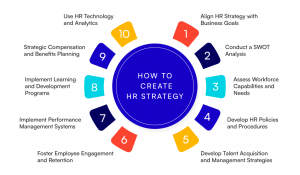
These examples of the HR program’s success will enable your HR team to deliver the next big strategy.
1. Data-Driven HR Decision-Making
HR analytics is becoming an important tool for businesses that want to improve how they manage their employees. By looking at employee data, HR can understand things like how well the team performs, how engaged employees are, how often people leave, and how effective recruitment is.
With predictive analytics, businesses can also spot trends in talent and skills gaps, helping them make better hiring decisions. Companies that do well in 2025 will use AI-powered HR tools to handle tasks and get quick insights that improve employee efficiency and productivity.
2. Employee Well-Being and Mental Health Support
Mental health and well-being are key parts of HR strategies. Companies are recognizing how important it is to support their employees by offering mental health programs, wellness platforms, and flexible work schedules.
By 2025, successful companies will make mental health care a core part of their business, offering things like counseling, work-life balance programs, and support for employees across the organization. Companies that invest in employee wellness will see higher job satisfaction, less absenteeism, and better overall performance.
3. AI and Automation in HR Processes
Organizations are using modern technology, like artificial intelligence and automation, to improve their HR operations, such as recruitment, onboarding, and employee management. AI-powered recruitment systems help process candidates more efficiently, making hiring faster and fairer by reducing bias.
4. Remote and Hybrid Work Optimization
Human Resources strategies must create solutions to handle advantages and issues resulting from hybrid work implementation that shows signs of becoming popular across organizations. Digital collaboration tools combined with well-defined remote work policies must get businesses’ investment to develop strategies that boost employee engagement during remote work scenarios.
Hybrid work models expect HR professionals to transition from monitoring hours worked to evaluating employees based on outcome achievements instead of established time-based metrics. The agility and resilience of organizations will significantly improve due to effective remote work strategy optimization in 2025.
5. Diversity, Equity, and Inclusion (DEI) Initiatives
Organizations need to recognize that diversity, equity, and inclusion (DEI) are not just buzzwords—they are crucial for a strong HR strategy. Companies that embrace DEI initiatives build a workforce that is more innovative and committed, leading to better results overall.
6. Up skilling and Reskilling Employees
As technology changes quickly, businesses need to offer ongoing learning opportunities for their employees. Training programs help workers stay up to date with their skills and keep the company competitive.
In 2025, successful companies will make continuous learning a key part of their HR strategy. This will include tailored training programs, mentoring, and online platforms where employees can share knowledge.
7. Sustainable and Socially Responsible HR Practices
Human resource strategies now incorporate sustainability and corporate social responsibility as core business elements. Corporate entities establish environmental policies in their workplaces while running social service programs committed to business ethics. Sustainable operations help businesses recruit responsible employees who strengthen their reputation among stakeholders while building trust between them.
8. Enhancing Employer Branding and Talent Acquisition
For companies to attract top talent in a competitive job market, having a strong employer brand is key. Organizations invest in creating smooth digital hiring processes and use social media and employee referral programs to showcase their work environment. A great employer brand helps companies stand out and draw in skilled candidates. Successful recruitment and employee engagement in the future will depend on solid employer branding.
In 2025, employee recognition will go beyond just yearly reviews. Companies will find more personal and frequent ways to acknowledge employees, from shout-outs to custom rewards like bonuses or extra time off. Recognition will also include peer-to-peer programs, where coworkers appreciate each other’s efforts.
HR leaders will need to create a culture where recognition is part of everyday work, helping employees feel valued and motivated. It’s not enough to reward employees for meeting goals—they should also be recognized for effort, teamwork, and innovation.
Why it matters: Regular, meaningful recognition boosts morale and keeps employees engaged. When employees feel appreciated, they’re more likely to go above and beyond and stay with the company longer.
9. Prioritizing Employee Experience (EX)
Today, businesses focus on improving the employee experience in their HR strategies. This includes creating a positive workplace culture, offering mental health support, and providing career development opportunities.
Companies that prioritize these areas see higher employee engagement, better performance, and stronger retention. Success depends on supporting employee well-being, offering flexible work schedules, and investing in leadership training, all of which help create a motivated and thriving workforce.
10. Adopt a Holistic Approach to Talent Management
In 2025, companies will manage talent in a more complete and connected way. HR will go beyond just hiring and performance reviews, focusing more on employees’ personal growth, health, and work-life balance.
Talent management will include creating personalized career paths, offering mentorship, and using advanced tools to track how employees grow and what they want. HR leaders will need to be proactive in keeping employees, helping them find meaning and satisfaction in their roles.
Why it matters: Taking a holistic approach to talent management helps employees stay with the company and motivates them to do their best work. This leads to higher retention and greater success for the company.
Encourage Employee Feedback and Open Communication
The future of HR is all about open communication. By 2025, employees will expect a work environment where they can give feedback and have their voices heard. HR teams will need to create regular ways for employees to share their thoughts, like surveys, focus groups, or one-on-one meetings.
But it’s not just about asking for feedback—HR leaders need to act on what they hear. This two-way communication builds trust, boosts employee engagement, and helps leaders understand their team better.
Why it matters: Open communication makes employees feel more involved and valued. When employees know their opinions matter, they’re more likely to stay loyal to the company.
Challenges of Revolutionizing HR: 9 Key Strategies for a Thriving Workforce in 2025
Even though the future of HR looks bright, there are some challenges in putting these strategies into action. One big issue is resistance to change—some employees or leaders might not want to adopt new HR methods. Managing a hybrid workforce, with both remote and in-office employees, can also be tough when it comes to communication, teamwork, and keeping the company culture strong.
Finding the right tools and technology to support HR efforts can be hard and expensive. Also, making sure the workforce is diverse and inclusive takes ongoing work and planning. Despite these challenges, businesses that successfully adapt to these changes will be in a better position for long-term success.
Future of Revolutionizing HR: 9 Key Strategies for a Thriving Workforce in 2025
Looking ahead, HR will be influenced by even more advanced technologies like AI and machine learning. These tools will help HR professionals make smarter decisions by analyzing lots of data on employee performance and engagement. The focus will be on creating personalized experiences for employees, making sure everyone feels valued and supported.
In the future, HR will also continue to lead the way in building more diverse and inclusive teams. Companies will invest more in employee well-being, offering better work-life balance, mental health support, and opportunities to keep learning. The future of HR looks bright, with a focus on innovation, inclusion, and making employees happy.
Conclusion
A human resource strategy example demonstrates the methods through which employees of a company interact as a team. This blog provides both working procedures and compensation for workers. You can find hundreds of HR strategy examples suitable for improving business performance. Examples are training and development services, dynamic communications systems, and community outreach activities. You can apply SWOT analysis when you need assistance with your selection process.