


Even the best writers—people who write for a living—still miss small but important mistakes. That’s not a sign of poor writing. It’s just how the human brain works.
When you’ve been staring at the same words for hours, your mind starts filling in gaps automatically. You “see” what you meant to write, not what’s actually on the page.
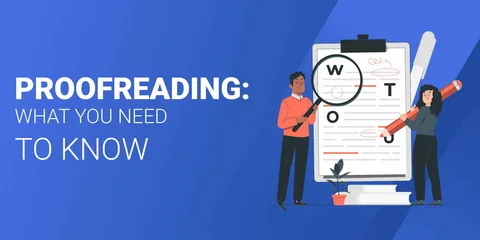
That’s why proofreading matters so much. It’s the final quality check before you publish, submit, print, or send anything out into the world.
Proofreading is what turns a “good enough” document into something polished, professional, and confident.
Whether you’re preparing a business proposal, a university assignment, a book manuscript, a blog post, or even a resume, the same rule applies: a few careless errors can make the reader question your credibility.
And the worst part? These errors are often easy to avoid—if you know what to look for.
Below are 10 common proofreading mistakes people make (even smart, experienced writers), plus practical ways to fix them.
You’ll also see where professional proofreading services can make a real difference, especially when the writing is high-stakes.
1) Relying Solely on Spellcheck
Spellcheck is helpful, but it’s not a proofreader. It catches obvious typos, but it often misses context-based mistakes. For example:
-
“Their going to the meeting” (spellcheck might not flag “their”)
-
“I can’t bare the pain” (it may not catch “bare” vs “bear”)
-
“We need to insure quality” (when you meant “ensure”)
These errors look small, but they instantly reduce trust.
What to do instead: Use spellcheck as a first pass, not the final step. Always do a manual read after.
How proofreading services help: Professionals combine tools with human judgment—meaning they catch both technical errors and meaning errors.
2) Proofreading Immediately After Writing
Proofreading right after finishing a draft is like checking your own haircut in a dark room. Your brain is still in “creation mode,” and it remembers what you intended to say. So you skim quickly, and your mind autocorrects mistakes without you noticing.
What to do instead: Step away. Even a short break helps, but a longer gap works better. A few hours is good. Overnight is ideal.
Quick trick: If you can’t wait, change the format. Convert the document to PDF, change font size, or read it on your phone. The “new look” forces your brain to pay attention.
3) Ignoring Formatting and Consistency
Proofreading isn’t only about grammar and spelling. Formatting and consistency are part of professionalism. A document can be perfectly written but still look sloppy if it’s inconsistent.
Common issues include:
-
Switching between “e-mail” and “email”
-
Inconsistent heading styles (some bold, some not)
-
Uneven spacing, bullet alignment, or numbering
-
Mixed fonts or different quotation styles
What to do instead: Pick a style and stick to it. For business content, consistency should match your brand. For academic work, match the required format (APA, MLA, Harvard, Chicago, etc.).
How proofreading services help: They don’t just “fix words”—they standardize the entire document so it looks clean and unified.
4) Overlooking Homophones
Homophones are words that sound the same but mean different things. They slip past spellcheck because they are “real words.”
Examples:
-
complement vs compliment
-
principal vs principle
-
then vs than
-
accept vs except
What to do instead: Read sentences out loud. When you hear the sentence, your brain is more likely to notice if the word doesn’t make sense.
5) Skimming Instead of Line-by-Line Reading
Many people “proofread” by scanning quickly from top to bottom. The problem is that skimming is designed for speed, not accuracy. Small errors hide in plain sight:
-
Missing articles (“a,” “an,” “the”)
-
Extra words (“the the”)
-
Awkward punctuation
-
Small spacing mistakes
What to do instead: Slow down and go line-by-line. Use a ruler on paper or highlight one line at a time on a screen.
Extra tip: Proofread backwards sentence-by-sentence. It breaks the flow and forces you to focus on each line.
6) Forgetting to Check Numbers and Data
Writers often focus heavily on words and forget to verify numbers, dates, names, and stats—especially in business and academic documents. But one wrong number can damage your credibility instantly.
Examples of easy-to-miss errors:
-
Wrong year (2023 instead of 2024)
-
Wrong pricing or currency
-
Incorrect percentages
-
Typos in phone numbers, emails, addresses
What to do instead: Check every number separately. If possible, compare it with the original source. Treat data like it’s “guilty until proven accurate.”
How proofreading services help: Skilled proofreaders verify consistency and flag suspicious numbers that may need confirmation.
7) Neglecting Punctuation
Punctuation is the silent driver of meaning. One comma can change the whole sentence. You’ve probably seen the famous example:
-
“Let’s eat, Grandma.”
-
“Let’s eat Grandma.”
Funny, yes—but punctuation mistakes can also make your writing unclear, too informal, or overly aggressive.
Common punctuation slip-ups include:
-
Overusing commas
-
Missing commas after introductory phrases
-
Incorrect apostrophes (its vs it’s)
-
Random capitalization or inconsistent quotation marks
What to do instead: Read slowly and pause where punctuation appears. If the pause feels wrong, the punctuation might be wrong.
8) Not Considering Tone and Clarity
Even if grammar is perfect, the writing can still feel “off.” Tone matters. A proposal should feel confident and clear. A blog should feel friendly and natural. An academic paper should feel formal and evidence-based.
Common tone issues:
-
Too casual for business
-
Too stiff for a blog
-
Too wordy for a report
-
Too emotional for a professional message
What to do instead: Read your writing like your audience would. Ask: “Would this sound right to the person reading it?” If the answer is no, adjust the wording.
How proofreading services help: Many professional services go beyond errors and improve clarity and flow without changing your meaning.
9) Proofreading in Poor Conditions
Proofreading while tired, rushed, or distracted is almost pointless. Your brain is already trying to save energy, so it misses details.
Bad conditions include:
-
Noisy places
-
Late-night proofreading
-
Multitasking while reading
-
Proofreading on a tiny screen for long periods
What to do instead: Proofread when you’re alert. Keep the environment quiet. Turn off notifications. Even 20 focused minutes beats 2 hours of distracted reading.
10) Underestimating Professional Proofreading Services
A lot of people assume professional proofreading is only for books or big corporate documents. In reality, it’s valuable for anything that matters—resumes, cover letters, presentations, business emails, research papers, website content, and marketing copy.
The biggest benefit is simple: a fresh, trained set of eyes sees things you won’t. Not because you’re careless—but because you’re human.
Proofreading services can help with:
-
Grammar, spelling, punctuation
-
Formatting and consistency
-
Readability and flow
-
Tone and audience fit
-
Brand or academic style compliance
-
Sometimes even light plagiarism checks or similarity red flags
Why Professional Proofreading Services Are Worth It
If you only remember one thing, remember this: polished writing increases trust. People judge your professionalism by how you communicate.
When your document is clean, clear, and error-free, it makes you look prepared and credible.
Professional proofreading offers:
-
Expertise: Trained proofreaders spot issues faster and more accurately
-
Consistency: Your document looks unified and intentional
-
Time-saving: You focus on ideas while they handle fine details
-
Better impressions: Especially important in business, academics, and job applications
5 FAQs About Proofreading
1) What’s the difference between proofreading and editing?
Editing improves structure, clarity, and flow. Proofreading is the final step that fixes grammar, spelling, punctuation, and formatting errors.
2) How much do professional proofreading services cost?
Pricing depends on length, complexity, and delivery speed. Many services charge per word or per page, and urgent delivery usually costs more.
3) Can AI tools replace human proofreaders?
AI tools are useful, but they struggle with tone, context, and nuanced meaning. Human proofreaders are still more reliable when accuracy matters.
4) How long should I wait before proofreading my own work?
Ideally 24 hours. If that’s not possible, take a few hours, then change the format (PDF, font, device) to “reset” your perspective.
5) Are proofreading services worth it for short documents?
Yes. A resume, proposal, or important email is short—but the impact is huge. Short documents often need perfection the most.
Conclusion
Proofreading is not just a last-minute task—it’s quality control. It protects your reputation, strengthens your message, and makes your writing look professional.
By avoiding these 10 common mistakes, you’ll catch more errors, improve clarity, and feel more confident sending your work out.
And when the writing is important—or the deadline is tight—professional proofreading services can be the difference between “almost ready” and truly flawless.
If your goal is clean, error-free content that makes a strong impression, proofreading is one of the smartest steps you can take.