






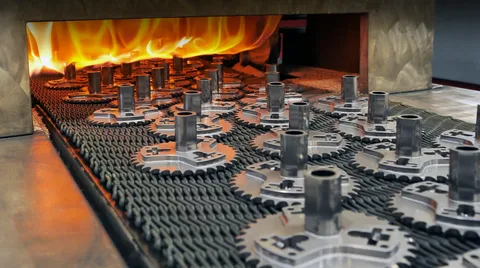
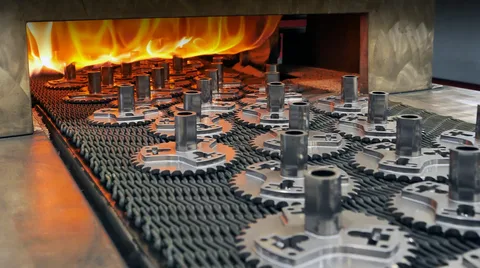
The powder metallurgy (PM) market is experiencing steady growth due to the increasing demand for efficient, cost-effective manufacturing methods, lightweight components, and high-precision parts across various industries. Powder metallurgy is a manufacturing technique that involves converting metal powders into finished parts through processes like blending, compaction, and sintering. This technique allows manufacturers to produce complex shapes with high material efficiency, making it a preferred choice for applications that demand precision and reduced waste compared to traditional metalworking methods.
In 2023, the global powder metallurgy market was valued at USD 9.83 billion. It is projected to grow from USD 10.47 billion in 2024 to USD 17.44 billion by 2031, reflecting a compound annual growth rate (CAGR) of 7.55% during the forecast period. The growth is primarily driven by the rising demand in automotive manufacturing, advancements in industrial processes, and the increasing adoption of additive manufacturing and metal injection molding technologies.
Key Market Insights
- Automotive Industry: The automotive sector remains a dominant end-user of powder metallurgy components, driven by the demand for lightweight and fuel-efficient parts.
- Industrial Applications: The use of PM in industrial machinery, electrical, electronics, and aerospace industries is expanding rapidly.
- Technological Advancements: The integration of metal injection molding (MIM) and additive manufacturing is contributing to increased adoption across various sectors.
- Sustainability: Powder metallurgy supports sustainability goals by offering high material utilization, reducing production waste, and lowering energy consumption.
Market Drivers and Emerging Trends
The powder metallurgy market is being driven by a strong demand for cost-efficient and sustainable manufacturing processes. Conventional manufacturing techniques frequently result in considerable material waste and increased production expenses. Powder metallurgy provides near-net-shape production, resulting in less scrap and more efficient use of materials.
Automotive Industry Growth
The automotive sector is one of the largest consumers of powder metallurgy products, particularly for engine parts, transmission systems, and structural components. With the increasing shift towards electric vehicles (EVs), powder metallurgy is gaining traction due to its ability to produce components with a high strength-to-weight ratio, excellent dimensional accuracy, and improved performance.
Demand for Precision Components
There is an increasing demand for high-precision components in industries like medical devices, electronics, and industrial automation. PM enables the production of intricate, lightweight components that meet stringent performance and quality requirements.
Market Segmentation
By Material Type
- Ferrous Metals: These are the dominant materials used in powder metallurgy due to their widespread application in automotive and industrial sectors.
- Non-Ferrous Metals: Non-ferrous materials such as aluminum, copper, and titanium are increasingly used in aerospace and electronics applications.
- Specialty Alloys: Advanced alloys are gaining popularity, especially in high-performance and high-temperature applications.
By Process
- Press and Sinter: This is the most commonly used method for producing PM components.
- Metal Injection Molding (MIM): Growing rapidly, MIM is ideal for producing small, complex, high-precision components.
- Additive Manufacturing: The integration of PM with 3D printing technologies is opening up new possibilities for customized, lightweight components.
- Hot Isostatic Pressing (HIP): This method is used for producing highly dense materials, often in aerospace and automotive applications.
By End-Use Industry
- Automotive: The automotive sector remains the largest consumer of powder metallurgy, particularly for lightweight, fuel-efficient components.
- Industrial Machinery: Increasing automation and industrial digitization are driving demand for PM components.
- Electrical & Electronics: PM is widely used for components that require excellent magnetic properties and wear resistance.
- Aerospace: The aerospace industry’s need for high-strength, lightweight components is supporting market growth.
- Medical: The demand for high-precision, biocompatible components in medical devices is on the rise.
- Consumer Goods: Powder metallurgy is gaining popularity in the consumer goods industry due to its ability to produce cost-effective, high-precision parts.
Regional Market Analysis
North America
North America is a leading market for powder metallurgy, supported by its advanced manufacturing infrastructure, high automotive production, and demand for precision components. The United States is the largest contributor, with investments in industrial automation and additive manufacturing playing a significant role in market growth.
Europe
Europe has a well-established powder metallurgy market, driven by strong automotive and aerospace industries. Germany, Italy, and France are key players in this region, supported by stringent emission regulations and a focus on lightweight materials in automotive and aerospace manufacturing.
Asia-Pacific
The Asia-Pacific region is expected to experience the highest growth rate in the powder metallurgy market. Countries like China, India, Japan, and South Korea are seeing rapid industrialization, expansion of automotive production, and increased investment in electronics and machinery, which are all contributing to the demand for powder metallurgy.
Latin America
The Latin American market is showing steady growth, supported by rising industrial activities and automotive production, particularly in countries like Brazil and Mexico.
Middle East & Africa
The Middle East & Africa region is gradually adopting powder metallurgy technologies, particularly in industrial and energy-related applications. Investments in infrastructure development and manufacturing diversification are boosting demand.
Emerging Trends in Powder Metallurgy
Metal Injection Molding (MIM)
Metal injection molding is gaining momentum, particularly for producing small, complex, high-precision components. It combines the design flexibility of plastic molding with the strength and durability of metal, making it ideal for applications in medical devices, electronics, and consumer goods.
Additive Manufacturing
The convergence of powder metallurgy and additive manufacturing (3D printing) is creating new growth opportunities. Powder-based additive manufacturing enables rapid prototyping and small-batch production, offering high design flexibility for customized components.
Focus on Sustainability
Sustainability is becoming increasingly important across industries, and powder metallurgy plays a key role in supporting eco-friendly manufacturing. The reduction of material waste, lower energy consumption, and the ability to recycle metal powders contribute to a more sustainable manufacturing process.
Competitive Landscape
The global powder metallurgy market is moderately consolidated, with key players focusing on product innovation, capacity expansion, and strategic collaborations to enhance their market position. Leading companies are investing in advanced technologies, including automated production lines and digital manufacturing, to improve efficiency and meet the evolving demands of the industry.
Key Companies in the Powder Metallurgy Market
- Höganäs AB
- GKN Powder Metallurgy
- Sumitomo Electric Industries
- Sandvik AB
- Miba AG
- AMETEK Inc.
- Carpenter Technology Corporation
- Rio Tinto Metal Powders
- Allegheny Technologies Incorporated
- Hitachi Chemical Co., Ltd.
These companies are actively involved in research and development (R&D) to enhance the quality of metal powders and sintering processes. They are also expanding their product portfolios and forming strategic partnerships to address growing industry demands.
Future Outlook
The future of the powder metallurgy market looks bright, with continued demand expected across automotive, industrial, and emerging technology sectors. As industries continue to seek ways to reduce costs, improve performance, and comply with environmental regulations, powder metallurgy is positioned to remain a key technology in modern manufacturing processes.
Technological innovations, such as improvements in powder quality, sintering efficiency, and process automation, will drive further growth. Additionally, as the demand for lightweight, high-precision components increases, especially in industries like automotive, aerospace, and medical devices, powder metallurgy will continue to offer significant advantages over traditional manufacturing methods.
Conclusion
The global powder metallurgy market is poised for robust growth, driven by advancements in manufacturing technologies, increasing industrial applications, and rising demand for sustainable and cost-efficient production methods. As the market is expected to reach USD 17.44 billion by 2031, stakeholders across automotive, industrial, and electronics sectors are recognizing the benefits of powder metallurgy.
Innovative solutions, regional expansion, and ongoing investments in research and development will continue to shape the competitive landscape, ensuring that powder metallurgy remains a fundamental component of modern manufacturing.