



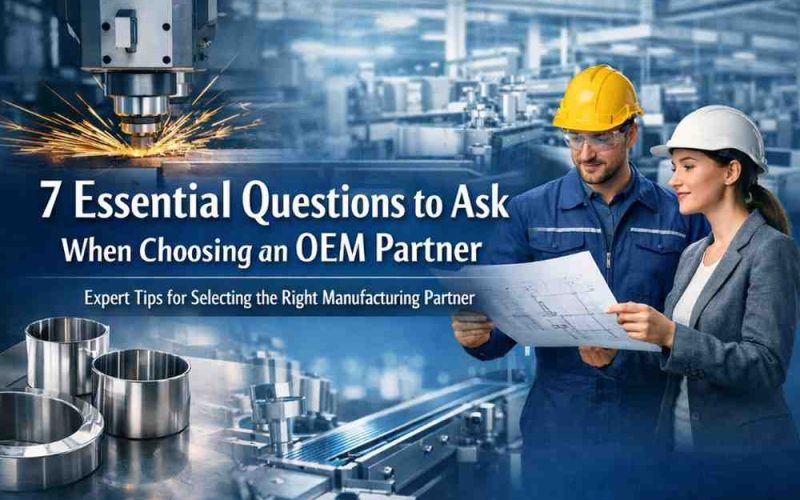
Choosing the right Original Equipment Manufacturer (OEM) partner is a strategic decision that directly impacts product quality, operational efficiency, brand reputation, and long-term growth. For businesses looking to scale, enter new markets, or optimize manufacturing costs, an OEM partnership is far more than a supplier relationship—it is a long-term collaboration built on trust, capability, and consistency.
With numerous OEM manufacturers operating in India and globally, identifying the right partner can be challenging. Asking the right questions early in the evaluation process helps businesses avoid costly mistakes and ensures alignment with long-term objectives.
This guide outlines seven essential questions to ask when choosing an OEM partner, along with insights into why these questions matter and how a reliable partner like Jindal Lifestyle can support your manufacturing goals.

1. Does the OEM Partner Have Proven Industry Experience?
Industry experience is one of the most important indicators of an OEM partner’s reliability. An experienced manufacturer understands industry standards, regulatory requirements, material behaviour, and production challenges that may not be evident to less established players.
A partner with a strong track record can:
- Anticipate potential production issues
- Maintain consistency across large-scale orders
- Adapt to evolving market and customer demands
When evaluating experience, look beyond years in operation. Review the industries served, product categories handled, and the complexity of projects completed.
Why this matters:
OEM manufacturing often involves tight timelines, precision engineering, and strict quality benchmarks. A seasoned OEM partner reduces risks and ensures smoother execution.
2. What Manufacturing Capabilities and Infrastructure Do They Offer?
An OEM partner’s infrastructure defines what they can deliver—both today and in the future. Modern manufacturing requires advanced machinery, skilled manpower, and scalable production capabilities to meet growing demand.
Key aspects to evaluate include:
- In-house manufacturing vs. outsourcing
- Availability of modern equipment and tooling
- Production capacity and scalability
- Ability to handle bulk as well as specialised orders
A well-equipped OEM partner ensures operational control, faster turnaround times, and consistent quality across batches.
Why this matters:
Insufficient infrastructure often leads to delays, inconsistent output, and dependency on third parties, which can compromise timelines and quality.
3. How Strong Are Their Quality Control and Compliance Standards?
Quality is non-negotiable in OEM manufacturing. Your partner’s quality assurance processes directly reflect on your brand in the market. A reliable OEM manufacturer follows stringent quality checks at every stage—from raw material selection to final inspection.
Key quality indicators include:
- Standardised quality control procedures
- Compliance with national and international standards
- Regular testing and inspection protocols
- Clear documentation and traceability
Why this matters:
Inconsistent quality can lead to customer dissatisfaction, increased returns, and long-term damage to brand credibility.
4. Can the OEM Partner Support Customisation and Design Requirements?
In today’s competitive market, customisation is often a differentiator. Brands require OEM partners who can translate design concepts into functional, manufacturable products while maintaining quality and cost efficiency.
Evaluate whether the OEM partner offers:
- Design collaboration and technical input
- Prototyping and sampling support
- Flexibility in materials, finishes, and specifications
- Engineering support for complex designs
Why this matters:
An OEM partner who understands design intent and manufacturing feasibility can significantly reduce development cycles and costs.
5. How Reliable Are Their Delivery Timelines and Supply Chain Processes?
Timely delivery is critical for businesses operating in fast-moving or seasonal markets. Delays at the manufacturing stage can disrupt inventory planning, sales cycles, and customer commitments.
Assess the OEM partner’s:
- Production planning and scheduling systems
- Raw material sourcing reliability
- Logistics and dispatch capabilities
- Track record of meeting delivery commitments
Why this matters:
Unreliable delivery timelines can lead to missed opportunities, increased holding costs, and strained customer relationships.
6. Are Pricing, Costs, and Communication Transparent?
Transparency builds trust in any OEM partnership. Hidden costs, unclear pricing structures, or inconsistent communication can create friction and long-term dissatisfaction.
A dependable OEM partner should offer:
- Clear and detailed cost breakdowns
- Transparent pricing aligned with quality and volume
- Regular communication during production stages
- Responsiveness to queries and feedback
Why this matters:
Transparent communication ensures smoother collaboration, better cost control, and faster issue resolution.
7. Does the OEM Partner Focus on Long-Term Partnership and Growth?
OEM manufacturing is most effective when viewed as a long-term partnership rather than a transactional relationship. A growth-oriented OEM partner invests in continuous improvement, innovation, and capacity expansion to support evolving client needs.
Look for a partner who:
- Supports scalability as your business grows
- Invests in process improvements and technology
- Values long-term collaboration over short-term gains
- Provides post-production support and consistency
Why this matters:
A long-term OEM partner becomes an extension of your operations, contributing to stability and sustained growth.
Why Jindal Lifestyle Is a Trusted OEM Partner in India
When evaluating OEM partners, businesses seek reliability, quality, and consistency. Jindal Lifestyle stands out as a trusted OEM manufacturer by combining advanced manufacturing capabilities with a strong focus on craftsmanship and innovation.
Key strengths include:
- Extensive experience in stainless steel OEM manufacturing
- Modern infrastructure with scalable production capacity
- Strict adherence to quality and compliance standards
- Expertise in customised and design-led OEM solutions
- Reliable delivery timelines and transparent processes
These strengths make Jindal Lifestyle a preferred OEM partner for brands seeking long-term value and operational excellence.
Conclusion
Selecting the right OEM partner is a critical business decision that influences product success, brand perception, and operational efficiency. By asking the right questions—about experience, capabilities, quality, customization, delivery, transparency, and long-term vision—businesses can make informed choices and build resilient manufacturing partnerships.
For organizations seeking a dependable, quality-driven OEM partner in India, Jindal Lifestyle offers the expertise, infrastructure, and commitment required to support sustainable growth.