




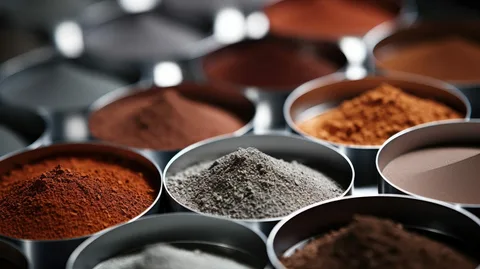
In today’s materials science landscape, selecting the right metal powder plays a major role in determining research success. Whether scientists are working on additive manufacturing, powder metallurgy, or advanced composites, the quality and characteristics of metal powders directly affect outcomes. Even small variations in particle size, shape, or composition can lead to noticeable differences in performance and reproducibility.
For this reason, researchers often begin with high-purity materials. Using pure metal powders helps eliminate uncertainty. It allows scientists to focus on process variables instead of worrying about inconsistencies in raw materials. As a result, experiments become more reliable and easier to repeat.
Why Metal Type and Purity Matter
Different metals serve different research purposes. Each one brings unique physical and chemical properties to an experiment. Choosing the correct metal is not just important—it is essential.
Titanium powders, especially Ti-6Al-4V, are widely used in structural research. They offer an excellent strength-to-weight ratio and resist corrosion effectively. Because of these properties, researchers often use titanium in aerospace and mechanical engineering studies. It also performs well in additive manufacturing processes such as selective laser melting and electron beam melting.
Copper powders, on the other hand, are preferred when conductivity is important. Researchers use them in experiments involving electrical systems or heat transfer. However, copper can oxidize easily, so careful handling is necessary during processing.
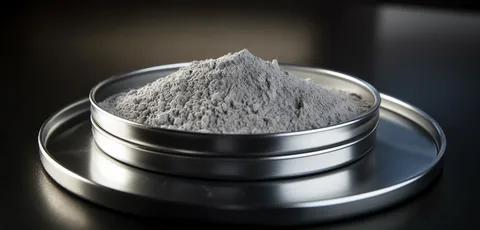
Nickel powders are commonly selected for high-temperature applications. They are ideal for developing super alloys and studying corrosion resistance. Similarly, cobalt powders are valuable in magnetic material research and wear-resistant coatings. Iron powders remain a versatile option. They are widely used in powder metallurgy, magnetic studies, and general alloy development.
Across all these materials, purity remains a key factor. High-purity powders reduce unwanted reactions and improve consistency. This is why many researchers rely on pure metal powders as a starting point.
The Role of Particle Size
Particle size has a strong influence on how powders behave during experiments. It affects everything from flowability to chemical reactivity.
Nano powders, which are smaller than 100 nanometers, offer a very high surface area. This makes them highly reactive. Researchers often use them in catalytic studies, advanced coatings, and experimental sintering. However, nano powders can be difficult to handle. They tend to clump together and may raise safety concerns if not managed properly.
Micro powders provide a more practical alternative in many cases. Their size usually ranges from 1 to 50 micrometers. These powders flow more easily and are simpler to process. They work well in additive manufacturing and powder compaction experiments. Because of their stability, micro powders often produce more predictable results.
In most laboratory settings, micro powders strike a balance between performance and usability. They are easier to control while still delivering reliable outcomes.
Understanding Powder Morphology
Particle shape, also known as morphology, is another important factor. It directly affects how powders behave during processing.
Spherical powders are smooth and uniform. They flow easily and pack efficiently. This makes them ideal for additive manufacturing techniques like 3D printing. When layers need to be evenly distributed, spherical particles provide better consistency.
Irregular powders, in contrast, have rough and uneven shapes. They offer a larger surface area, which can improve bonding and chemical reactions. Researchers often choose irregular powders for sintering studies or composite material development.
The choice between spherical and irregular particles depends on the experiment. If precision and uniformity are the goal, spherical powders are the better option. If enhanced reactivity is required, irregular powders may deliver better results.
Matching Powders with Processing Methods
Every experimental technique has specific material requirements. Using the wrong type of powder can lead to poor results or wasted effort.
Additive manufacturing processes such as selective laser melting and electron beam melting require high-purity powders with consistent size and shape. Spherical particles with narrow size distributions work best in these systems. They ensure smooth layering and even melting.
Powder metallurgy, however, focuses more on compaction and sintering. In this case, micro powders with controlled size ranges are preferred. These powders help achieve better density and mechanical strength in the final product.
Composite research often involves combining multiple powders. Scientists use this approach to explore new material properties, such as improved strength, conductivity, or magnetism. In such cases, compatibility between powders becomes crucial.
To simplify selection, researchers often follow a few basic guidelines:
- Use high-purity materials to minimize variability
- Choose particle size based on processing needs
- Match particle shape with the desired outcome
Even these simple steps can significantly improve research efficiency.
Practical Recommendations for Researchers
Selecting the right powder depends on the research objective. However, some general patterns can help guide decisions.
Titanium powders are best suited for structural applications and additive manufacturing. They provide strength, durability, and reliability. Copper powders are ideal for studies involving heat transfer or electrical conductivity. Nickel and cobalt powders are commonly used in high-temperature and magnetic applications.
Iron powders remain a flexible option for many types of research. They are widely available and easy to process. For foundational experiments, iron often serves as a starting point.
Regardless of the metal type, using pure metal powders ensures better consistency. It allows researchers to focus on innovation rather than material variability.
Emerging Trends in Metal Powder Research
Materials science continues to evolve, and new developments are shaping the future of metal powder research. Scientists are now exploring nanostructured powders, hybrid materials, and surface-modified particles.
These innovations open new possibilities. They allow researchers to create stronger alloys, more efficient coatings, and advanced composite materials. At the same time, they increase the need for precise and well-characterized powders.
As research becomes more complex, the demand for high-quality materials continues to grow. Reliable powders are no longer just helpful—they are essential for meaningful progress.
Final Thoughts
Choosing the right metal powder is a critical step in any materials science experiment. Factors such as metal type, particle size, shape, and process compatibility all play a role in determining success.
Spherical powders work best in additive manufacturing. Irregular powders support chemical reactions and sintering. Nano powders offer high reactivity, while micro powders provide ease of use. Most importantly, high-purity powders create a stable foundation for reliable results.
By understanding these factors, researchers can improve efficiency, reduce errors, and achieve more consistent outcomes. In the end, thoughtful material selection is not just a technical detail—it is the foundation of successful and reproducible research.