



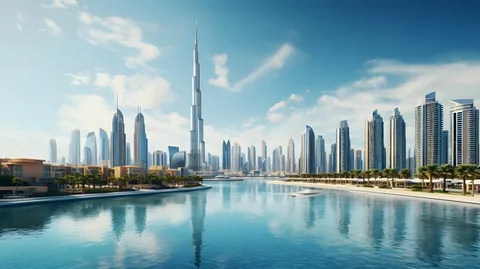
When people think of Dubai, they often picture glittering towers, designer boutiques, and waterfront penthouses.
That side of the city absolutely exists—but Dubai also has neighborhoods built for everyday life: practical communities with reasonable housing costs, convenient amenities, and a resident mix that feels truly global.
International City Dubai is one of the best-known examples. It’s a multicultural residential development that combines affordability with a distinctive identity, making it popular with residents looking for value and investors searching for steady rental demand.
A quick overview of International City
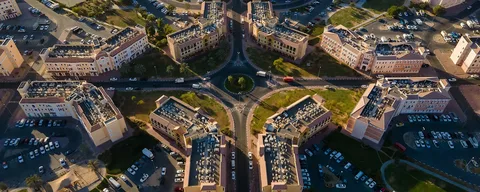
International City is a master-planned community developed by Nakheel Properties. Situated in the Al Warsan area, it covers a large footprint—roughly eight million square metres—and is home to a sizable population of more than sixty thousand residents.
The community is best known for its themed layout: clusters inspired by different countries, reflected through building facades and overall design cues.
The result is a neighborhood that feels different from many of Dubai’s newer, uniform districts—more lived-in, more diverse, and more community-oriented.
Location and getting around
One reason International City remains consistently in demand is its practical location. It sits close to major arterial roads, which makes commuting manageable for people working across different parts of Dubai.
Residents can typically reach Dubai International Airport in around twenty minutes, Downtown Dubai in roughly twenty-five, and Mirdif City Centre in about ten, depending on traffic.
The road network makes it straightforward to access business zones and commercial areas, which is a key factor for tenants who want affordability without feeling isolated.
Public transport options also help. RTA buses serve the area, and metro access is possible via stations such as Rashidiya and Centrepoint, usually with a short drive or a bus connection.
For many residents, that combination—roads plus public transport—means you’re not locked into owning a car, even if driving remains the most common choice.
The “country cluster” concept
International City’s signature feature is its cluster design. The neighborhood is divided into ten themed clusters that take inspiration from countries including China, England, France, Russia, Spain, Italy, Morocco, Greece, Persia, and the UAE.
Each cluster contains mid-rise residential buildings with exterior styling intended to match its theme, giving the community a quirky, recognizable character.
Beyond aesthetics, the cluster format also makes the area easy to navigate. Residents often refer to their location by cluster name, and each section tends to develop its own rhythm, retail pockets, and small social micro-communities.
Homes and who the community suits
Housing in International City is primarily apartment-based, with a strong supply of studios, one-bedroom units, and two-bedroom units.
These layouts are well suited to young professionals, couples, small families, and expats who want to keep living costs under control.
The apartments are generally straightforward rather than luxury-focused: functional floor plans, decent natural light in many units, balconies in a large portion of the stock, and practical parking arrangements.
This “no-frills but comfortable” positioning is exactly why the community works. Not everyone is looking for concierge service and rooftop infinity pools. Many tenants prioritize space, connectivity, and rent that doesn’t squeeze their monthly budget. International City caters to that reality.
Day-to-day amenities and convenience
A major advantage of living in International City is how easy it is to handle daily routines without traveling far. The area is closely associated with Dragon Mart, a major retail and wholesale hub that attracts shoppers from across Dubai.
In everyday terms, that means residents benefit from nearby access to household goods, electronics, furniture, and affordable shopping options.
For groceries and essentials, supermarkets and cooperatives operate in and around the community. Healthcare access is also a plus, with clinics available nearby for general medical needs.
Families with young children can find nurseries in the area, while school options are commonly accessed in neighboring districts such as Academic City, where education infrastructure is more concentrated.
International City also includes pockets of green space—small parks, walking areas, and open zones where residents can take short evening walks or let kids play. It’s not a resort-style environment, but it covers the essentials that matter most for daily comfort.
Food, culture, and the community vibe
International City feels lively because its population is genuinely diverse. Restaurants and cafés reflect that, offering everything from South Asian to Chinese and Arabic food, along with African cuisines and plenty of casual takeaway spots.
For many residents, this is one of the neighborhood’s most enjoyable features: you can eat well without paying premium prices, and you’re exposed to a wide range of cultures simply by living there.
The overall atmosphere tends to be relaxed and practical—more “real neighborhood” than “tourist postcard.” That makes it appealing for people who prefer a grounded lifestyle while still living inside Dubai’s broader urban ecosystem.
Affordability and investment potential
From an investment perspective, International City stands out because entry prices are typically lower than many of Dubai’s headline districts. That lower buy-in can translate into attractive rental yields, especially when demand remains steady among budget-conscious renters.
While exact figures vary by building condition, cluster, view, and unit upgrades, typical market ranges often seen in the area place studios roughly in the AED 250,000 to AED 350,000 bracket, one-bedroom apartments around AED 350,000 to AED 500,000, and two-bedroom units roughly between AED 500,000 and AED 650,000.
Rental yields are often discussed in the range of around seven to nine percent, though real performance depends on vacancy rates, maintenance costs, and how well a unit is presented and managed.
For landlords, the logic is simple: International City serves a large tenant segment—people who want Dubai access without luxury pricing—so demand can be resilient even when other markets cool.
Things to keep in mind
No neighborhood is perfect, and International City’s value positioning comes with trade-offs. Some buildings are older compared to Dubai’s newest developments, and the level of luxury amenities is limited.
Traffic congestion can also occur, especially near major retail zones during peak hours. The best approach is to evaluate buildings individually, pay attention to maintenance standards, and prioritize units with clean common areas, good access points, and sensible layouts.
Looking ahead
There have been announcements and ongoing efforts to improve infrastructure, road flow, and overall appearance within the broader International City area.
In addition, International City Phase Two is often referenced as a development that may bring newer building stock and upgraded amenities, potentially widening the community’s appeal for both end users and investors.
Final thoughts
International City Dubai proves that affordability and livability can exist side by side in a city known for luxury.
It may not offer beach views or five-star facilities, but it delivers something many residents and investors value even more: practical housing, multicultural energy, everyday convenience, and the potential for strong rental returns.
For anyone seeking a cost-effective base in Dubai—or a real estate investment built around steady demand—International City remains a neighborhood worth serious consideration.