



Introduction
Modern urban coffee shops are no longer just spots for a quick caffeine fix—they have become cultural hubs that blend functionality, style, and social interaction. The challenge for designers and cafe owners lies in optimizing small spaces without compromising on comfort or aesthetics. Innovative approaches now transform compact cafes into inviting, multifunctional environments where every inch serves a purpose. Among these concepts, the rise of Shipping Container Cafe has brought a new dimension to efficient, stylish design.
Why Design Matters in a Coffee Shop
The design of a coffee shop isn’t just about looking good. It’s about creating a space where people feel comfortable, relaxed, and inspired to stay longer. A well-designed coffee shop can:
- Increase seating capacity
- Improve customer flow
- Highlight your brand
- Create a better work environment for staff
- Encourage customers to return
Whether your space is big or small, design helps turn a basic café into a memorable experience.
Compact Design with Purpose
Small urban cafes often struggle with spatial constraints, which can affect seating, workflow, and customer comfort. Designers are responding by using modular furniture, movable partitions, and multifunctional zones that make the most of limited space. Vertical storage, foldable counters, and creative seating arrangements ensure that the cafe feels spacious and uncluttered, even in tight quarters.
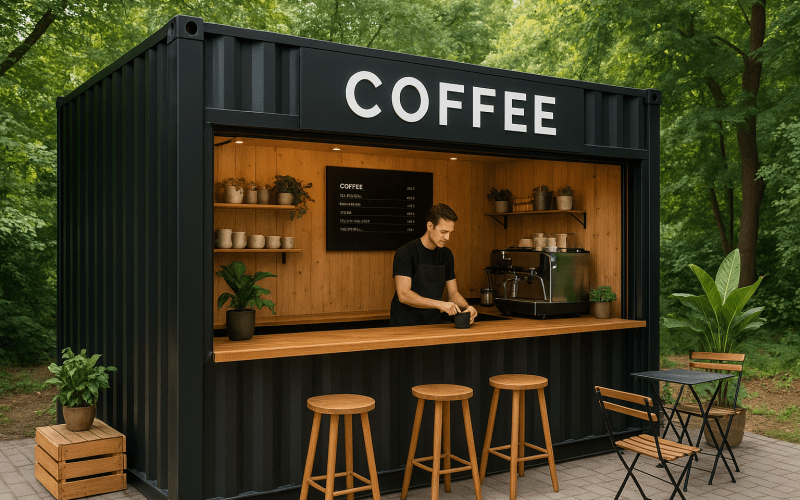
Container-based cafes, in particular, provide a framework that encourages smart spatial planning. By carefully arranging seating, service counters, and display areas, designers can create an environment that is both practical and aesthetically appealing. The compact nature of these spaces encourages creativity, resulting in layouts that are surprisingly functional and visually engaging.
Merging Function with Aesthetics
A modern coffee shop must appeal to both the senses and the lifestyle of its patrons. Design choices influence how visitors perceive a space, affecting comfort, ambiance, and overall satisfaction. Using natural materials like wood, metal, and greenery enhances warmth and visual appeal, especially in modular or container-based structures. Thoughtfully chosen lighting, from pendant lights to subtle accent LEDs, adds depth and mood to the cafe, highlighting key areas while maintaining an inviting atmosphere.
The charm of a Shipping Container Cafe lies in its balance between industrial simplicity and stylish details. Clean lines, open layouts, and cozy corners create a versatile environment that encourages lingering and social interaction. Even in small spaces, carefully considered design elements can make the cafe feel larger and more welcoming.
Optimizing Every Inch of Space
Every corner of a small cafe can serve multiple purposes. Designers maximize efficiency by incorporating vertical elements such as hanging planters, wall-mounted shelves, or lofted seating. Compact kitchen layouts streamline barista workflows while maintaining customer visibility and interaction. Flexible furniture allows spaces to shift seamlessly between solo coffee breaks, small gatherings, and group meetings.
For container cafes, linear layouts naturally enhance efficiency. Foldable counters, retractable walls, and modular seating offer adaptability, allowing the cafe to respond to varying customer demands. This flexible approach not only improves functionality but also ensures the space remains comfortable and visually appealing.
Sustainable and Modular Design
Sustainability is a key consideration in contemporary cafe design. Using repurposed materials, energy-efficient appliances, and eco-friendly finishes reduces environmental impact and resonates with environmentally conscious patrons. Container Conversion Companies in UAE are increasingly facilitating the creation of fully functional cafes from shipping containers while maintaining sustainable practices.
Modular design allows cafe owners to expand their operations with minimal disruption. Additional units can be added or reconfigured to accommodate growing demand, seasonal variations, or new design concepts. Green roofs, solar panels, and water-saving installations are popular options that further enhance the sustainability and functionality of compact cafes.
Creating Memorable Visual Identities
A unique visual identity sets a cafe apart from competitors. Even in compact spaces, design elements such as bold color schemes, creative furniture arrangements, and artistic wall treatments leave lasting impressions. Thoughtful decoration and attention to detail contribute to a cohesive ambiance that patrons remember long after leaving.
Container cafes offer a blank canvas for design experimentation. Exterior facades can be transformed with retractable awnings, outdoor seating decks, or distinctive signage, while interior finishes like polished concrete, reclaimed wood, or ambient lighting create a warm, inviting environment. The modular nature of container designs also allows for personalization and seasonal redesigns without major renovations.
Multi-Functional Spaces for Modern Cafes
Flexibility is central to modern cafe design. Spaces can be adapted for social gatherings, work sessions, pop-up events, or casual dining. Multi-functional furniture, adjustable lighting, and adaptable seating arrangements allow a small space to serve multiple purposes effectively.
Container cafes, with their modular construction, lend themselves well to multi-use concepts. Sections can be partitioned or combined as needed, accommodating a range of activities while maintaining a consistent aesthetic. This versatility ensures the space remains appealing to a broad audience.
Enhancing Ambiance Through Lighting
Lighting is a critical factor in the perception of space and comfort. Natural light can be maximized through windows and skylights, creating an open, airy feel. Artificial lighting, carefully layered with ambient, task, and accent elements, enhances the cafe’s mood and functionality.
In container-based cafes, smart lighting can accentuate architectural features and create focal points, even in smaller areas. A combination of warm and neutral tones ensures a welcoming atmosphere, while practical lighting solutions support both staff efficiency and customer enjoyment.
Incorporating Technology and Efficiency
Modern cafes increasingly integrate technology to improve service and customer satisfaction. Mobile ordering, contactless payment systems, and smart inventory management enhance operational efficiency without compromising the customer experience.
Container cafes are particularly suitable for technology integration, as modular layouts simplify equipment placement and workflow optimization. These innovations allow small cafes to operate smoothly while offering a modern, seamless experience for patrons.
Color, Light, and Mood
Design isn’t only about layout. Color and lighting play a big role in making small coffee shops feel cozy and inviting.
- Light colors make spaces look larger. Soft whites, creams, and pastels reflect light and open up the room.
- Warm lighting creates a relaxed mood. Avoid harsh overhead lights and use pendant lamps or wall sconces instead.
- Accent colors help show off your brand. A single bold color used on chairs or walls can add personality without overwhelming the space.
Personal Touches That Stand Out
Even in a tiny space, little design details can leave a big impression. Consider adding:
- Handwritten menus or signs
- A feature wall with local art or photos
- A cozy reading nook with books and magazines
- A mini shelf with board games or coloring books
- A loyalty card board or message wall for regulars
These personal touches show customers you care and turn your shop into a community hub, not just a business.
Green Design: Eco-Friendly and Space Smart
Eco-conscious design is not just good for the planet—it often saves space and money, too.
- Use reclaimed wood or recycled furniture
- Offer reusable cup discounts
- Install energy-efficient lighting
- Choose low-maintenance indoor plants for air quality
Customers appreciate brands that care about sustainability, and these green choices add charm and responsibility to your design.
Real-Life Inspiration: Small Coffee Shops Doing It Right
Around the world, many coffee shops have made headlines for their clever use of space:
- Tiny cafés in Japan use sliding walls and hidden storage to transform layouts throughout the day
- European espresso bars rely on window bars and standing room to serve dozens in a small footprint
- Mobile coffee carts prove you can run a café in a space as small as a food truck
These examples show that size doesn’t limit success. Smart design, good coffee, and a welcoming vibe go a long way.
Conclusion
Innovative coffee shop design demonstrates that small spaces can offer large experiences. By combining thoughtful layouts, multifunctional furniture, sustainable practices, and compelling aesthetics, modern cafes can maximize every corner. Concepts like Shipping Container Cafes exemplify this approach, providing flexible, stylish, and efficient solutions for urban coffee culture.
Engaging services from Container Conversion Companies in UAE further support the creation of versatile and eco-friendly spaces, helping cafe owners turn creative visions into reality. Through careful planning, modular design, and attention to detail, even compact cafes can deliver exceptional experiences that attract and retain patrons.
Small spaces no longer limit ambition; instead, they challenge designers and owners to innovate, creating coffee shops that are both functional and memorable. As urban environments continue to evolve, these creative solutions will define the future of coffee culture.