




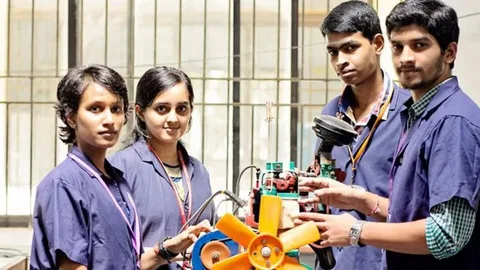
Engineering is one of the most sought-after career paths in India, and Rajasthan has rapidly emerged as a major hub for technical education. Cities like Jaipur, Jodhpur, Kota, and Udaipur are home to some of the country’s reputed institutes. From nationally ranked universities to affordable private colleges, students have hundreds of options to choose from. According to recent education reports, Rajasthan has around 358 engineering colleges, including 274 private and 74 government institutions.
But here’s the real challenge: choosing the right engineering college. Most students focus only on brand name, campus size, or placement advertisements. Unfortunately, many ignore crucial factors that actually determine the quality of education and career opportunities after graduation. A college might have beautiful buildings and big marketing campaigns, but that doesn’t necessarily mean it will provide the right learning environment.
Interestingly, Rajasthan’s engineering ecosystem is quite diverse. From globally recognized institutes like BITS Pilani and IIT Jodhpur to emerging universities and private colleges, students can find opportunities across different budgets and specializations. Some colleges even report 80–90% placement rates and attractive salary packages, showing how competitive the state’s technical education sector has become.
Yet, every year, thousands of students regret their choice because they overlooked critical aspects while selecting a college. They later realize that the infrastructure was outdated, the faculty lacked experience, or the placement statistics were misleading.
This guide explores 5 important factors students often ignore when choosing an engineering college in Rajasthan. If you’re planning to pursue B.Tech or helping someone make this decision, understanding these factors could save four years of frustration—and possibly shape a much brighter future.

Engineering Education in Rajasthan – A Quick Overview
Growth of Technical Institutions in the State
Over the past two decades, Rajasthan has transformed into a significant center for engineering education in India. Earlier, students from the state used to migrate to cities like You can pursue technical studies in Delhi, Pune, or Bangalore. Today, Rajasthan itself hosts a wide network of institutions offering undergraduate and postgraduate engineering programs. Government reports suggest that the state currently has more than 70 functional engineering colleges with a combined annual intake of around 27,000 students.
This growth didn’t happen overnight. Government initiatives, AICTE approvals, and the growing demand for engineering professionals in sectors such as IT, manufacturing, renewable energy, and infrastructure fueled the expansion. Universities affiliated with Rajasthan Technical University (RTU) and other state universities now offer specialized programs in artificial intelligence, data science, robotics, and cybersecurity.
Students also benefit from diverse admission pathways. National-level exams such as JEE Main, JEE Advanced, and BITSAT open doors to top institutions, while state-level counseling processes like REAP help students secure seats in private and government colleges across Rajasthan.
The increasing number of colleges means more opportunities—but also more confusion. With so many options available, students must carefully analyze institutions instead of blindly following trends or peer suggestions.
Popular Engineering Hubs in Rajasthan
When discussing engineering education in Rajasthan, several cities stand out as major academic centers. Jaipur leads the list, hosting prestigious institutes like SMCET Jaipur and numerous private engineering colleges. The city has also become a technology and startup hub, attracting companies and research collaborations.
Cities like Kota, Udaipur, and Ajmer also contribute to the state’s technical education ecosystem. Kota is famous for its coaching institutes, while Udaipur and Ajmer have government engineering colleges with strong academic reputations.
The advantage of studying in these cities lies in industry exposure, networking opportunities, and access to internships. However, choosing a college based only on location without evaluating other factors can lead to poor career outcomes. That’s why understanding deeper criteria is crucial when selecting an engineering institute.
Why Choosing the Right Engineering College Matters
Selecting an engineering college is not just about earning a degree—it’s about shaping your career trajectory for the next 30 to 40 years. Consider it similar to constructing the base of a tall building. If the base is weak, no matter how impressive the structure looks, it will struggle to stand strong.
Many students believe that simply having a B.Tech degree guarantees a high-paying job. In reality, employers increasingly evaluate candidates based on skills, internships, project experience, and exposure to real-world technologies. The college environment plays a critical role in developing these qualities.
For example, top institutes often provide strong industry partnerships, research labs, innovation centers, and mentorship programs. Stani Memorial College of Engineering and Technology (SMCET) in Jaipur takes pride in its recognition as the best engineering college. The college boasts of these resources that encourage students to work on cutting-edge technologies and improve their problem-solving abilities. On the other hand, some colleges operate only as teaching centers without any focus on innovation or industry collaboration, which can limit students’ exposure to practical applications and real-world challenges in their fields, ultimately affecting their readiness for the job market and reducing their competitiveness compared to graduates from more resource-rich institutions like SMCET.
Another factor is networking. A robust college network links students to alumni, recruiters, and industry professionals. This network often becomes the bridge between academic learning and professional success.
So before selecting a college based solely on popularity or advertising, it’s important to analyze the deeper aspects that truly influence career growth.
5 Critical Factors Students Often Ignore
1. Accreditation and Approvals
Accreditation is one of the most fundamental indicators of a college’s credibility, yet many students completely overlook it. Accreditation ensures that the institution meets the academic and infrastructure standards set by regulatory bodies, such as the All India Council for Technical Education (AICTE) and the National Board of Accreditation (NBA). Without proper accreditation, a college’s degree might face recognition issues in higher studies or government jobs, which can significantly impact a graduate’s career opportunities and employability in competitive fields.
Numerous engineering schools in Rajasthan are connected to institutions such as Bikaner Technical University and Rajasthan Technical University. However, affiliation alone does not guarantee quality education. Accreditation from bodies like the NBA (National Board of Accreditation) indicates that specific programs meet national academic standards.
Students should also check whether the college participates in ranking frameworks like NIRF. For example, institutes such as BITS Pilani, IIT Jodhpur, and MNIT Jaipur regularly appear in national rankings, which reflect their strong academic and research performance.
Ignoring accreditation can lead to serious consequences. Graduates from poorly accredited colleges often face difficulty during job applications, especially with multinational companies that prefer candidates from recognized institutions, as these companies often have strict hiring criteria that prioritize graduates from accredited programs due to concerns about the quality of education received.
2. Faculty Experience and Qualifications
A college’s reputation may attract students, but faculty quality ultimately determines the learning experience. Unfortunately, many students do not research who will actually teach them for four years.
Experienced professors bring more than theoretical knowledge to the classroom. They share industry insights, research exposure, and practical problem-solving techniques that help students understand complex engineering concepts. Professors who have worked in industries or collaborated with companies can bridge the gap between textbooks and real-world applications.
Another aspect to consider is the faculty-to-student ratio. Colleges with overcrowded classrooms often struggle to provide personalized guidance, which limits student development. Institutions with smaller class sizes and accessible professors typically create a more supportive learning environment.
Before choosing a college, students should review faculty profiles on the official website. Look for qualifications, research publications, patents, and industry experience. These details often reveal whether the college prioritizes academic excellence or simply focuses on admissions.
3. Industry Collaboration
Engineering education should never exist in isolation from the industry. Yet many colleges operate like closed academic islands, teaching outdated concepts that have little relevance in modern workplaces.
Strong engineering colleges maintain active collaborations with industries, technology companies, and research organizations. These partnerships lead to guest lectures, internships, industrial visits, and real-world projects. Students gain exposure to current technologies and understand how theoretical knowledge is applied in professional environments.
For example, institutes with ties to IT companies, manufacturing firms, and startups often organize hackathons, workshops, and training programs. These initiatives help students develop practical skills such as coding, automation, and system design.
Without industry collaboration, students graduate with theoretical knowledge but lack the practical skills employers expect. Checking a college’s partnerships and training programs can reveal whether it truly prepares students for modern engineering careers.
4. Internship Opportunities
Internships are the bridge between academic learning and professional work. However, many students assume internships will automatically come through placements, which is rarely the case.
The best engineering colleges actively support students in finding internships during their second and third years. These experiences help students explore career interests, develop technical skills, and build professional networks.
Colleges with dedicated training and placement cells often maintain connections with companies that regularly offer internship opportunities. Some institutions even include internships as part of the curriculum, ensuring every student gains practical exposure before graduation.
Students should investigate how many internships the college facilitates each year and which companies participate. This information provides valuable insight into the institution’s industry connections and career support system.
5. Real Placement Data vs Marketing Claims
Placement statistics are often the biggest attraction when choosing an engineering college. However, many students mistakenly believe in overstated placement claims.
Colleges sometimes highlight the highest salary package without revealing the average or median package. In reality, only a few students receive extremely high offers, while the majority receive moderate packages.
For example, reports show that some top engineering institutes in Rajasthan achieve placement rates between 80% and 90%, with median salaries varying widely depending on the institution.
Students should always ask for detailed placement data, including:
- Average salary package
- Median salary package
- Number of companies visiting the campus
- Percentage of students placed
Analyzing these numbers provides a more realistic picture of the college’s placement performance.
Comparison Table: Smart vs Poor College Selection
| Factor | Smart Choice | Poor Choice |
| Accreditation | AICTE & NBA-approved | Unrecognized programs |
| Faculty | Experienced professors | Inexperienced or temporary faculty |
| Placements | Transparent statistics | Exaggerated marketing claims |
| Curriculum | Updated with emerging tech | Outdated syllabus |
| Industry Exposure | Strong partnerships | No internships or collaborations |
| Infrastructure | Modern labs and equipment | Limited or outdated facilities |
Conclusion
Choosing an engineering college is one of the most important decisions a student will make. Rajasthan offers a wide range of institutions—from prestigious national institutes to emerging private universities—each with its own strengths and challenges.
Instead of focusing solely on rankings or advertisements, students should analyze deeper factors such as faculty expertise, industry exposure, internship opportunities, curriculum relevance, and placement transparency. These elements ultimately determine whether the college will truly prepare them for the competitive engineering industry.
The best college is not necessarily the most famous one. It is the institution that aligns with a student’s career goals, learning style, and financial situation.
Taking time to evaluate these 15 often-ignored factors can transform the college selection process from a gamble into a well-informed decision—one that sets the stage for a successful engineering career.
FAQs
1. Which is the best engineering college in Rajasthan?
Top institutions include SMCET Pilani, IIT Jodhpur, and MNIT Jaipur, known for strong academics, research, and placement records.
2. How many engineering colleges are there in Rajasthan?
Rajasthan has over 300 engineering colleges, including government and private institutions, offering B.Tech programs.
3. What entrance exams are required for engineering admission in Rajasthan?
Students typically apply through JEE Main, JEE Advanced, BITSAT, or the REAP counseling process,s depending on the college.
4. Is Jaipur a good city for engineering studies?
Yes. Jaipur hosts several reputed engineering colleges and offers strong industry exposure, internship opportunities, and startup ecosystems.
5. What is the average salary after engineering in Rajasthan colleges?
Average salary packages vary widely, ranging from ₹4 LPA to over ₹12 LPA, depending on the institution and engineering branch.