






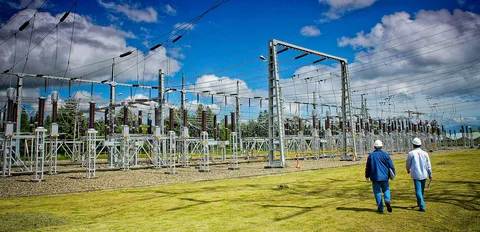
The global market for digital substations is projected to grow from an estimated USD 7.96 billion in 2024 to approximately USD 16.53 billion by 2034.
This robust growth trajectory is supported by a compound annual growth rate (CAGR) of 7.6% between 2025 and 2034, as reported by recent research from Polaris Market Research.
The findings indicate a surge in adoption and expansion within the sector, reflecting the increasing emphasis on modern, efficient, and secure power infrastructure worldwide.

Market Overview
The digital substation market is undergoing a transformative phase, driven by the escalating demand for automated and reliable power systems.
Digital substations leverage cutting-edge digital technologies, including Intelligent Electronic Devices (IEDs), Supervisory Control and Data Acquisition (SCADA) systems, and sophisticated communication networks.
These advancements enhance overall operational efficiency and reliability, marking a significant leap in how power distribution and management are conducted.
Significant investments aimed at modernizing grid technology and facilitating the integration of renewable energy sources are propelling the adoption of digital substations within utilities and various industries.
These intelligent systems reduce operational downtime, enhance real-time monitoring capabilities, and contribute prominently to the development of smart grids. Amidst these advancements, the market is witnessing robust growth in both developed nations and emerging economies.
The Digital Substation Market is evolving dynamically, shaped by various economic, structural, and technological influences. Changes in consumer behaviors, regulatory frameworks, and corporate strategies continue to redefine the landscape and competitive dynamics of the market.
Organizations within this sector are increasingly adopting innovative approaches to stay aligned with emerging trends and fulfill shifting market demands. Continuous advancements and a steady influx of investments suggest a favorable outlook for market expansion during the forecast period.
Key Growth Drivers of the Digital Substation Market
1. Rising Demand for Grid Modernization
As electrical infrastructure ages and energy demands escalate, utilities worldwide are prompted to transition towards more intelligent grid systems.
Digital substations are pivotal in modernizing transmission and distribution networks by providing advanced automation, real-time monitoring, and remote management capabilities. This modernization effort not only enhances system resilience but also ensures quality power delivery to consumers.
2. Increasing Integration of Renewable Energy Sources
The global transition towards renewable energy sources, such as wind, solar, and hydro, is driving the demand for more flexible and efficient grid frameworks.
Digital substation market enables smoother management of renewable energy by facilitating faster data processing and seamless integration into prevailing grid structures.
This adaptability is critical for balancing energy supply and demand, ensuring grid stability amidst variability in power generation from renewable sources.
3. Advancements in Communication and Automation Technologies
The implementation of advanced technologies like Intelligent Electronic Devices (IEDs), IEC 61850 communication protocols, and SCADA systems enhances the operational capabilities of digital substations.
These technologies support rapid fault detection, enable predictive maintenance, and contribute to reduced operational downtime. Collectively, these efficiencies are significant factors driving market growth.
4. Improved Operational Efficiency and Reduced Costs
By automating numerous monitoring and control functions, digital substations significantly decrease the reliance on manual interventions.
This automation yields substantial cost savings associated with maintenance, system reliability, and a decrease in power outages. Ultimately, these efficiencies bolster the economic viability of adopting digital substation technology.
5. Growing Emphasis on Cybersecurity and Grid Reliability
With the increasing incidence of cyber threats targeting critical infrastructure, digital substations are being designed with robust cybersecurity features.
These systems ensure secure data transmissions, safeguarding against unauthorized access while maintaining continuous grid functionality. The prioritization of cybersecurity plays a pivotal role in enhancing the overall resilience of power distribution networks.
Competitive Dynamics in the Market
This section delves into a detailed analysis of the major players in the digital substation market, outlining their competitive positioning. Notable companies include:
- ABB Ltd.
- Cisco Systems Inc.
- Eaton Corporation plc
- Emerson Electric Co.
- General Electric Company
- Hitachi Energy Ltd.
- Honeywell International Inc.
- NR Electric Co. Ltd.
- Schneider Electric
- Siemens AG
The competitive landscape of the digital substation market is characterized by continuous innovation, partnerships, acquisitions, and strategic product launches.
The analysis reviews how these companies are evolving, including their specific business models and key initiatives.
Understanding the competitive dynamics is essential for stakeholders to identify emerging trends, key barriers to entry, and prevailing pricing strategies.
Companies are differentiating themselves through technological advancements, unique service offerings, and niche market positioning.
Smaller firms and regional players are also innovating to capture particular segments, challenging established market leaders and driving further change within the industry.
Market Scope and Outlook
The global Digital Substation Market report offers an in-depth analysis of the rapidly evolving sector, including historical performance assessments and forecasts extending to 2034. The projected market value is set to reach USD 16.53 billion.
The report meticulously examines key aspects of the market, including size, value chain components, primary drivers, constraints, opportunities, and challenges, providing a comprehensive understanding.
A deep dive into various segments and sub-segments is included, along with both quantitative and qualitative data sourced from primary and secondary research to ensure high accuracy.
Emerging trends and strategic developments form a substantial part of the evaluation, offering a holistic view of the broader market landscape.
Segment Contributions to the Market
The digital substation market is delineated into distinct segments that reflect its diverse components. Key segmentation criteria encompass product type, application areas, end-use industries, and distribution channels.
Each segment is evaluated based on its market size, growth rate, revenue share, and strategic importance. This segmentation aids in identifying growth drivers and patterns within the market.
Market Segmentation Overview includes:
- Digital Substation by Module: (Revenue Projection – USD Billion, 2020-2034)
- Hardware
- Fiber-Optic Communication Networks
- SCADA Systems
- Digital Substation by Insulation Type: (Revenue Projection – USD Billion, 2020-2034)
- Transmission Substation
- Distribution Substation
- Digital Substation by Voltage Level: (Revenue Projection – USD Billion, 2020-2034)
- Up to 220kV
- 220–500kV
- Above 500kV
- Digital Substation by Application Area: (Revenue Projection – USD Billion, 2020-2034)
- Utility Providers
- Heavy Industries
- Transportation
- Other Sectors
Global Trade Wars and Their Impact on the Market
The influence of global trade wars on the digital substation market is an important consideration. Trade tensions, particularly between significant economies like the US and China, have drastically reshaped global supply chains and import-export mechanisms.
The imposition of tariffs and retaliatory actions has interrupted material procurement, escalated operational expenses, and fostered uncertainty in international trade.
Companies are responding by diversifying their supplier networks and considering reshoring operations to mitigate risks associated with these trade disputes.
The report highlights how investments in regional production capabilities are leading to new competitive advantages and promoting innovation in the sector.
Through this analysis, readers can gain insights into how trade dynamics continue to redefine market structures and strategic business approaches within the digital substation market.
Regional Market Performance
The regional performance of the digital substation market is analyzed to reveal growth potential across major global regions. Each region is assessed for its current market size and projected growth trajectory.
Factors influencing regional viability, such as macroeconomic conditions, regulatory environments, availability of skilled labor, and advancements in technology and infrastructure, are integral to this analysis.
Entry barriers and growth limitations across different regions are also examined to provide in-depth comparative insights.
This knowledge equips stakeholders to design effective marketing strategies sensitive to regional nuances, further enhancing their operational effectiveness in targeted markets.
About Polaris Market Research
Polaris Market Research is a leading global market research and consulting firm specializing in delivering comprehensive market intelligence and business research services across diverse industries.
Our commitment is to empower clients with the most accurate and timely information, fostering informed decision-making and capitalizing on new opportunities in fast-evolving markets.
We serve a wide range of sectors, including healthcare, technology, semiconductors, and chemicals, connecting clients with insightful data on innovative technologies and emerging business environments.
With a team of highly qualified analysts and subject matter experts, we strive to offer tailored business solutions aligned with our clients’ strategic objectives, ensuring they stay ahead in competitive landscapes.