







Innovation isn’t merely a buzzword in today’s fast-paced business environment—it’s an essential ingredient for success. Companies that adapt, evolve, and embrace new ideas remain competitive and relevant.
One of the most effective methods to spur this kind of innovation is through Design Thinking Workshops.
These workshops provide individuals and teams with practical tools, fresh perspectives, and the creative confidence needed to tackle complex challenges effectively.
By focusing on empathy, collaboration, and experimentation, participants can unlock solutions that truly meet user needs.
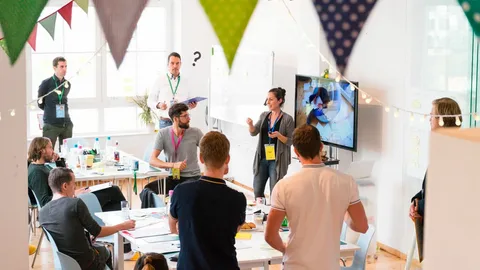
Understanding Design Thinking
At its core, Design Thinking is a structured, human-centered approach to problem-solving. It shifts the focus from a purely solution-driven mindset to one that seeks to understand the people affected by the challenges.
This comprehensive method marries creativity with analytical thinking, ensuring that outcomes are not just innovative but relevant and practical.
The Design Thinking process typically unfolds in five key stages:
1. Empathize
The first stage is all about understanding. It involves deeply engaging with the perspectives, needs, and challenges of end-users.
Through interviews, observations, and immersive experiences, participants gather rich insights that set the foundation for the problem-solving journey. By empathizing, teams can uncover the real issues people face, which often differ from what they initially assume.
2. Define
Once empathy has been established, the next stage is to clearly frame the problem. This involves synthesizing the insights gained during the empathizing phase to identify the core issues that need to be addressed.
A well-defined problem statement not only directs the subsequent brainstorming efforts but ensures that the focus remains on delivering solutions that truly matter to users.
3. Ideate
With a clear problem in mind, it’s time to unleash creativity. In this stage, participants generate a wide variety of ideas without immediate judgment.
The goal is to foster an open environment where even the wildest ideas are encouraged. Techniques such as brainstorming, mind mapping, and sketching can be employed to stimulate creativity. This process often leads to a range of innovative solutions, some of which may seem unconventional.
4. Prototype
Next comes prototyping. Here, teams create simple models or versions of their ideas to explore potential solutions. Prototypes can be low-fidelity (like paper sketches) or high-fidelity (like functional digital models), depending on what fits the project.
The key is to make these representations tangible enough to provide a sense of how the final product might look and function. This hands-on engagement allows teams to visualize their ideas, making it easier to identify strengths and weaknesses.
5. Test
Finally, it’s time to test the prototypes. This stage is critical as it involves collecting feedback from real users. Testing helps validate ideas and provides valuable insights into what works and what doesn’t.
It encourages teams to refine their solutions based on user experiences, ensuring that the end product is not only innovative but also user-centered. The testing stage often leads back to earlier phases, creating a continuous loop of improvement.
The Benefits of Design Thinking Workshops
Investing in Design Thinking Workshops offers numerous advantages for organizations. Here are some key benefits:
1. Enhanced Collaboration
Design Thinking fosters a culture of collaboration. Participants learn to work together across different departments, encouraging diversity of thought and perspective. This collaborative spirit not only enriches the problem-solving process but also strengthens team dynamics.
2. Increased Empathy
Through the empathize stage, participants develop a deeper understanding of their users’ needs and challenges. This heightened empathy goes beyond the workshop, leading to more human-centric products and services in the future.
3. Greater Innovation
By encouraging exploration and ideation, Design Thinking Workshops tap into the creative potential of teams. Participants often leave with a wealth of ideas that can lead to innovative solutions, setting the stage for continuous improvement and forward-thinking strategies.
4. Practical Solutions
Design Thinking emphasizes real-world applicability. The solutions developed during the workshop are tailored to meet actual user needs, increasing the likelihood of successful outcomes. This focus on practicality ensures that innovative ideas don’t just exist in theory but can be enacted in the market.
5. Confidence to Experiment
Participants gain not only tools but also the confidence to experiment with their ideas. This willingness to take risks can lead to breakthrough innovations that might not have been considered in a more traditional problem-solving framework.
Implementing Design Thinking in Your Organization
To integrate Design Thinking effectively, organizations should consider the following:
1. Create a Supportive Environment
Build an atmosphere where creativity is encouraged and safe. Employees should feel comfortable sharing their ideas without the fear of criticism. This culture allows for unfiltered brainstorming and collaboration, essential for innovation.
2. Invest in Training
Providing training in Design Thinking methods is crucial. Workshops led by experienced facilitators can equip teams with the skills and techniques needed for effective problem-solving.
3. Foster Interdisciplinary Teams
Encourage participation from diverse departments. An interdisciplinary team brings varied perspectives, enriching the ideation process and resulting in more comprehensive solutions.
4. Iterative Approach
Design Thinking is inherently iterative. Encourage teams to revisit earlier phases as they test and refine their solutions based on feedback and new insights.
5. Measure Success
Evaluate the outcomes of Design Thinking initiatives. Establish metrics to assess how well solutions address user needs and the overall impact on business objectives.
Conclusion
In a landscape where change is constant, businesses must embrace innovation as an ongoing commitment. Design Thinking Workshops serve as a powerful tool in this journey, equipping teams with the skills, perspectives, and confidence necessary for effective problem-solving.
By following the structured phases of empathizing, defining, ideating, prototyping, and testing, organizations can develop solutions that resonate with users, ensuring their success in a competitive marketplace.
Investing in Design Thinking isn’t just about solving problems; it’s about fostering a culture of innovation that empowers teams and drives businesses forward.
As you embark on this journey, remember that the potential for creativity and breakthrough solutions lies within collaborative efforts focused on understanding real user needs.