



Choosing the right software is one of the most important technology decisions a business can make. Software tools manage operations, store critical data, and support communication across teams. When businesses evaluate new systems, they often compare custom software vs off the shelf software to determine which option best fits their needs.
Some companies prefer off the shelf software solutions because they are quick to deploy and widely available. Others invest in custom software development to build applications designed specifically for their operations. Both options have advantages. However, the right choice depends on business goals, technical requirements, and long term growth plans.
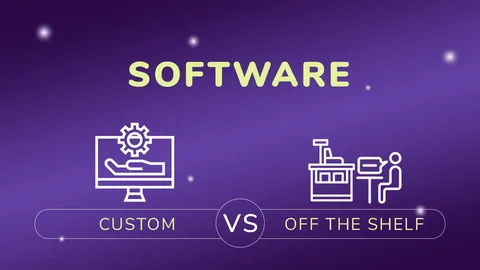
This custom software vs off the shelf software comparison will help organizations understand the differences between these approaches and decide which solution is the best fit for their operations.
What Is Custom Software?
Definition of Custom Software Development
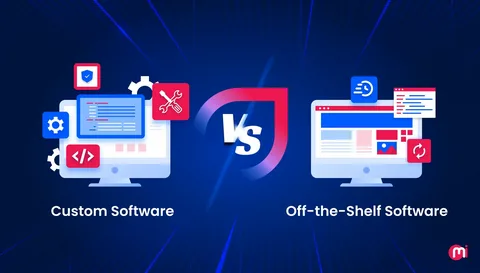
Custom software refers to applications developed specifically for a particular organization or business process. Unlike ready made tools, these systems are designed to match a company’s workflow, operational requirements, and strategic goals.
Through custom software development services, businesses can create platforms that support unique business models and improve efficiency.
How Custom Software Is Built for Specific Business Needs
In the custom software development process, developers first analyze the company’s challenges, workflows, and goals. Based on this research, they design and build software tailored to those needs.
This approach allows businesses to create custom software solutions for business that align perfectly with their operations instead of forcing teams to adapt to generic tools.
Examples of Custom Software in Different Industries
Many industries rely on custom business software to manage specialized processes. Examples include:
• Healthcare platforms for patient record management
• Logistics systems for fleet tracking and shipment monitoring
• Financial software for transaction management and risk analysis
• Retail platforms for inventory and customer experience management
These applications are usually developed through enterprise software development to support complex operations.
What Is Off the Shelf Software?
Definition of Off the Shelf Software
Off the shelf software refers to ready made applications that are designed for a wide range of users. These tools are built to solve common business problems and are available for immediate use.
Companies typically subscribe to these off the shelf software solutions rather than building their own systems.
Common Examples of Ready Made Software Tools
Businesses use many types of ready made tools for everyday operations, including:
• Accounting software
• Customer relationship management platforms
• Project management tools
• Marketing automation systems
• Communication platforms
These tools are often compared in discussions about ready made software vs custom software.
Why Many Businesses Initially Choose Off the Shelf Solutions
Many organizations begin with ready made tools because they offer practical advantages.
• Quick setup and deployment
• Lower upfront costs
• Prebuilt features for common tasks
• Vendor support and updates
These benefits make off the shelf solutions appealing, especially for small and medium sized businesses.
Essential Distinctions Between Tailored Software and Ready-Made Software
Customization and Flexibility
One of the biggest differences in the custom software vs off the shelf software comparison is flexibility.
Custom software can be designed with specific features and workflows. Off the shelf tools usually provide limited customization options.
Businesses that require specialized functionality often prefer custom software solutions for business.
Implementation Time
Ready made tools can be deployed quickly. Businesses can often start using them within days.
Custom software requires more time because it must be designed, developed, and tested before deployment.
Scalability and Future Growth
Scalability is another key factor in the custom software vs off the shelf software debate.
Custom platforms can be built with growth in mind. Businesses can add new features and handle increasing workloads as operations expand.
Off the shelf tools may struggle to support rapid growth or complex processes.
Cost and Long Term Investment
Off the shelf tools typically require lower initial investment. However, businesses must pay recurring subscription fees.
Custom systems may require higher initial development costs. Over time, they can reduce operational expenses and provide better long term value.
Integration with Existing Systems
Modern organizations use many software tools across departments. Custom platforms can be designed to integrate smoothly with existing systems.
Off the shelf solutions sometimes require additional connectors or third party tools to enable integrations.
Advantages of Custom Software Development
Tailored Features for Specific Business Processes
One of the biggest benefits of custom software development is the ability to create features that match business processes exactly.
Companies can design workflows that improve efficiency and reduce unnecessary steps.
Better Scalability and Performance
Custom platforms are often designed as scalable software solutions. They can support increasing users, growing datasets, and expanding business operations.
This scalability makes them suitable for organizations with long term growth plans.
Enhanced Security and Data Control
Security is a major concern for many industries. Custom systems provide better control over data access, encryption, and compliance standards.
Businesses can implement security measures that match their specific regulatory requirements.
Competitive Advantage for Businesses
Custom systems allow companies to develop unique capabilities that competitors may not have.
For example, businesses can integrate advanced automation or analytics through ai custom software development to improve decision making and operational performance.
These capabilities are among the major benefits of custom software over off the shelf software.
Advantages of Off the Shelf Software
Faster Implementation
One of the main advantages of off the shelf software solutions is quick deployment. Businesses can begin using the software almost immediately.
This is useful for organizations that need a fast solution.
Lower Initial Cost
Ready made software usually requires a smaller upfront investment compared to custom development.
This makes it a practical option for startups and small businesses with limited budgets.
Regular Updates and Vendor Support
Software vendors provide updates, maintenance, and customer support. Businesses benefit from ongoing improvements without managing development internally.
Suitable for Standard Business Needs
Many organizations only require basic functionality for tasks such as accounting, communication, or project management.
In these situations, ready made tools may be sufficient.
When Should Businesses Choose Custom Software?
Unique Business Requirements
Companies with specialized processes often need software that matches their workflows. In such cases, custom software development becomes the most effective solution.
Need for Advanced Integrations
Businesses using multiple digital platforms may require deeper integrations between systems.
Custom applications allow seamless integration across departments and technologies.
Rapid Business Growth
Fast growing companies need technology that can scale with operations. Custom platforms provide the flexibility needed to support expansion.
This is one of the key reasons which is better custom software or off the shelf software often depends on the company’s growth strategy.
When Is Off the Shelf Software the Right Choice?
Small Businesses with Limited Budgets
Startups and small businesses may choose ready made tools because they are affordable and easy to deploy.
Standardized Business Processes
Organizations with simple and standardized workflows may not require advanced customization.
Off the shelf tools can meet their operational needs effectively.
Quick Deployment Requirements
When businesses need a solution immediately, ready made tools offer the fastest implementation.
How to Decide Which Software Is Best for Your Business
Assessing Business Needs and Processes
The first step in any custom software development guide is understanding business requirements.
Organizations should analyze their workflows, challenges, and operational goals before selecting software.
Evaluating Budget and Long Term ROI
Businesses must compare the short term cost of ready made tools with the long term value of custom platforms.
In many cases, custom solutions provide better return on investment over time.
Considering Scalability and Future Growth
Technology decisions should support future growth. Businesses must evaluate whether their software can handle increasing data, users, and operational complexity.
This factor often determines whether custom software vs off the shelf software is the better choice.
Conclusion
Both custom software and ready made tools offer valuable advantages. Off the shelf platforms provide quick deployment and lower upfront costs. They are suitable for businesses with simple operational needs.
However, organizations with complex workflows, rapid growth, or specialized requirements often benefit from custom software development. Custom platforms offer flexibility, scalability, and stronger control over data and operations.
The decision between custom software vs off the shelf software ultimately depends on business goals, budget, and long term strategy. By carefully evaluating these factors, companies can choose the technology solution that best supports their growth and operational efficiency.