




For years, businesses across the Gulf region—from Dubai’s fast-growing startups to established family conglomerates in Riyadh and Doha—faced a straightforward choice: install software on your own servers or do without. On-premise CRM systems were the gold standard for companies that valued control above all else. But the landscape has shifted dramatically. Today, executives are asking a different question: can we afford not to move to the cloud? The debate between Cloud CRM vs. On-Premise has moved from IT departments to boardrooms, driven by demands for agility, remote access, and lower upfront costs. If you’re evaluating which path suits your organization, explore our detailed comparison guide for region-specific insights and real-world case studies.
Understanding the Core Difference
Before diving into why Gulf businesses are switching, let’s clarify the basics.
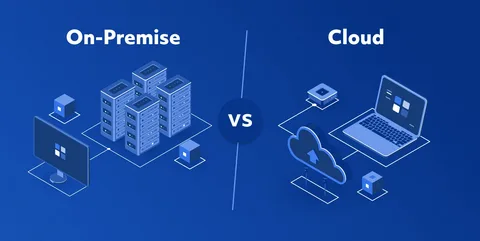
On-Premise CRM means you purchase software licenses outright, install the system on your own servers, and manage everything—hardware, security, updates, backups—with your internal IT team. You own the data and the infrastructure.
Cloud CRM (often called Software-as-a-Service or SaaS) means you subscribe to a platform hosted by a vendor. You access it via a web browser. The vendor handles maintenance, security patches, and upgrades. You pay a monthly or annual fee per user.
The choice impacts your balance sheet, your team’s productivity, and your ability to scale in a fast-moving region like the Gulf.
Why On-Premise Once Made Sense
Historically, Gulf businesses preferred on-premise solutions for three reasons:
-
Data sovereignty concerns – Keeping customer data within national borders felt safer, especially for finance, government, and oil & gas sectors.
-
Perceived control – IT directors liked knowing exactly where servers lived and who had physical access.
-
Legacy integration – Older companies had on-premise ERP and accounting systems that needed direct, low-latency connections.
However, these advantages are eroding fast. The rise of robust regional data centers (in UAE, Saudi Arabia, and Qatar) and stricter compliance frameworks have made cloud CRM not just viable but often superior.
The Shift: Why Gulf Businesses Are Moving to Cloud CRM
Several converging forces are driving migration across the Gulf Cooperation Council (GCC) region.
1. Remote and Hybrid Work Is Here to Stay
The pandemic permanently changed work patterns. Sales teams in Jeddah, finance teams in Abu Dhabi, and customer support in Manama now expect to access the same CRM from anywhere. On-premise systems typically require VPNs, which slow down performance and frustrate users. Cloud CRM offers native mobile apps and browser access—no tunnels required.
2. Lower Total Cost of Ownership (TCO)
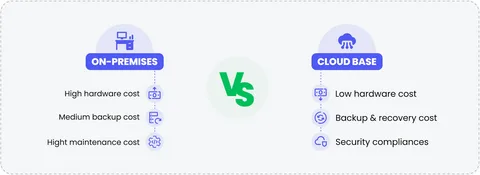
On-premise seems predictable: one large license fee plus maintenance. But hidden costs pile up: servers, backup power, cooling, IT salaries for upgrades, and security audits. A total cost of ownership analysis often shows cloud CRM is 30–50% cheaper over three years. Gulf finance directors are noticing.
3. Automatic Updates and Compliance
Regulations evolve. Saudi Arabia’s PDPL (Personal Data Protection Law) and UAE’s new data protection laws require ongoing compliance. On-premise users must manually implement changes. Cloud CRM vendors bake compliance into automatic updates. You’re always audit-ready without extra IT work.
4. Scalability for Rapid Growth
Gulf economies are diversifying rapidly. A logistics startup in Dubai can double in size within six months. On-premise CRM requires buying and configuring new servers in advance—or scrambling when you run out of capacity. Cloud CRM lets you add users in minutes. Related keywords like scalability and elastic infrastructure become real advantages, not buzzwords.
5. Disaster Recovery and Business Continuity
Regional tensions and extreme weather (like the April 2024 UAE floods) remind businesses that on-premise servers in a single office are vulnerable. Cloud CRM providers replicate data across multiple geographic zones. If one data center goes offline, another takes over instantly. Your sales team never loses access.
At the heart of this transition is the need for a partner who understands both local regulations and global best practices. Cross media sol specializes in helping Gulf enterprises migrate from legacy on-premise systems to modern cloud CRMs, ensuring data integrity, user adoption, and measurable ROI. Their regional expertise bridges the gap between traditional IT comfort zones and the agility that modern Gulf markets demand.
The Hidden Costs of Staying On-Premise
Many Gulf businesses underestimate what they lose by not switching:
| Factor | On-Premise CRM | Cloud CRM |
|---|---|---|
| Upfront investment | High (licenses + servers) | Low (monthly subscription) |
| IT staff required | Dedicated team | Minimal (vendor manages) |
| Remote access | Poor (VPN required) | Excellent (native web/mobile) |
| Upgrade process | Painful (scheduling, testing) | Seamless (automatic) |
| Disaster recovery | You build it | Included |
| Time to deploy | Weeks or months | Days |
Beyond these tangible factors, there’s IT overhead—the hours your best technical people spend patching servers instead of working on strategic projects. That’s an opportunity cost that never appears on a budget.
Who Should Still Consider On-Premise?
Cloud isn’t for every Gulf business. On-premise still makes sense if:
-
You operate in a sector with extreme data localization laws that prohibit any data leaving your physical building (rare, but exists in defense or classified government work).
-
You have unreliable internet connectivity (though Gulf fiber and 5G coverage is world-class).
-
You already own underutilized server hardware and want to extract value from it.
For the other 95% of businesses, the cloud is the future. Digital transformation initiatives across Saudi Vision 2030 and UAE Centennial 2071 all assume cloud-first infrastructure.
Making the Switch: A Practical Roadmap
If you’re convinced, here’s how to migrate from on-premise to cloud CRM without disrupting operations:
-
Audit your current system – What data, customizations, and integrations do you have?
-
Choose a cloud CRM – Popular options in the Gulf include Salesforce, HubSpot, Microsoft Dynamics 365, and regional players.
-
Plan data migration – Clean your data first. Garbage in, garbage out.
-
Run parallel systems – Keep on-premise active while your team trains on the cloud version.
-
Phase user rollout – Start with one department, prove success, then expand.
-
Decommission old servers – Repurpose or retire hardware within 90 days of full cutover.
Frequently Asked Questions (FAQs)
1. Is cloud CRM secure enough for Gulf financial institutions?
Yes, provided you choose vendors with regional data centers and certifications like ISO 27001, SOC 2, and compliance with NESA (UAE) or NCA (Saudi Arabia). Leading cloud CRMs are often more secure than on-premise systems because they invest millions in cybersecurity.
2. What about data sovereignty—does cloud CRM keep my data inside the Gulf?
Major cloud providers now have data centers in UAE (Dubai, Abu Dhabi) and Saudi Arabia (Riyadh, Jeddah). You can select a regional instance to ensure data never leaves national borders. Always check your vendor’s data residency options before signing.
3. How long does a typical migration take?
For a small to mid-sized business (10–50 users), expect 4–8 weeks from planning to full go-live. Larger enterprises may take 3–6 months due to custom integrations and compliance reviews.
4. Will my sales team resist the change?
Change management is critical. Involve users early, provide training, and highlight benefits like mobile access and less manual data entry. Most resistance dissolves after two weeks of hands-on use.
5. Can I keep my existing on-premise integrations with a cloud CRM?
Often yes, through APIs or middleware platforms. However, some legacy systems may need upgrading. Your CRM partner should conduct a full integration assessment before migration.
6. What is the average ROI after switching?
Gulf businesses report 20–35% improvement in sales productivity, 15–25% lower IT costs, and 30% faster new-user onboarding after moving to cloud CRM. Most recover migration costs within 6–12 months.
7. Is hybrid CRM (some cloud, some on-premise) a good option?
For transitional periods, yes. But long-term hybrid adds complexity. Most experts recommend fully committing to cloud unless you have an exceptional regulatory constraint.
Final Verdict
The debate around Cloud CRM vs. On-Premise is largely settled for Gulf businesses. Cloud offers lower costs, better accessibility, automatic compliance, and resilience that on-premise simply cannot match. With regional data centers addressing sovereignty concerns, the remaining arguments for on-premise grow weaker each year. The companies that switch early gain a competitive edge in speed, agility, and data-driven decision-making. Those that delay risk being left behind as the Gulf accelerates toward a cloud-first, digitally transformed future.