





Understanding the key differences between chatbots, LLMs, and AI agents has become essential for executives evaluating enterprise AI tools. Budget approvals, compliance reviews, and digital roadmaps increasingly include some form of conversational AI. Yet many projects stall because decision makers do not clearly distinguish between these technologies.
This guide offers a structured conversational AI systems comparison. It explains architecture, intelligence, scalability, cost, and governance concerns in practical terms.
Why Understanding the Key Differences Between Chatbots, LLMs, and AI Agents Matters
Increasing AI investments across industries
Recent industry surveys from McKinsey and Deloitte indicate that more than half of large enterprises are piloting generative AI initiatives. Customer service, IT operations, and marketing are leading the way. Boards now expect AI adoption to produce measurable results.
However, labeling every system as “AI-powered” obscures real differences in capability. A rule-based support bot does not function like an LLM-driven assistant. An AI agent that executes backend workflows operates on yet another level.
Clear definitions reduce the risk of misaligned expectations.
Risks of choosing the wrong technology
Selecting the wrong system can lead to three common problems:
- Overinvestment in complex systems for simple tasks
- Underperformance when advanced automation is required
- Compliance exposure due to misunderstood data handling
For example, deploying a generative model where strict response control is required can create regulatory concerns. Conversely, relying on scripted bots for complex troubleshooting may frustrate customers and employees.
A careful review of the key differences between chatbots, LLMs, and AI agents helps prevent such mismatches.
Technical Architecture Comparison
A technical perspective clarifies much of the confusion.
Rule-based chatbot frameworks
Traditional chatbots rely on predefined decision trees. Developers map out conversation flows using conditional logic. The architecture is deterministic.
Key characteristics include:
- Structured input recognition
- Prewritten responses
- Limited contextual memory
- Minimal infrastructure requirements
In a chatbot architecture vs LLM discussion, these systems are predictable and easier to audit.
LLM-based generative architectures
Large Language Models operate on deep neural networks trained on vast text corpora. They generate responses based on probability patterns rather than fixed scripts.
Their architecture typically includes:
- Transformer-based models
- Tokenization and embedding layers
- Context windows for multi-turn conversation
- API-based deployment or cloud infrastructure
Unlike rule-based systems, LLMs can handle varied phrasing and ambiguous queries. However, they require higher computational resources and monitoring.
Agent-based systems with tool integration
AI agents build on LLM capabilities but introduce planning and execution layers. They often include:
- A reasoning module
- Memory storage
- API connectors to enterprise software
- Task orchestration logic
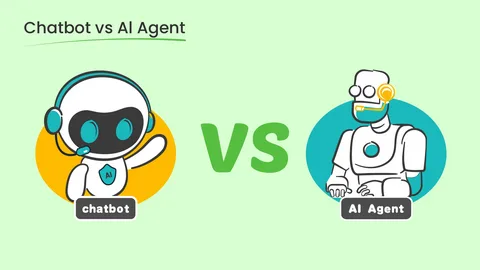
In an AI agent vs chatbot comparison, the distinction lies in action. Chatbots reply. Agents act.
For instance, an AI agent may receive a request to generate a sales report, access the CRM database, analyze the data, create a document, and email it to stakeholders.
Intelligence and Decision-Making Capabilities
Technical architecture influences how each system behaves.
Predefined responses vs contextual generation
Rule-based chatbots provide scripted answers. If a query falls outside expected patterns, they fail gracefully or escalates.
LLMs generate contextual responses. They interpret intent rather than match keywords. This leads to more natural dialogue, especially in customer-facing roles.
However, contextual generation introduces variability. Outputs may differ each time.
Memory and reasoning depth
Memory varies across systems.
- Basic chatbots maintain short session context.
- LLMs can manage multi-turn conversations within a defined token limit.
- AI agents often include persistent memory modules that store historical data.
Reasoning depth also differs. Chatbots follow logic trees. LLMs approximate reasoning through pattern recognition. Agents combine generation with stepwise planning.
Autonomous task execution
Autonomy represents the clearest separation.
Chatbots do not initiate actions. They respond.
LLMs generate text but typically require external triggers to perform tasks.
AI agents can execute predefined workflows with minimal human input.
This distinction is central to understanding enterprise AI tools and their operational impact.
Performance and Scalability Differences
Performance considerations often determine deployment success.
Response speed and latency
Rule-based chatbots respond almost instantly because their logic is simple.
LLM systems may introduce latency due to model processing time. Larger models require more computing power.
AI agents can experience additional delay if they perform multi-step tasks or external API calls.
Decision makers should assess acceptable response time thresholds before implementation.
Infrastructure requirements
Infrastructure needs increase along the spectrum.
- Chatbots may run on lightweight servers.
- LLMs require GPU resources or managed cloud services.
- AI agents need both model infrastructure and secure integrations with enterprise systems.
These technical requirements influence long-term budgeting.
Maintenance and retraining needs
Rule-based chatbots require manual updates when business rules change.
LLMs may require periodic fine-tuning or prompt adjustments. Monitoring output quality is essential.
AI agents demand continuous oversight to ensure workflows operate correctly and safely.
Maintenance complexity grows as autonomy increases.
Security, Compliance, and Risk Considerations
Governance is often underestimated during early planning stages.
Data privacy risks in LLMs
LLMs may process large volumes of text, including sensitive data. If deployed through third-party APIs, organizations must verify data handling policies.
Risks include:
- Accidental data leakage
- Model hallucinations present incorrect information
- Exposure to unauthorized data access
Clear data governance policies are critical.
Control limitations in AI agents
AI agents introduce additional risk because they perform actions. Improper configuration can result in unintended operations.
For example, an agent connected to financial systems must operate within strict permission boundaries. Audit trails and human approval checkpoints reduce exposure.
Governance frameworks
Effective governance includes:
- Access controls and role-based permissions
- Logging and monitoring mechanisms
- Human-in-the-loop review processes
- Compliance alignment with industry regulations
A structured framework ensures that advanced capabilities do not outpace oversight.
Cost and ROI Comparison
Financial evaluation should reflect both direct and indirect costs.
Development and deployment costs
Rule-based chatbots are generally less expensive to build. Development timelines are predictable.
LLM implementations require licensing or infrastructure expenses. Customization and integration add further cost.
AI agents often represent the highest upfront investment due to orchestration, integration, and testing.
Operational expenses
Operational costs include:
- Hosting and compute charges
- Monitoring and maintenance staff
- Security and compliance management
LLM-based systems typically incur ongoing compute expenses. Agent systems may also generate integration and workflow management costs.
Long-term return potential
Return on investment depends on the scope.
- Chatbots offer savings in repetitive support tasks.
- LLMs provide broader productivity gains across departments.
- AI agents can reduce manual operational work by executing multi-step processes.
Decision makers should align investment scale with strategic goals rather than short-term experimentation.
Summary Table: Side-by-Side Comparison
Capabilities
| Feature | Chatbots | LLMs | AI Agents |
| Scripted responses | Yes | No | No |
| Contextual conversation | Limited | Yes | Yes |
| Task execution | No | Limited | Yes |
| Tool integration | Minimal | Via API | Core feature |
Limitations
| System | Primary Limitation |
| Chatbots | Rigid conversation flows |
| LLMs | Output variability and data risk |
| AI Agents | Higher complexity and governance needs |
Ideal use cases
| System | Best Fit |
| Chatbots | FAQs, structured customer queries |
| LLMs | Knowledge assistants, content generation |
| AI Agents | Workflow automation, multi-system tasks |
This structured conversational AI systems comparison clarifies where each technology performs best.
Conclusion
The key differences between chatbots, LLMs, and AI agents lie in architecture, autonomy, scalability, and governance requirements. Chatbots offer predictability and control. LLMs introduce flexible language generation with greater computational demands. AI agents extend these capabilities by executing tasks across systems.
For decision makers, clarity is more valuable than novelty. A thoughtful assessment of technical needs, compliance constraints, and long-term objectives ensures that enterprise AI tools serve practical goals rather than abstract ambition.